Interview to Sara Reyes (b. 2000), lives and works in Valencia, Spain.
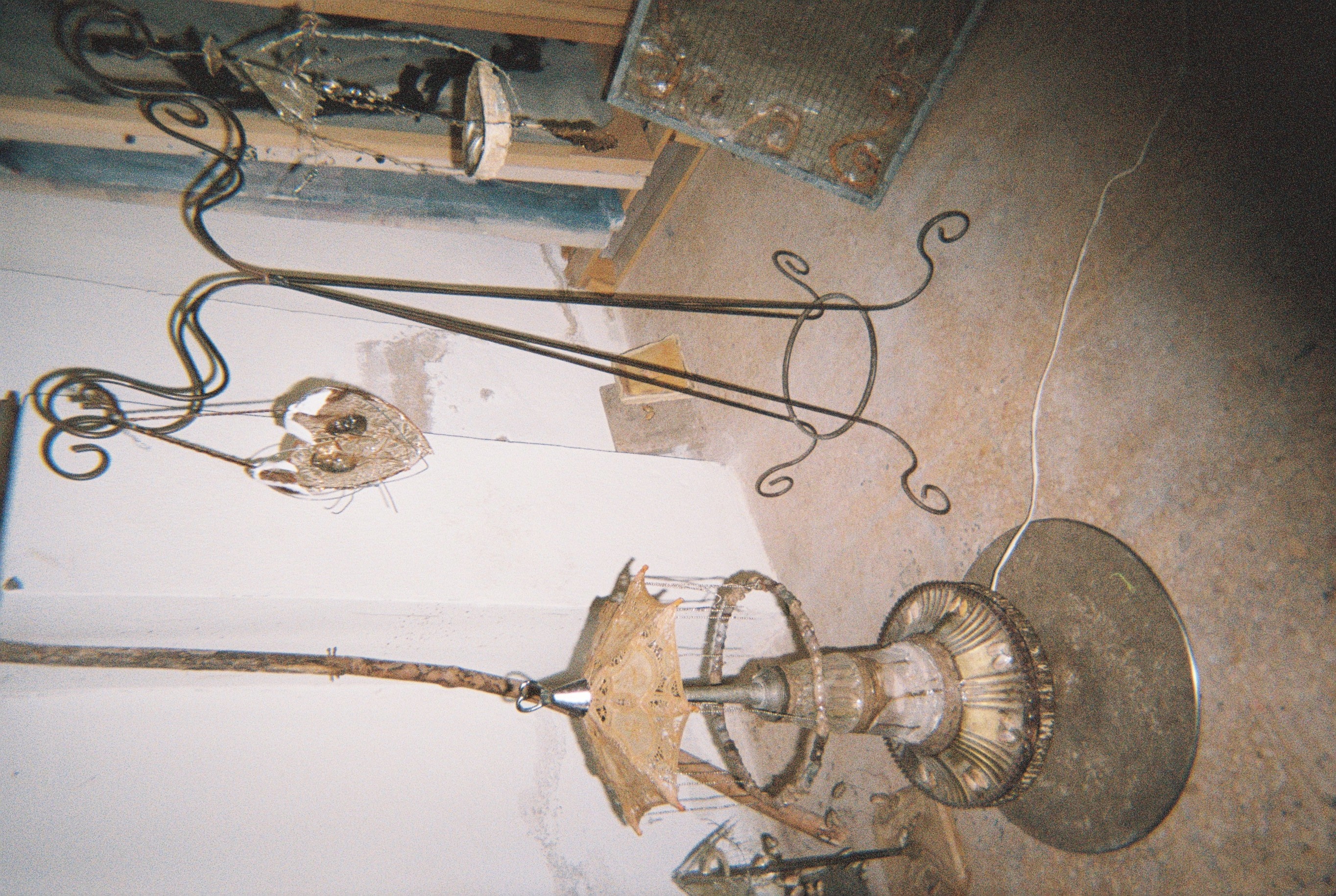
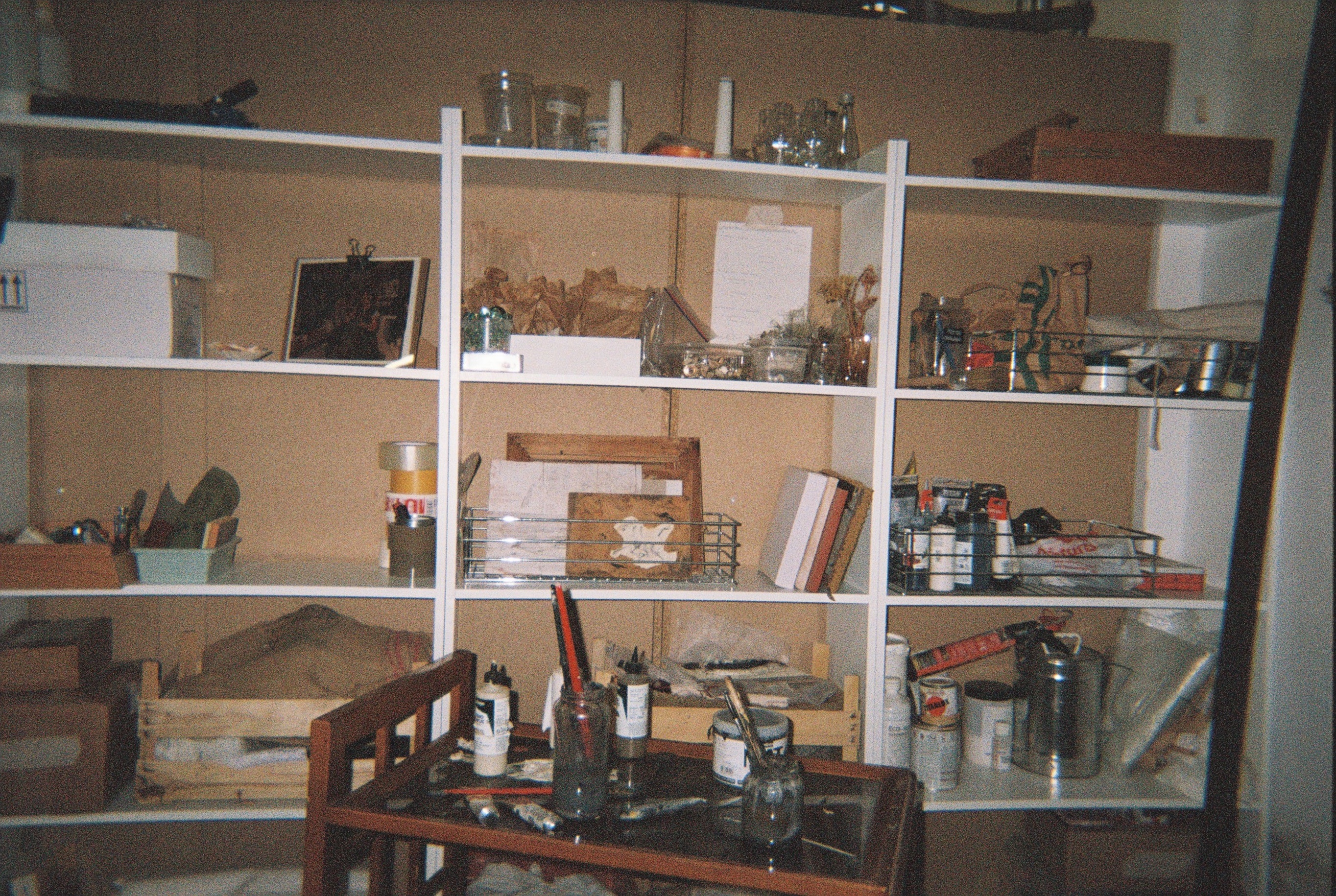
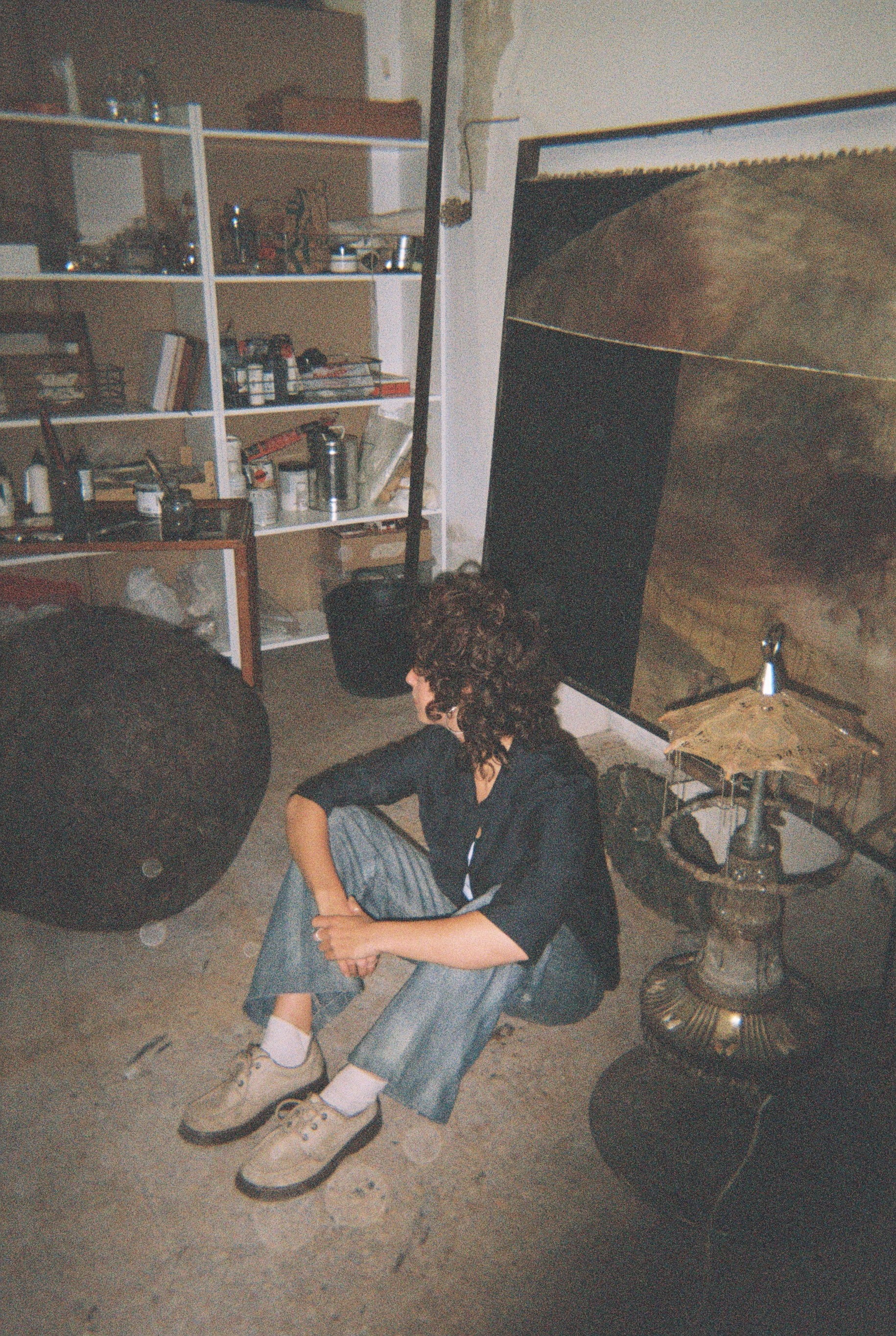
Artist Sara Reyes welcomes us among piles of decrepit objects—lamps, shells, hair curlers, stuffed butterflies—in a studio that feels more like a flea-market antiques stall or a grandmother’s living room. The best part is discovering, among these artifacts, one of her most iconic works: a huge ball of human hair, round, perfect, and utterly unsettling, sitting among the other pieces with the uncanny presence of a living being. Sara ironically refers to it as “her daughter” and says it is “one of the best things that has happened to her.” That ball, in a way, encapsulates her practice: her strange fascination with decontextualized objects, her dark humor, and her interest in infinite loops of movement, as well as her desire to create—quite simply—something that has never existed before.
Artist Sara Reyes welcomes us among piles of decrepit objects—lamps, shells, hair curlers, stuffed butterflies—in a studio that feels more like a flea-market antiques stall or a grandmother’s living room. The best part is discovering, among these artifacts, one of her most iconic works: a huge ball of human hair, round, perfect, and utterly unsettling, sitting among the other pieces with the uncanny presence of a living being. Sara ironically refers to it as “her daughter” and says it is “one of the best things that has happened to her.” That ball, in a way, encapsulates her practice: her strange fascination with decontextualized objects, her dark humor, and her interest in infinite loops of movement, as well as her desire to create—quite simply—something that has never existed before.
 Hey Sara! Let’s start from the beginning: you’ve mentioned your interest in the decontextualization of found objects, a central theme in your work. Where did it all begin, and why do you enjoy bringing the viewer into that space of the absurd?
I’ve always been drawn to objects and the possibility of decontextualizing them. I’m especially attracted to discarded objects: looking at them and letting them suggest other things. For me it’s almost like sprinkling a bit of glitter on top and seeing what grows from there. More specifically, I’d say it began during my first years at university. I remember an exercise where we had to decontextualize an object. I made a jar of chickpeas covered with chickpeas, and the game was: “they’re not canned chickpeas, but a jar made of chickpeas.” I found it hilarious how I could create an absurd object—something that didn’t exist before—just because I felt like doing it, without any concrete reason. Since then, this idea of opposites, of turning things upside down, of decontextualizing, has stayed in my work. I also like introducing humor, and I think mine appears through the absurd: creating something you don’t quite know what it is, but that somehow makes sense within its own logic.
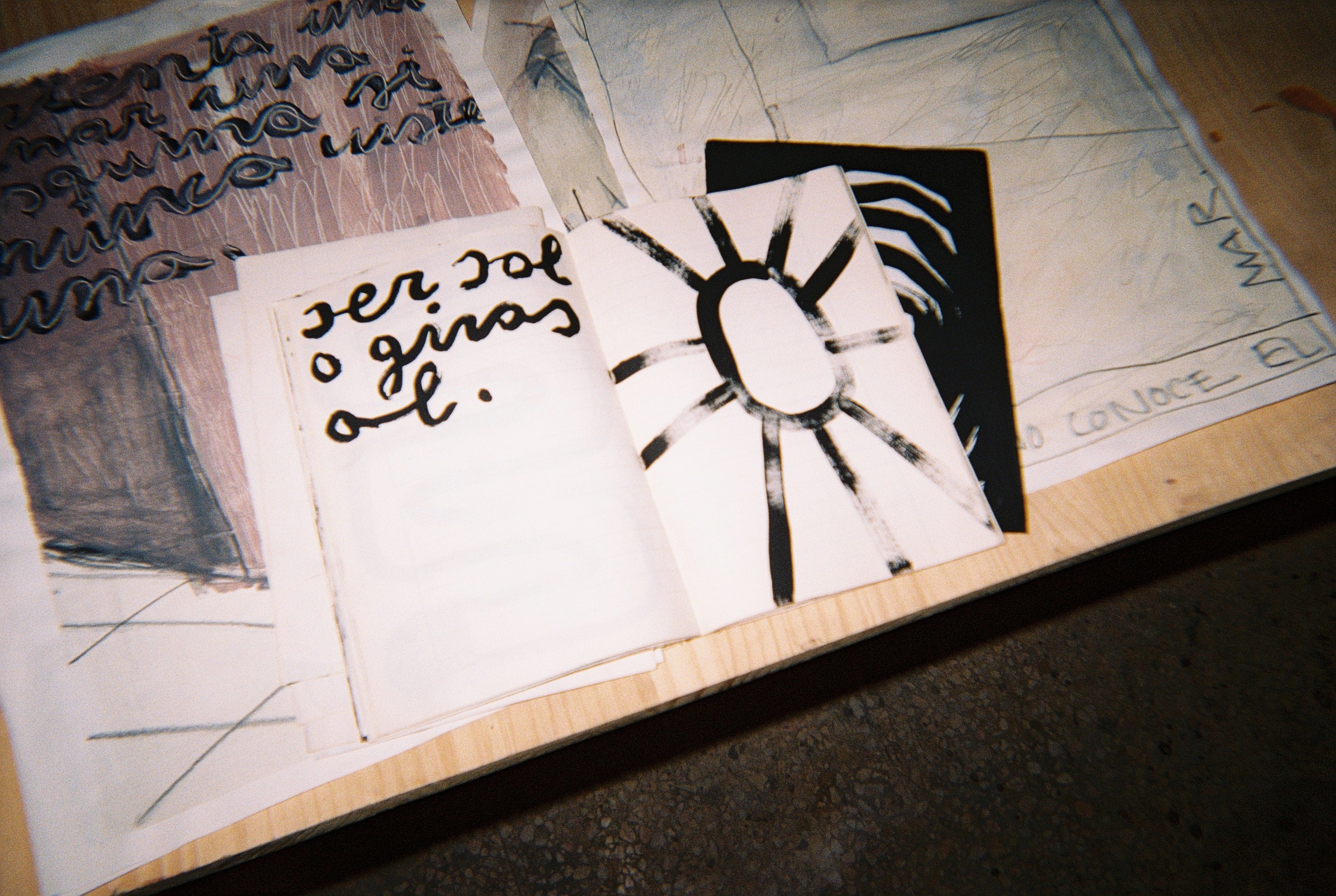
I also relate my practice very closely to everyday life. I realize that many times questions arise simply by observing elements around me. For example, recently I was looking at a sunflower and wondered: “To be the sun or to be the sunflower?” In that sense, an object can suggest a more existential question, like in this case, the idea of looking at something or being looked at. I’m always dancing between two opposites, and the object is a starting point for that on a personal level. I think that by starting from these kinds of objects, I also try to make it approachable, so that a viewer can see something and, just as I asked myself that question, feel identified with it. After all, they’re also able to relate to that object. It’s not necessarily super philosophical or existential at first glance, but it can open the door to a deeper reflection in a more “friendly” way.

Turning to absurd humor—do you also see this as a reaction against an art world that is sometimes perceived as very serious or solemn? Are you trying to take the weight off that?
Yes, totally. In fact, that’s why I started working with organic materials like cookies, gummy candies, or chewing gum. I was interested in that way of creating from the everyday, with what I had close at hand, without pretensions. It was a way of taking the weight off the idea that art always has to start from a perfectly designed conceptual and material framework. Sometimes it feels like you have to speak from the “transcendental” for your work to have value, and I’m looking for the opposite: showing that poetry can be found through something very banal.
I’m interested in that mix: something that makes you laugh and feel melancholic at the same time, that’s tender and absurd at once. And I think it’s easier to achieve that starting from common, familiar objects that we all recognize.
In that sense, could we say that for you the act of creating also has to do with play? Not so much with reaching a concrete end, but with enjoying the process itself, without objectives.
Yes, that idea of play comes up a lot in my work, although in different ways. At first it was more connected to childhood, to inventing absurd games or recreating impossible games. For example, I made a sandcastle composed of pieces, designed to be played with inside a living room. It was a kind of decontextualization of children’s play. Now play appears on other levels: for example, in the mixing of materials, in combining things that seemingly have nothing to do with each other—“noble” materials with more “poor” ones—or within the conceptualization of the works as a way of experimenting with personal symbolisms without a necessarily premeditated goal.
I read a text of yours where you talked about the idea of stimulating fantasy. It reminded me of an author who says that nowadays we are “besieged by fantasies,” in the sense that basic aspects like commercial activities or social interaction have become ethereal and digital. In that line, would you say you conceive your art as a form of escape from these dynamics? Do you want to take fantasy to other places?
Yes, I think you could say that. I also see it as a way of creating your own symbols, something I believe is being lost. Nowadays we have answers for everything, and the fact of finding an object or a symbol that makes me think about something I want to think about—but for which I haven’t yet found the way—feels valuable to me. In the end, it’s like creating a small world onto which you can project yourself, that gives you questions, answers… like a dance between those themes.
In one of your texts you talk about a man exercising in a park in an almost mechanical way, as if detached from what he’s doing. In your work, are you trying to place viewers in front of that kind of mechanized alienation we seem to live in today?
Yes, I’ve also noticed that this interests me in many of my works that revolve around the idea of the loop. I realized that the loop appeared unconsciously in my work, and that made me wonder why and where it came from. I think we live in a constant loop, whether through social media or through that feeling of infinite movement that is nonetheless static. And yes, I think that happens in many everyday aspects and patterns of thought, especially in connection with digital media.
Social media throws you directly into a loop that feeds back on itself. And on a material and technical level, I also think it progressively drags us toward an art that’s closer to the digital, generated and consumed through screens, which isn’t something that interests me right now. I suppose my response to that is to learn from it and try to move toward a more “spiral-like” impulse for action, not so repetitive and uniform. And art feels like an essential medium to facilitate that path, even if it’s by talking about it through the idea of the “loop.” “Contradictory ideas” once again, I guess (laughs).
I also think that returning to the material and experimenting with objects that, at first glance, have nothing to do with each other—like taking a plate, a chair base, a flowerpot, a piece of metal—and seeing what happens, also allows you to step a bit outside the box.
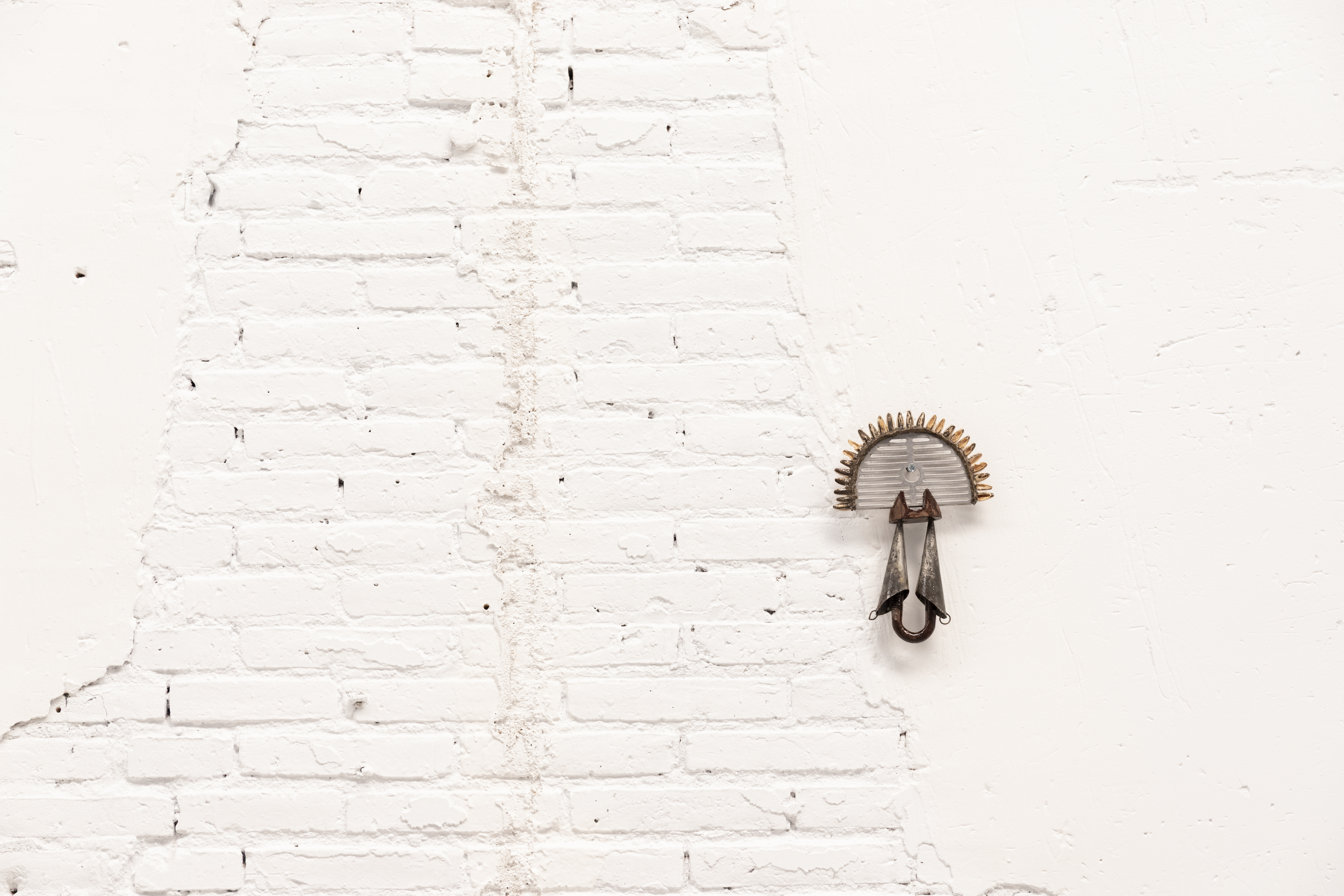
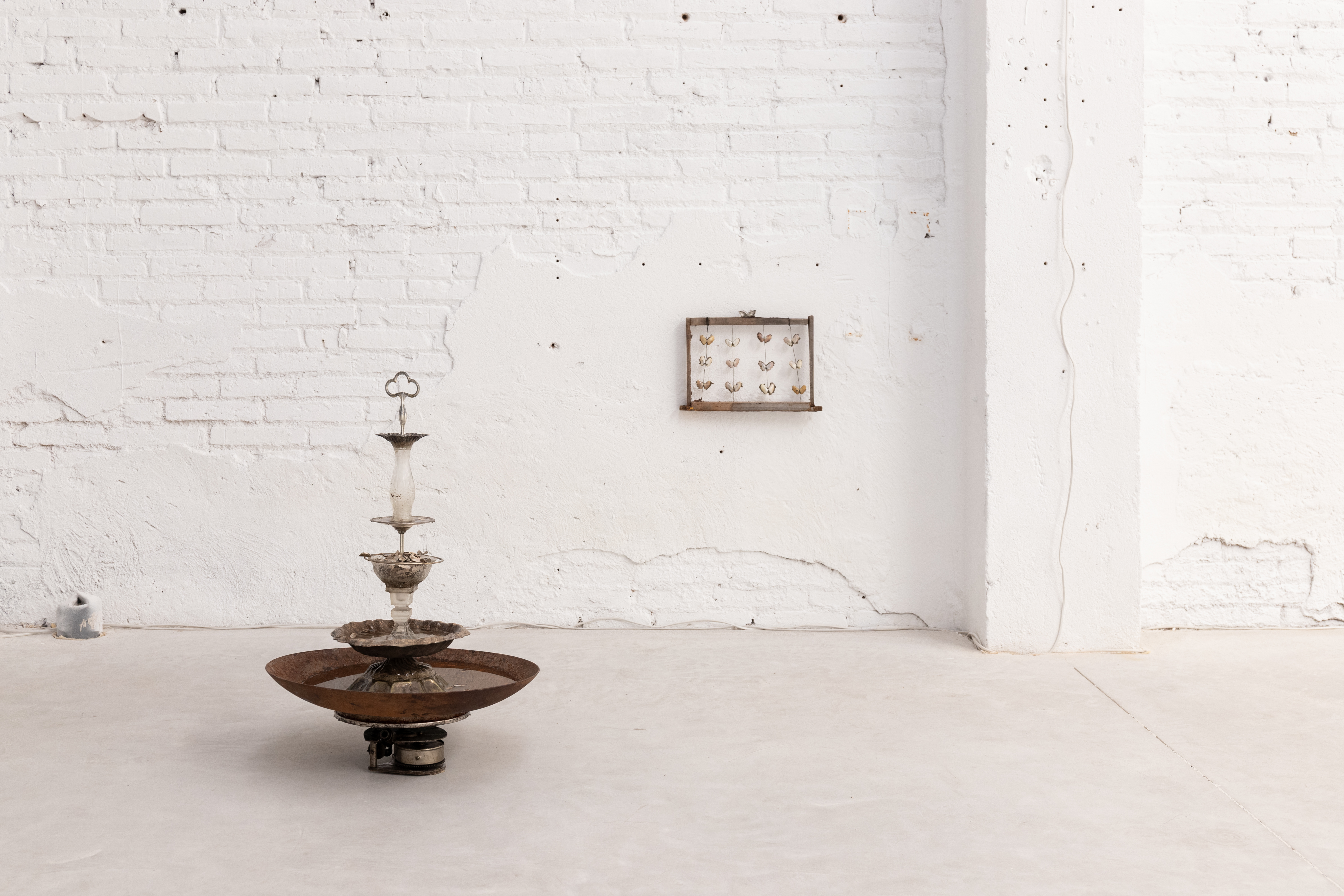
Regarding your interest in loops and a tendency towards the infinite... How did you treat this in your latest solo show “Intenta imaginar una esquina si nunca viste una” at Juan Silió gallery?
It all started with observing that grandfather in the park rotating his shoulder with that circular, rotating machine, and from there I began to think about what it meant: a continuous movement, but a static one. From there I moved to the idea of the fountain and the waterfall, two opposites that appear a lot in my work. Both are flows of infinite water, but different: the waterfall is expansive, while the fountain repeats the same water in a constant cycle. It’s a good way of explaining the difference between a circle and a spiral: between repetitive movement and expansive movement.
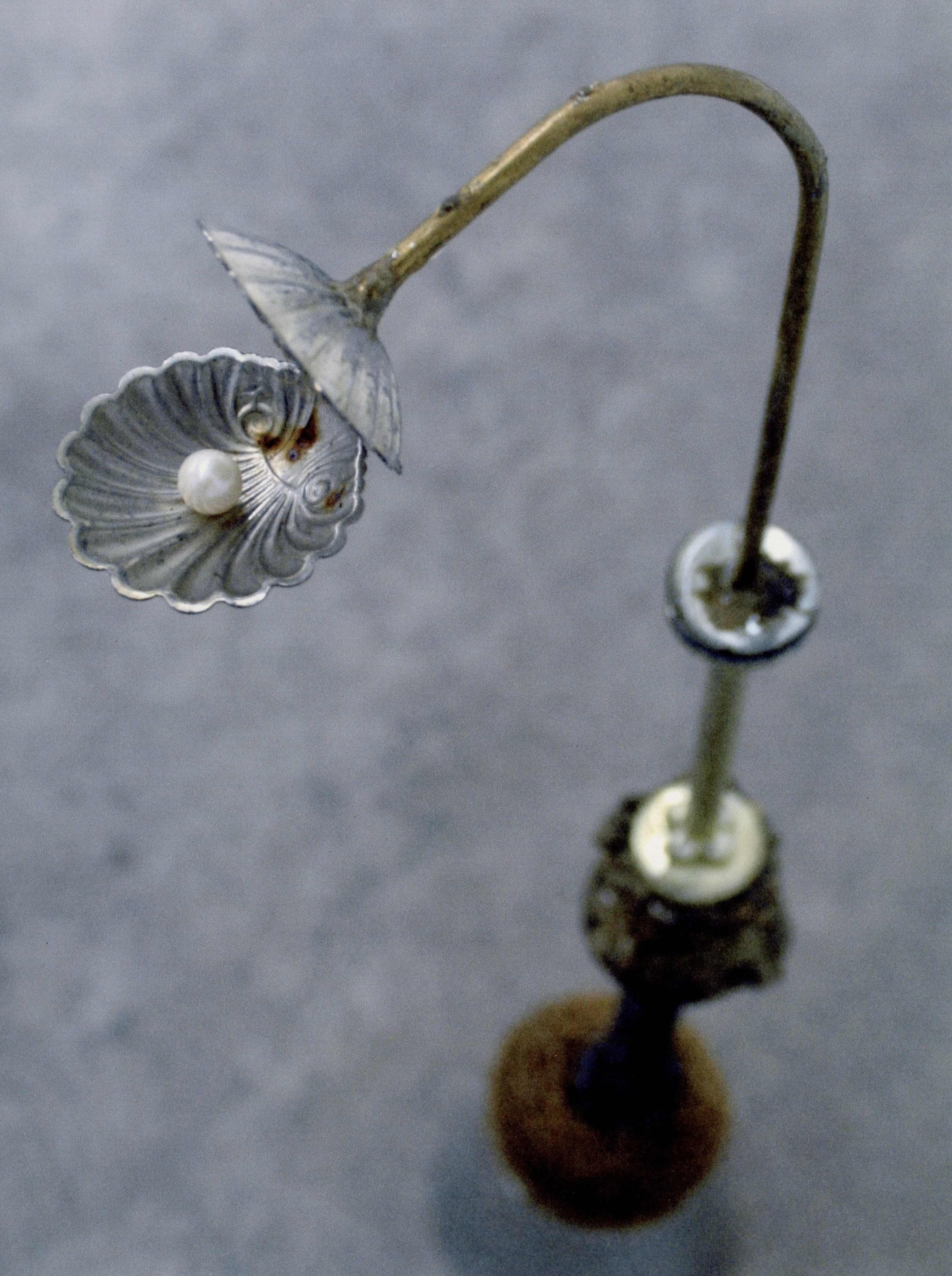
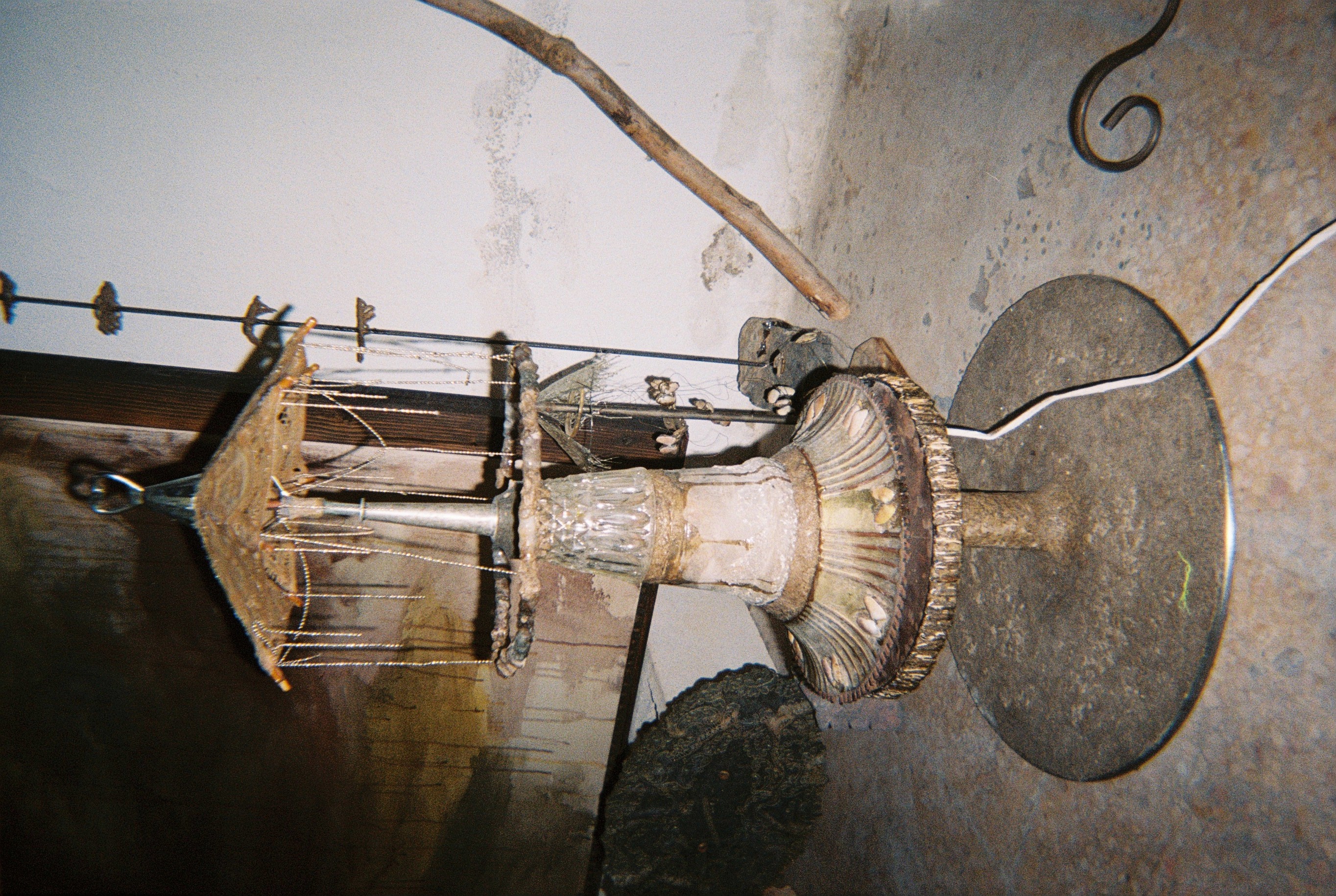
From there I thought about other examples with that kind of motion: a music-box ballerina—which I actually made—the carousel, the hula hoop… I was also inspired by the figure of the ouroboros, the snake biting its own tail, a symbol of infinity and repetition. In another piece, for example, I used a wind-up mechanism to create a sunflower, based on that idea of turning and being turned. Then other pieces emerge that are less directly related to the loop, like a teddy bear made from an egg carton. There, the thematic idea serves as an excuse to experiment with the materials I have on hand during the process. In this case, since I was working with papier-mâché, I had many egg cartons around, and by manipulating them the image of this teddy bear suddenly appeared in my hands through just a couple of simple transformations. And I suppose that from those works, new ones will emerge later on.
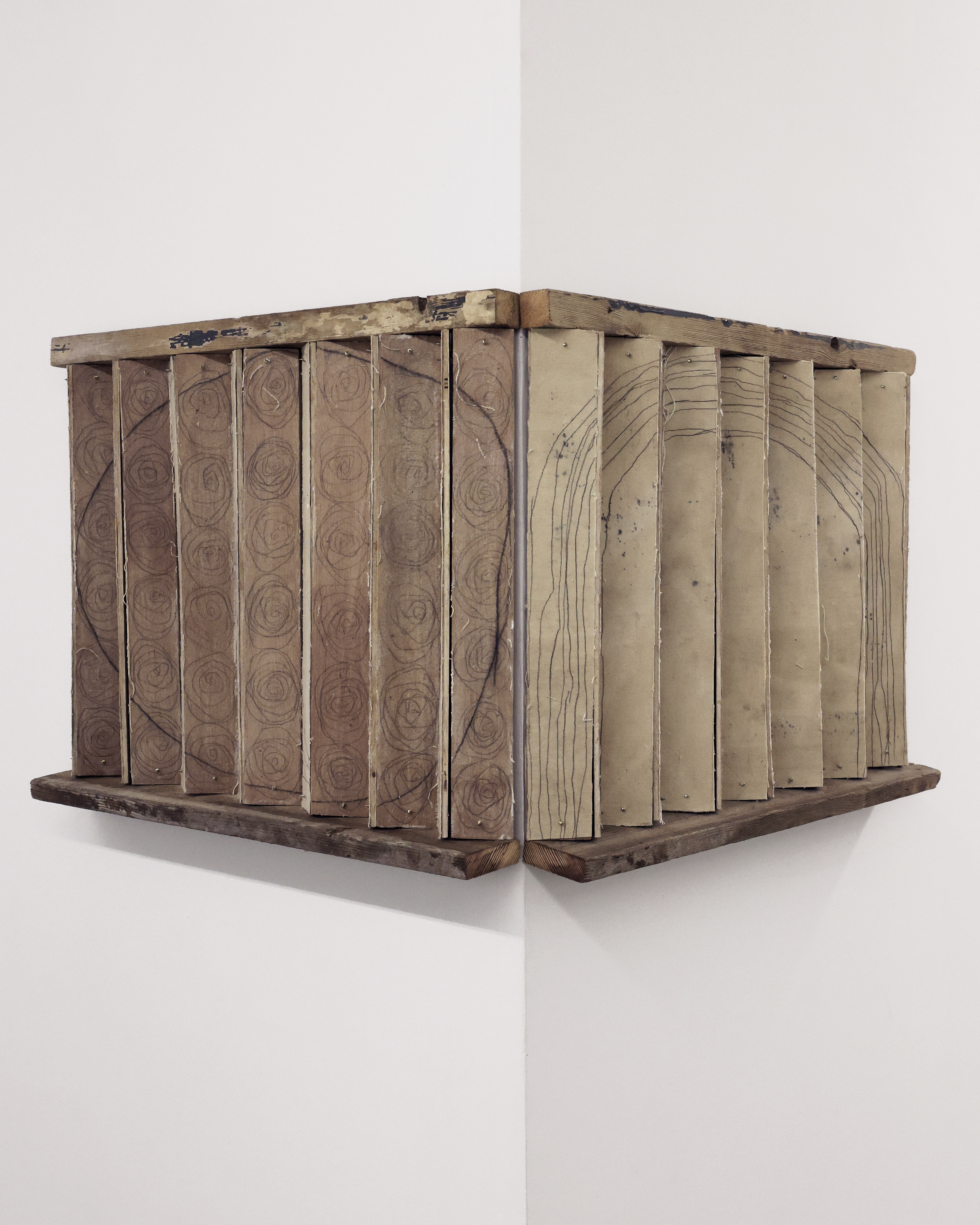
You usually work with found materials. Can you tell us what that process is like? Does something catch your eye in the moment, or do you already have an idea in mind?
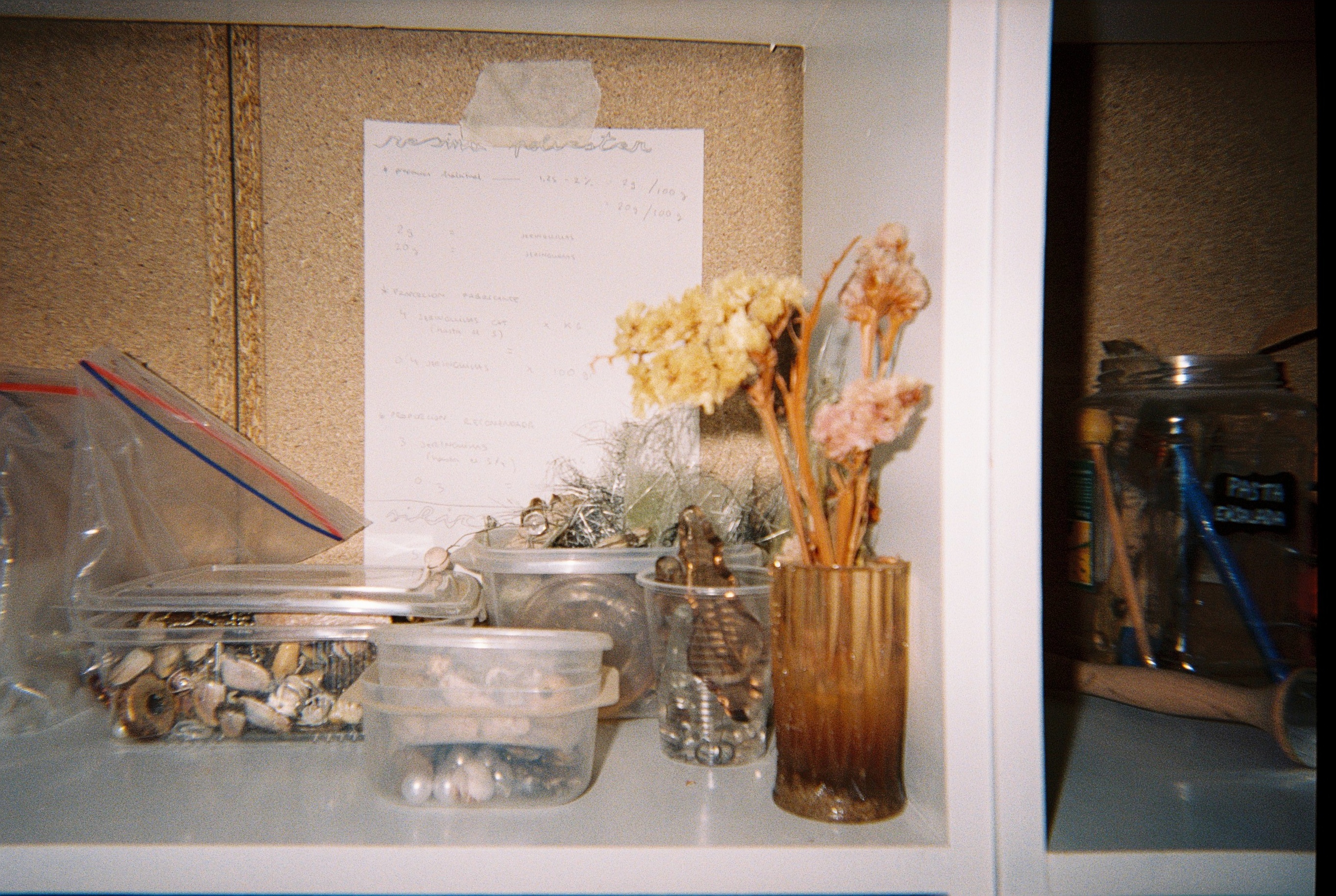
A bit of both. Sometimes I’m walking down the street and I find things—I’m quite a hoarder—and I accumulate them because I find them beautiful, even if they’re nothing in particular. But there’s something about them that catches my attention.
I also go a lot to flea markets; here in the Valencia area there are many, and you can find real treasures. Sometimes, when I have a specific idea, I go to the flea market looking for something in particular. For example, when I wanted to make the ballerina, I went looking for a music box. So yes, it depends: sometimes I find objects by chance, and other times I search for them for an idea I already have in mind.

Connecting with the ballerina, there’s also an iconography or symbolism in your work that seems very linked to femininity. Is that something that particularly attracts you?
Yes, increasingly so. I think that after this last exhibition I realized everything was super pink, and without falling into clichés, I noticed a shift: I continued with my playful objects, but they became more sensitive, emotional, more intimate, or “feminine,” why not—probably linked to a different stage in my life. They’re quite general themes, but yes, there’s something there.
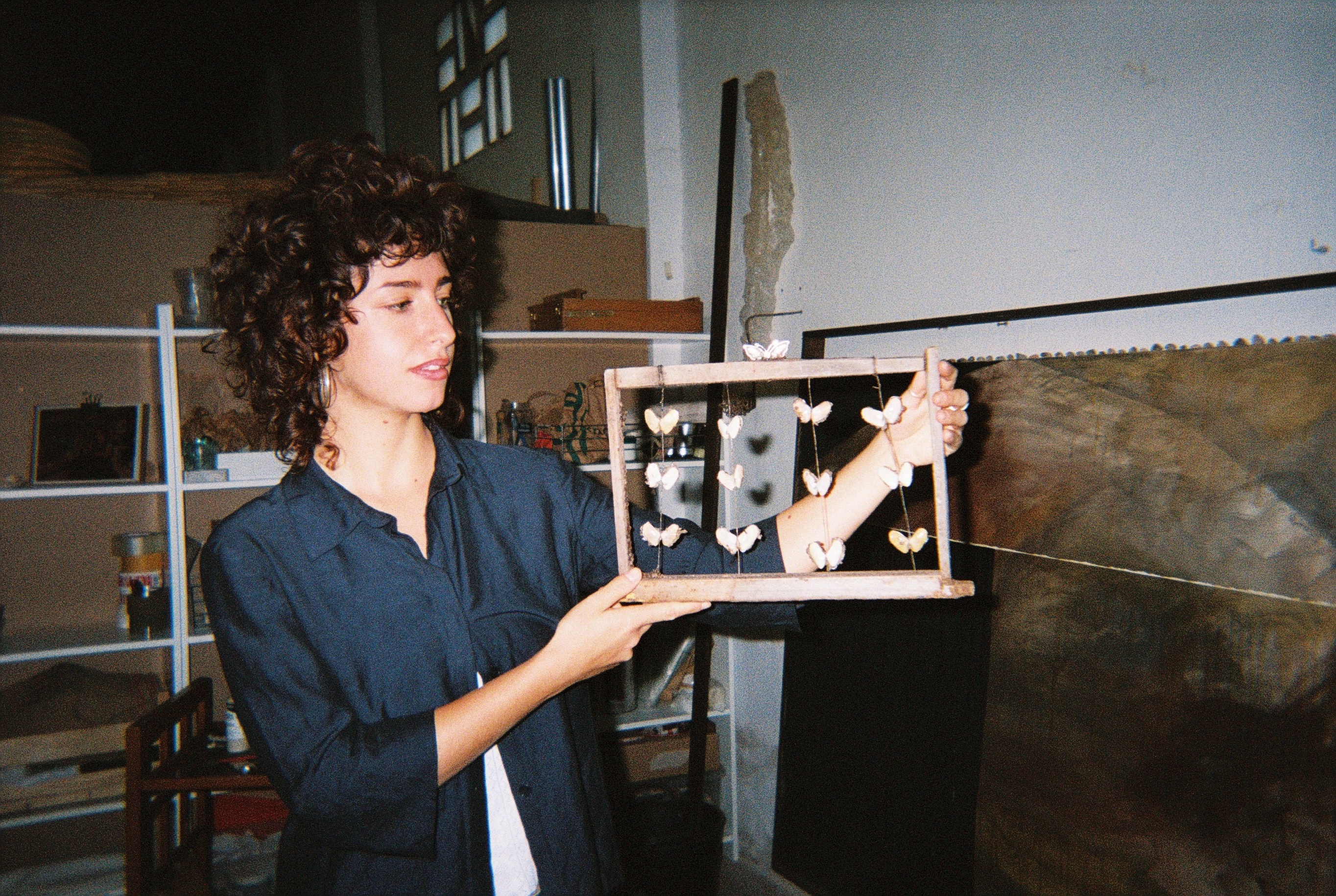
I also think it’s no longer so much about the theme itself, but about the objects I use, which already carry a feminine symbolism in themselves: the lace doily, the butterfly… These are elements that refer to the everyday world of women. In works from some years ago I saw more of a relationship with childhood, with the idea of construction and play, and with a sensitive way of “making,” more connected to that of a girl playing in an internal, naïve world. I think that remains, and perhaps now it appears with a sensitivity toward elements that recall these aspects and that have always interested me, but which in these latest works become more evident. Also, on a material level, the finish of the polyester resin I’ve frequently used in my pieces inevitably contributes that overall pinkish tone.
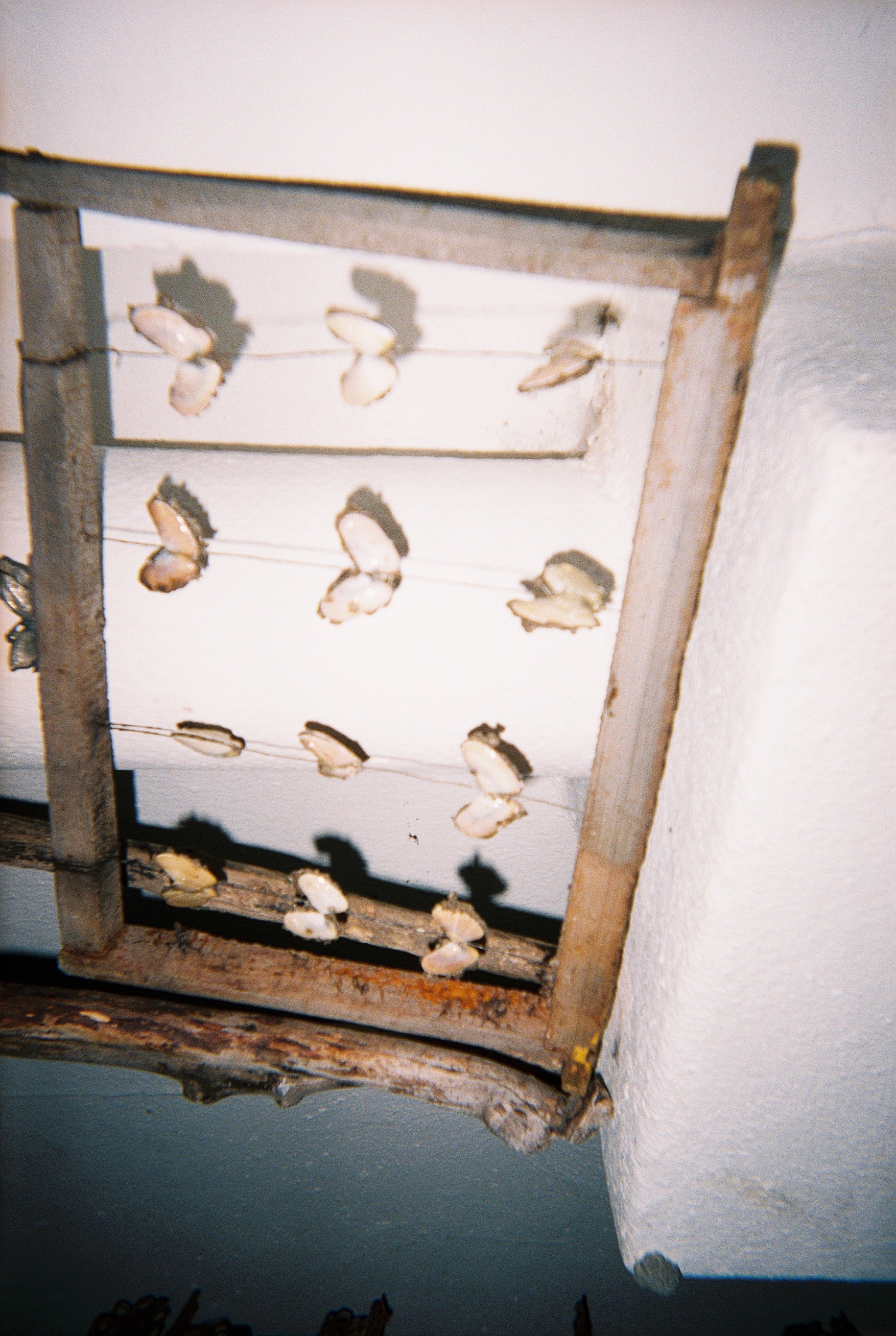
I feel there’s a contrast in your work between very recognizable things—everyday images that anyone can identify—and very intimate elements, like your own hair. Do you tend to explore that duality?
I’d say what’s most personal isn’t so much in the material, but in the question I’m asking myself. That’s where I really expose myself, because ultimately putting your vital questions on the table forces you to remove filters. And in art you also have to lose your shame for that.
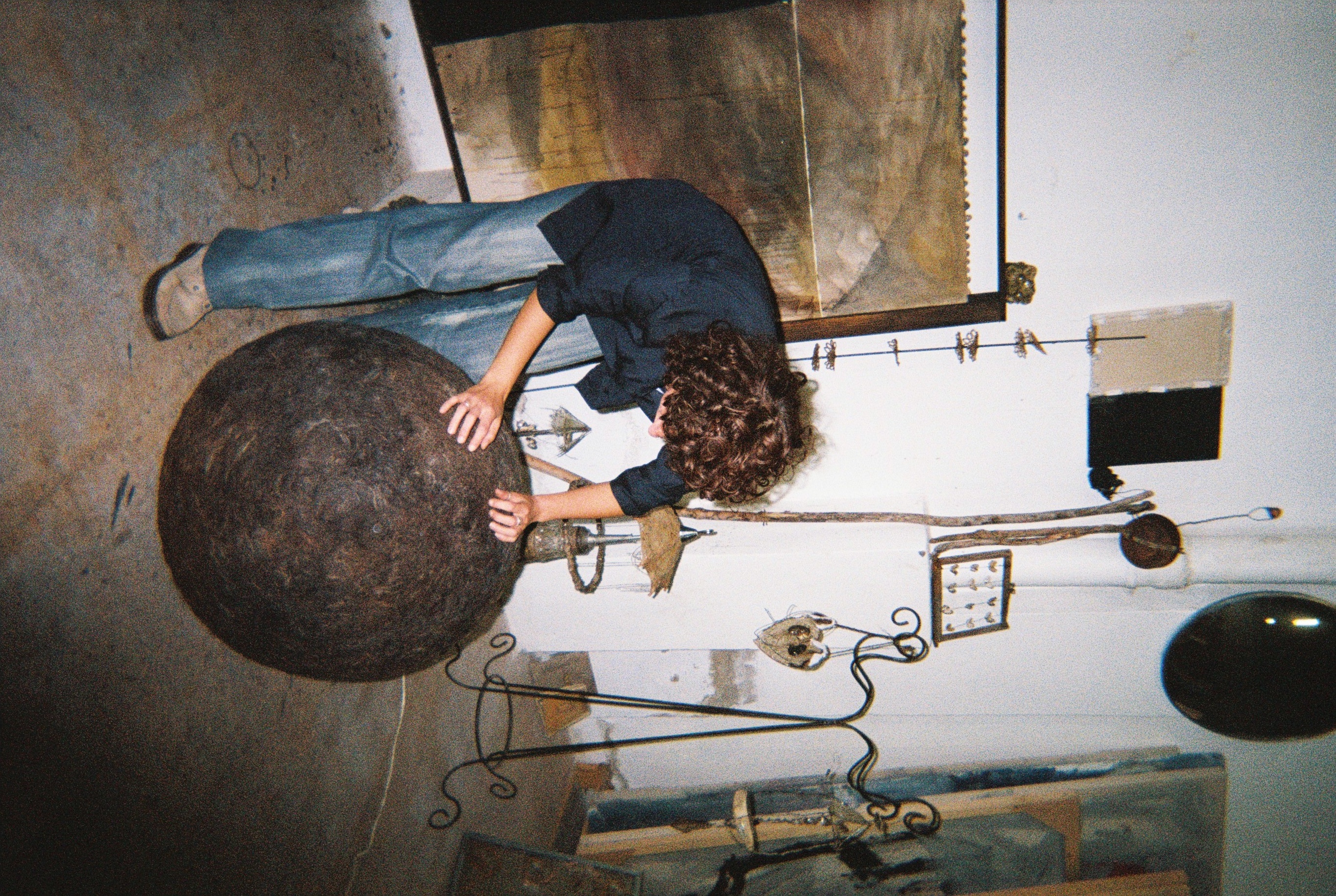
I do consider my work very personal and closely tied to my moment in life. On a material level, the personal aspect might lie in the way I play with objects, in the sensitivity with which I connect one thing to another. With the hair, for example, in the performance I did with the hair ball, I think what’s most personal isn’t the fact of using it, but the experience of taking the hair ball for a walk. I collected my own hair, hair from friends, even from hair salons. What’s personal is that experience: having an idea you don’t know where it comes from or where it’s going, and encountering yourself in the process of carrying it out.
This brings us to THE topic… [laughs]. Your performance “It Is What It Is (A Ball of Hair in This Case),” in which you pushed a giant hair ball through various parts of Spain. I’m very intrigued by the whole process of collecting the hair, how spectators experienced it, and how you experienced it yourself. I find it an incredible and very emotional piece on some level.
I think it’s one of the strongest things I’ve ever lived through. It’s definitely changed me a lot. [More laughs].
I don’t even know exactly how it all started. I had already worked with hair before—I made a hair frame some time ago, and also the hair curler—so I think that opened the door a bit. One day I simply thought: “I’m going to make a hair ball.” I imagined something small, but it ended up being much bigger. I wanted to take it to a neighborhood hair salon to take a photo, and from there the idea of taking it to many places emerged. We went with it to Benidorm, to the Valencian countryside, to the beach, to Cantabria… even to the flea market, which was quite a powerful experience.
It was very interesting to see how reactions changed depending on the place, and even how I myself changed while carrying it. In each place I became a different person, and nothing was planned. It was very natural: a hair ball appeared, and suddenly the question arose of who you were with that ball, how people reacted to it. In the city, for example, people didn’t want to look. It made them uncomfortable because they didn’t know how to react—no one has ever encountered a hair ball like that—and a lot of discomfort was generated. In Benidorm, on the other hand, there was more admiration; people are more used to seeing things out of context, so they stopped, looked, but with less surprise. At the flea market it was much more intimate: there were so many strange objects that the ball fit right in, and people approached it, wanted to touch it. One vendor told me he had been going there his whole life and had never seen anything like it. At that moment I knew something important was happening.
So, was your goal to surprise? Or what did you want to achieve with this piece?
Looking back, I think it was about creating something that didn’t exist, which is what often happens in art: inventing something imaginary that generates a new experience. No one had ever seen a giant hair ball. I wanted to provoke a reaction that had no precedent, something new.
I was also interested in altering routine, transforming the everyday into something that pulls you out of the everyday. Hair is something common, but in that format, turned into a ball, it becomes decontextualized and turns into something else for which we have no register of reaction. And yes, on a personal level I’m very interested in performance and absurd humor. Adding a playful spark to art, so it’s not all so intense. That experience of taking the ball for a walk was very powerful. When I finished the route in Benidorm, I felt as if five years had passed through me. It was really intense.
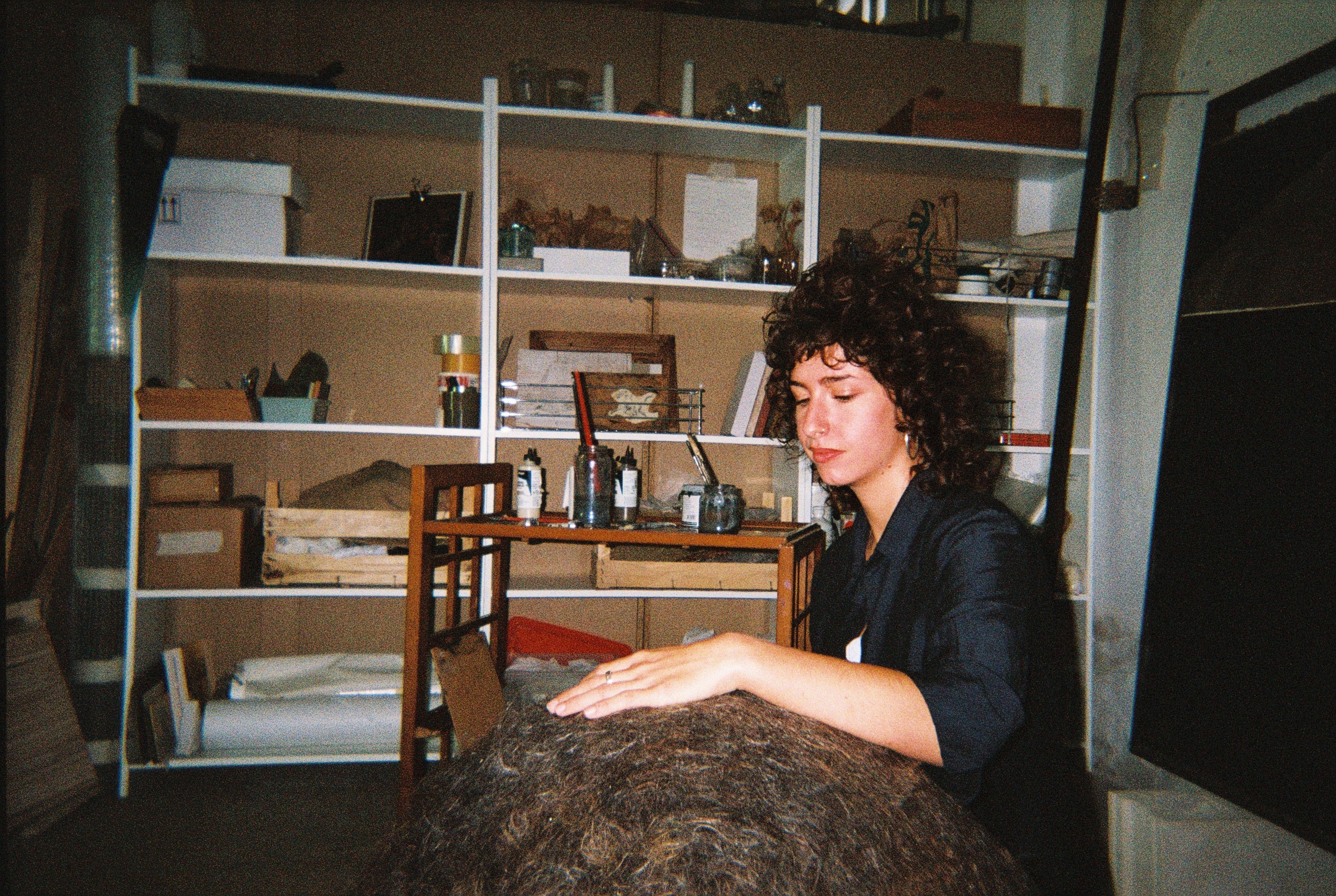
And what would you say you discovered about yourself with the hair ball?
It was as if, suddenly, I wasn’t even myself anymore. With performance you connect with parts of yourself that don’t exist elsewhere, just like in theater or dance, in anything that involves the body. I discovered myself being another person with a hair ball. And that’s what it is: a hair ball, nothing more. But at the same time, look at everything it provokes. It doesn’t have a clear “reason for being,” and that’s precisely where it becomes interesting.
Something else that strikes me is that many of your pieces have a decayed or outdated appearance, as if they belonged to the past or were in a state of decomposition. Do you deliberately seek that aesthetic?
As I mentioned, I’m very interested in found objects, discarded things, things that initially no longer serve a purpose, to create something else. In that sense, yes, I’m also attracted to that “worn” finish. It’s not something I consciously seek, because in the end it’s something the object itself already gives me.
I also find myself reflected in the colors I choose in a very instinctive way. I wouldn’t use, for example, an electric blue, because it doesn’t resonate with me. It happens somewhat casually. It’s true that my aesthetic taste when choosing an object already marks a decision: I choose one I like from the beginning, because in the end that’s also linked to my own person, to my colors and my way of seeing. I’ve tried working with brighter colors, and everything changes, of course—it’s not fixed. But I feel I resonate more with those natural tones; they feel closer to me and help me better convey what I want to say. My process is quite intuitive. Many times it arises from a non-rational attraction: something catches my attention and from there I start working. Then, little by little, the project emerges.
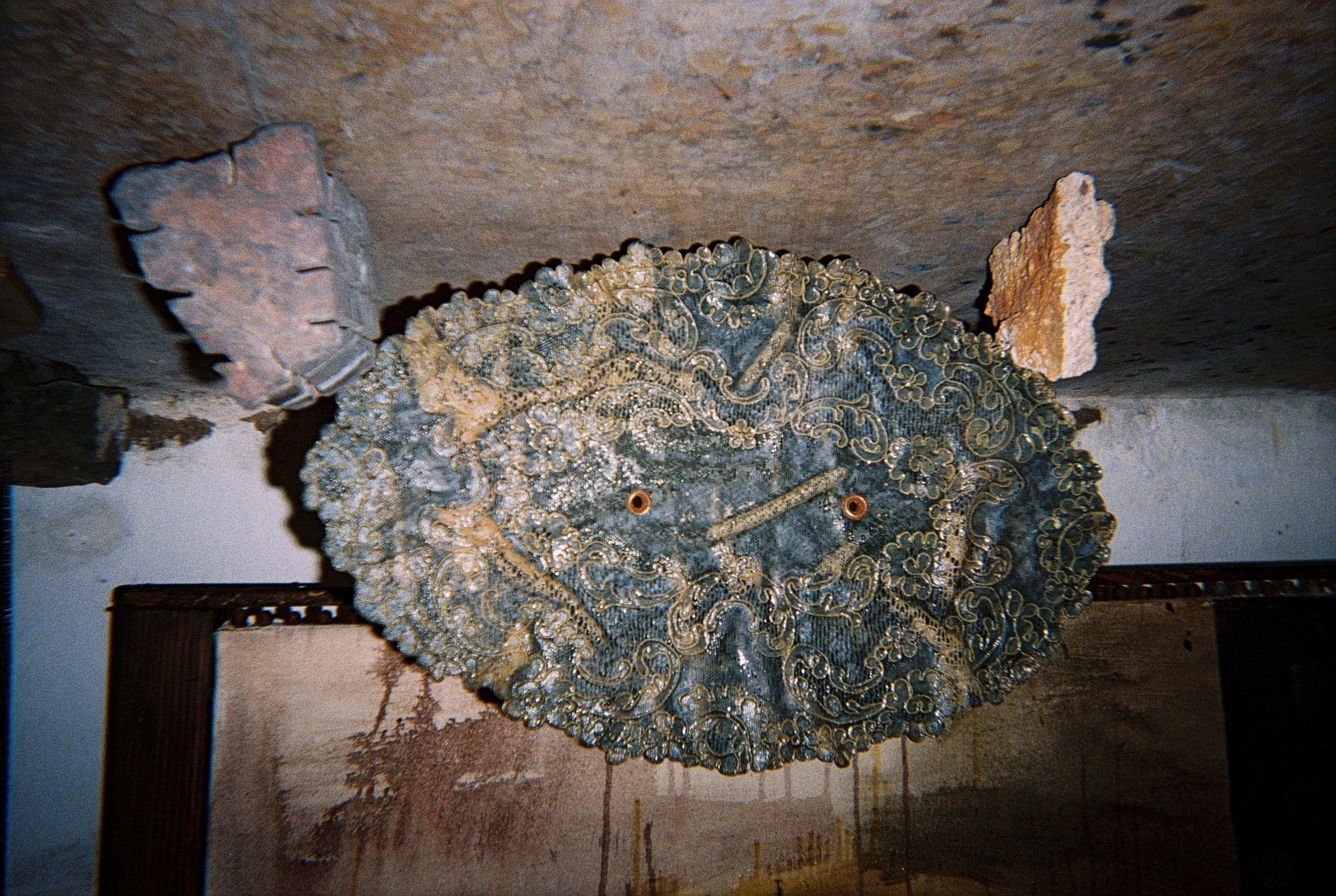
In that sense, the whole theme of found objects and decay has often been related to ideas of memory and death. Are these themes you keep in mind when creating?
I don’t have them directly in mind, but I do tend to work with pairs of opposites. I always see in my works that relationship between two opposites and the search for a midpoint between them, within a spectrum. That also applies to the idea of life and death: giving life to a dead object, or freezing something living in time.
For example, I made a piece that was like a “tree of life,” with bitten apples hanging from a tree and covered in polyester resin. It was a way of freezing the moment, of transforming the perishable into something permanent. Once again, I’m interested in that dialogue between opposites.
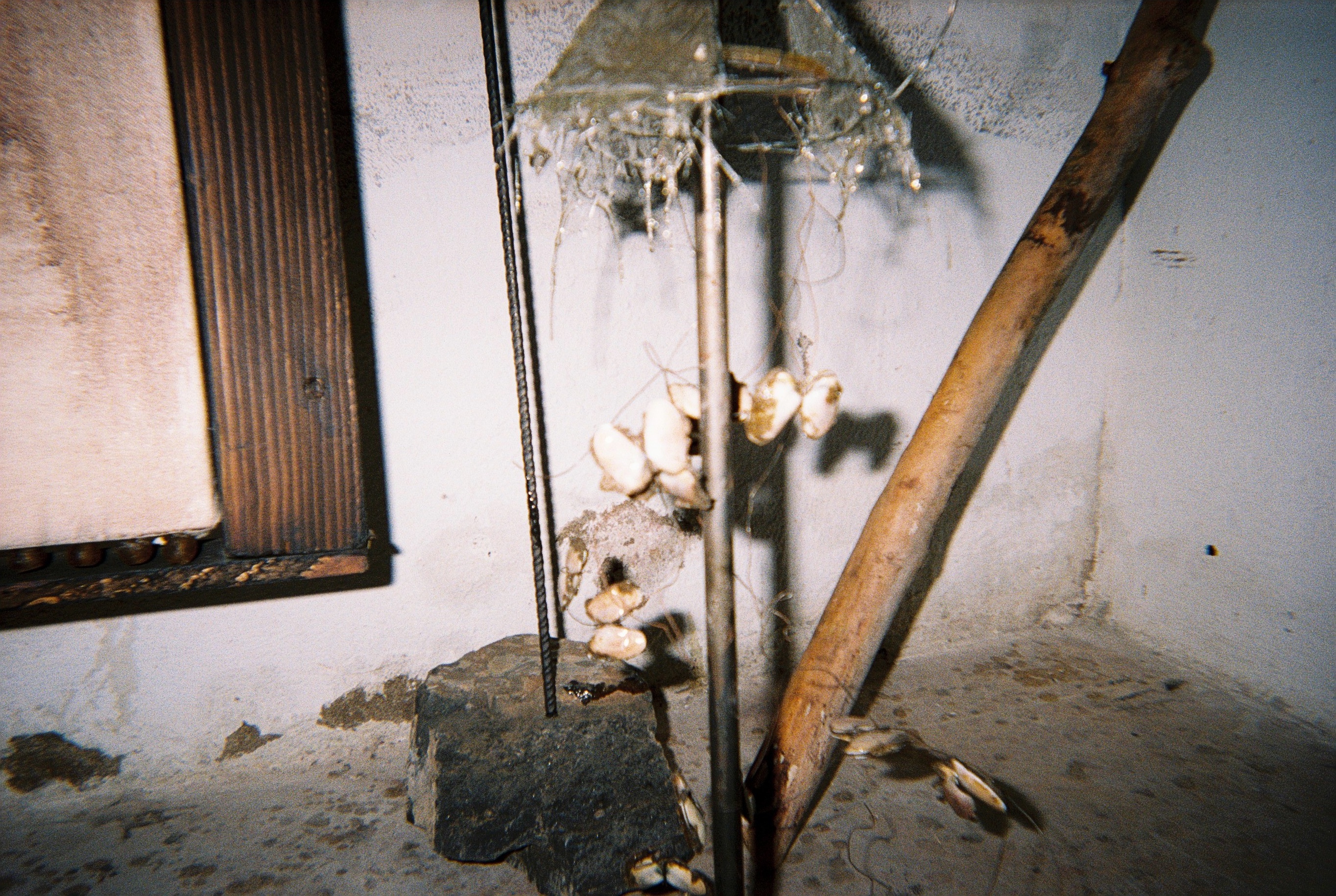
You posted a piece on Instagram that seemed to imitate a child’s drawing, titled “I Found a Castle and Drew It Because I Hadn’t Seen One in a Long Time.” With works like that, are you trying to bring some of the innocence of childhood into your practice?
Yes, I’d say it used to be more present and now it appears in other ways. But yes, I’m interested in that innocence of looking, of playing, of building. I suppose it’s quite common among artists: that connection with the past, with finding your purest self, your more childlike self. I’m very interested in searching in that direction.
Perhaps it’s a slightly idealized view, but children, in general, don’t seem to be as caught in loops as adults can be. They have a fairly self-motivated existence. Would you say that’s one of the reasons why you like to explore this imaginary?
Yes, actually, now that you mention it, it’s very much related. That freshness of childhood really attracts me. Right now we’re very “looped” into many things—into ideas that have to be one way or another, into concepts of good and evil. We all have some kind of restriction like that in our lives.
I try to return to that in-between point of the child, through asking myself naïve, almost absurd questions about something. From there, things can be built that are neither one nor the other, but instead inhabit an intermediate gray zone. I think that gray area is also where a child’s freedom lies, and it’s where I like to position myself.
Nature also seems to have something of that uncontrollable freedom. Does it attract you for that reason?
I think that, both in life and in art, nature has always been a reference and a source of inspiration. I’m interested in that coexistence of opposites without the need for an answer—without explanation—they simply are. A waterfall, for example, moves forward without knowing where it comes from or where it’s going. That coexistence of many elements, of opposing forces, really interests me. On an aesthetic level, I’m also drawn to more organic finishes and natural color ranges. I’ve always found pleasure in nature, in non-straight forms, in fluidity. I think I take a lot from that into my work.
You mentioned earlier that you also like to write. Is there a relationship between your writing and your visual practice? Do you see them as part of the same thing?
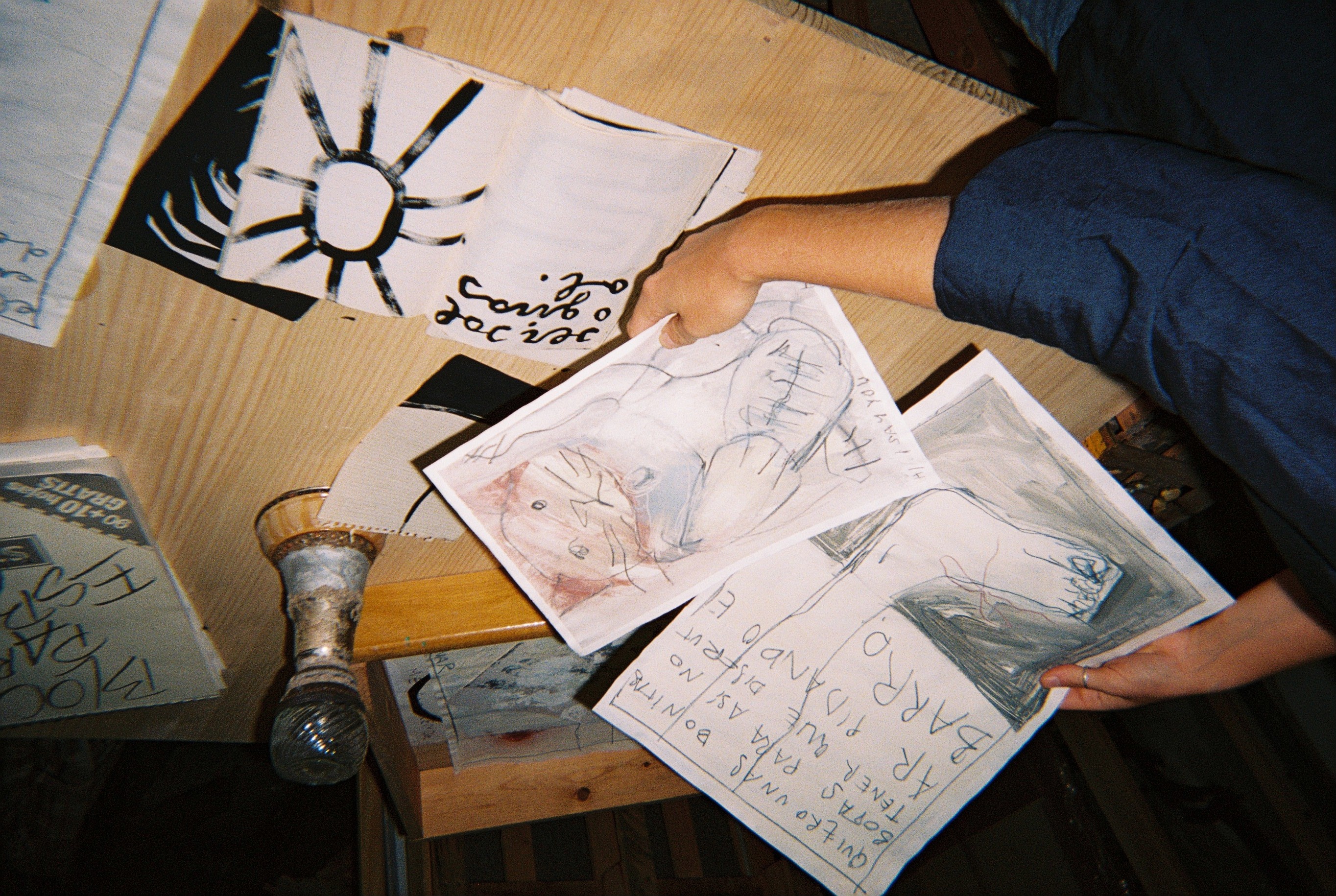
Yes, I write a lot as well. I have a notebook where I write down phrases or questions that come to mind, sometimes months or even years before they become a piece. Very often the starting point is a phrase, a question, a word, and that leads me to work with an object or a sculpture. I think the interest in the absurd, in humor, or in doing things “the way they shouldn’t be done” is also present in my writing. I like playing with language, writing in a slightly twisted way, not fully following the rules.
Text and the visual part are very closely connected. Many times an object suggests a question or a thought, which then becomes text. For example, with the ballerina: the idea came from spontaneously combining two objects—a shell that opens and a music box. Later I related that idea to the concept of movement and the loop. In the end, if you truly connect with the work, the mind and the eye end up moving together. Other times it happens the other way around: a phrase or an idea that’s been thought through and written down later transforms into a visual work.
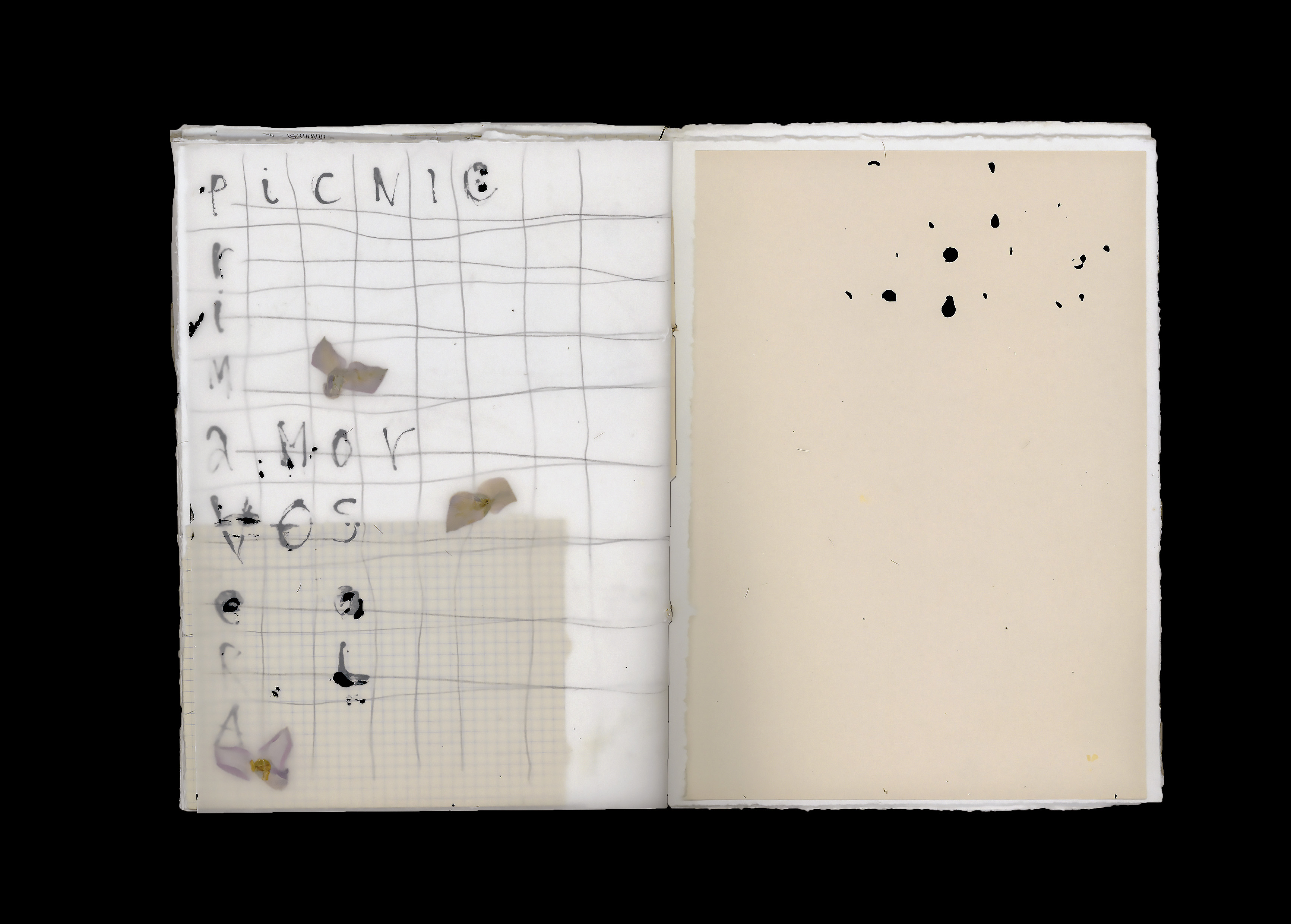
In several texts you’ve mentioned your fascination with Eastern culture, particularly its appreciation of indirect light and irregular finishes. What inspires you about that reference?
I don’t have a very elaborate discourse on this specific topic, but I am interested in that non-Western sensitivity toward imperfection, toward aging, toward the irregular. In the West there’s a strong pursuit of the perfect, shiny finish, of polished whiteness. I, on the other hand, tend to be drawn to the opposite: soft edges, wear and tear, things that show the passage of time. I think it partly comes from a rejection of that artificial perfection. It also relates to what we were saying earlier about colors, objects, and finishes. I’ve always been drawn to found objects for that reason, because they show a trace, a story, a mark. I like preserving that beauty, not erasing it.
In that sense, cracks can also be associated with vulnerability, with the idea of a wound or imperfection. Is there something of that in the contrast you establish between what is polished and what reveals its wear?
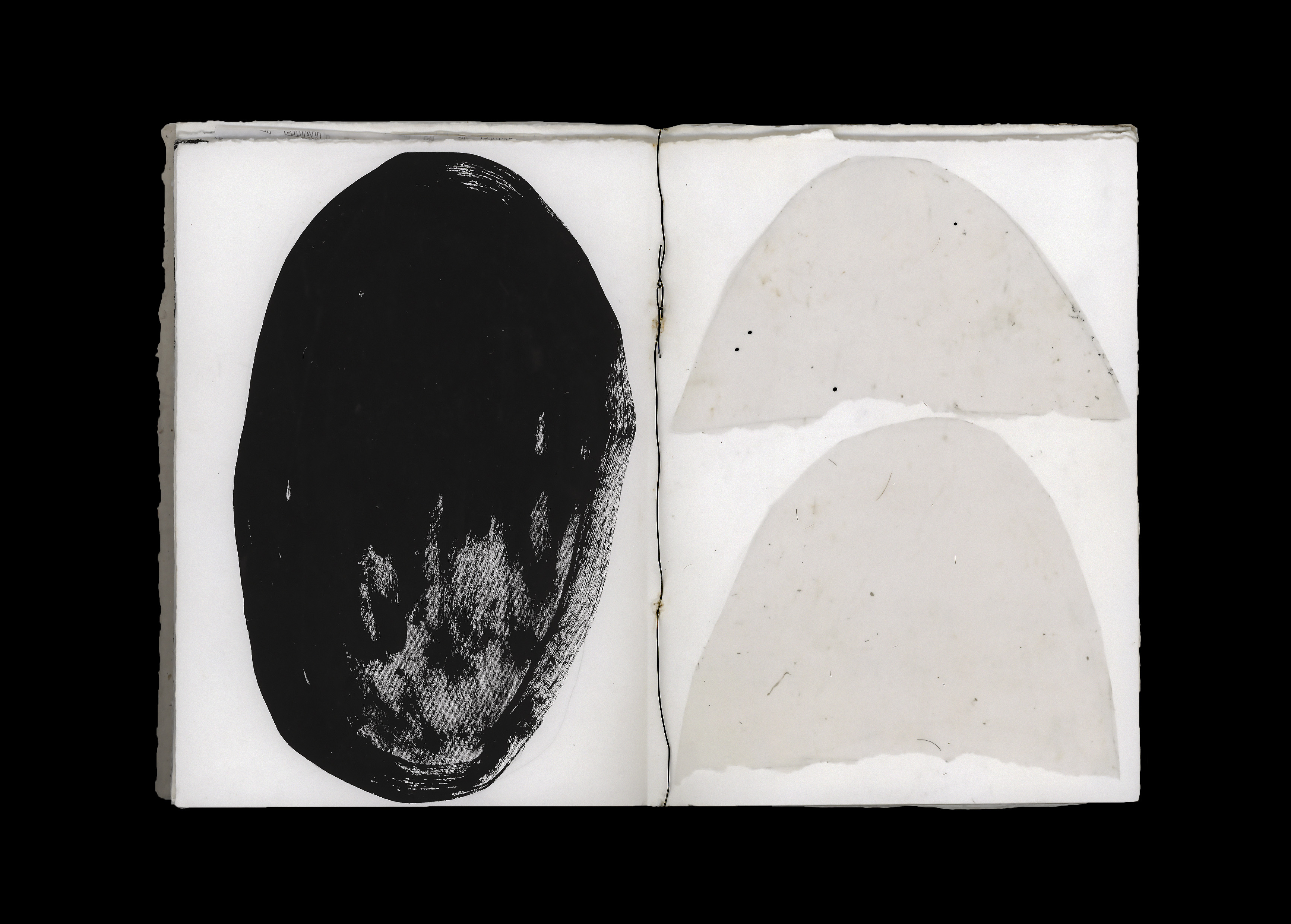
Yes, I think it has to do with finding your own way of seeing beauty, your own codes, without sticking to what’s already established. Right now I’m working with stone, and I’m interested in the idea of whether a stone is more beautiful the more polished it is, or the less. Because the less polished it is, the more it preserves the record of all the life that has passed over it. That’s something you don’t notice until you pick it up from the ground and see all those marks.
A completely polished stone might seem more “beautiful,” but it stops being a living stone, with all the good and bad that actually make it beautiful. In general, this interest in what is discarded, in what’s considered worthless, is still very present.
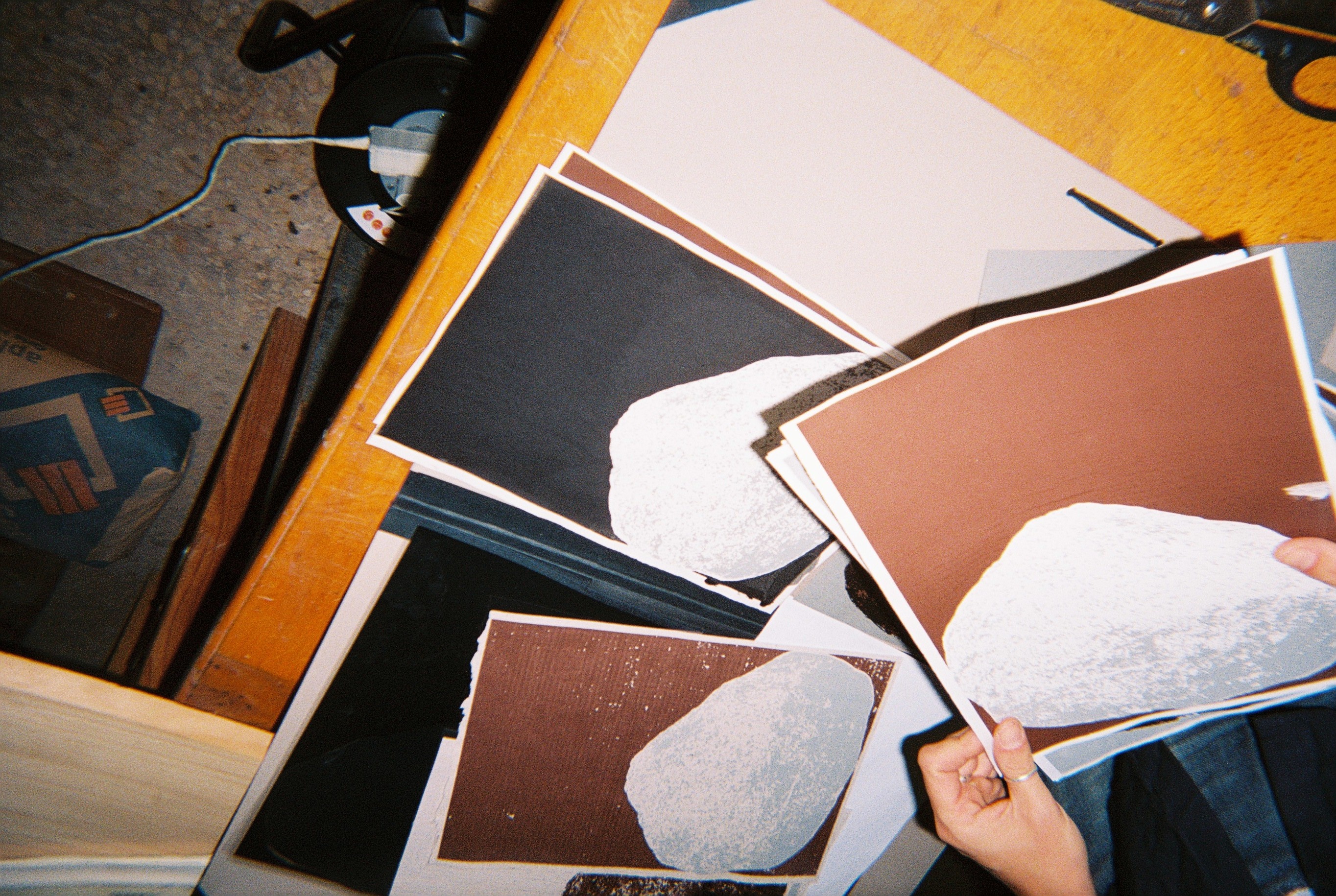
In trying to find the object that best embodies the encounter between beauty and what has been discarded, I think stone represents that search very well. I’m also taking the opportunity to experiment with new techniques in more specific, technical workshops that I hadn’t had access to in recent years, and from that came a series of “stone washbasins” and absurd ways of washing a stone, where humor returns, but with a lot of poetry behind it

The kind of art you make escapes commercial circuits quite a bit—it’s not very sellable. Does that generate any kind of conflict for you?
It has at times, and at other times it hasn’t. It’s a bit of a back and forth. Sometimes I think, “Okay, honestly, this is what comes out of me,” and then, being realistic, you also realize how the art world generally functions, and that can be discouraging, of course. Honesty and realism—there are two more terms that somehow clash and could be added to the list (laughs).
There have been moments when I’ve tried to bring some works into a more formal, more inorganic territory—something that would last longer—but many times it hasn’t worked. Other times it has, and other times I simply didn’t care. Honestly, I’m still in the process of understanding how to position myself in relation to that. I think it has to do with what you were saying: I look for beauty in places that aren’t socially validated, and that also translates into the commercial sphere. These are pieces that, by their very nature—the ephemeral, the perishable, the strange—don’t easily fit into the market. A hair ball, for example, is hard to imagine in someone’s living room, but that’s precisely where part of its meaning lies.
So, would you say that the kind of work you make is also born from a critical reaction against the art market, or does it arise more naturally?
I wouldn’t say it’s a direct reaction, but it is connected to everything else: to the idea of a more approachable, less elitist kind of art. I’m interested in the value not lying in whether something can be acquired, but in what it provokes. In the end, many of my pieces come from ideas or intuitions, and they simply are what they are. I love that photo of the ball of hair for that reason: it is what it is. Sometimes I have to remind myself of that in life too, to tell myself, “it is what it is—things are the way they are, and that’s okay.” It’s almost become a mantra.
Finally: a dream or project you’d like to realize in the near future?
Right now I’m quite focused on working with stone. It’s something recent, but I’m planning it for the whole year. I’m interested in the challenge of developing a more elaborate project, centered on the symbolism of a single element, while still speaking about everything I’ve been exploring: time, fragility, humor, the beauty of imperfection. I’d also like to continue with the hair ball project and take it to more places. It’s something that remains open, even if there’s nothing concrete at the moment. It’s always there, waiting for its moment to emerge again.
Images 2, 4, 23, 24 by Javier Lamela. Image 22 by Guillermo Beses.
Interview by Victoria Álvarez Conde. 17.12.25