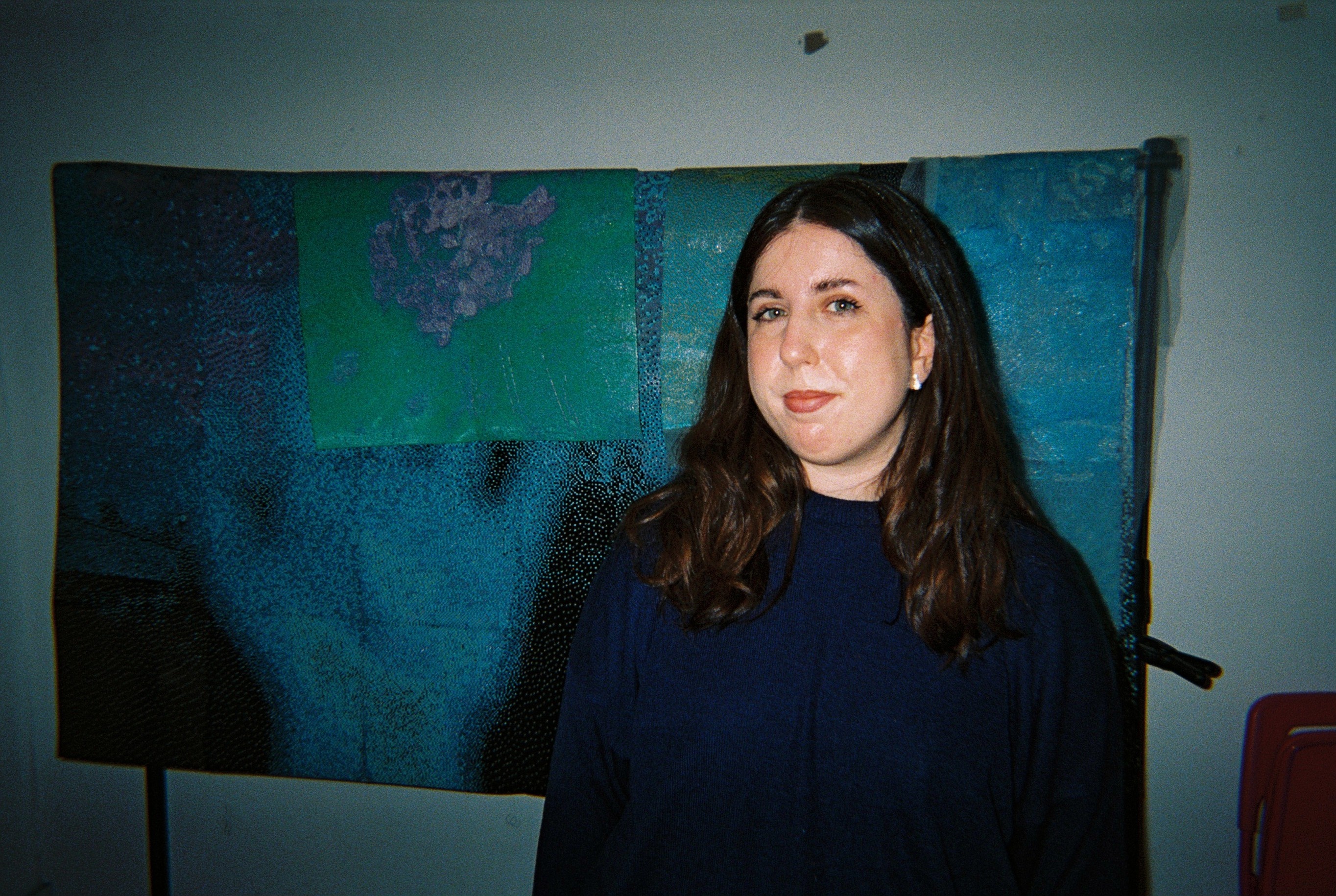
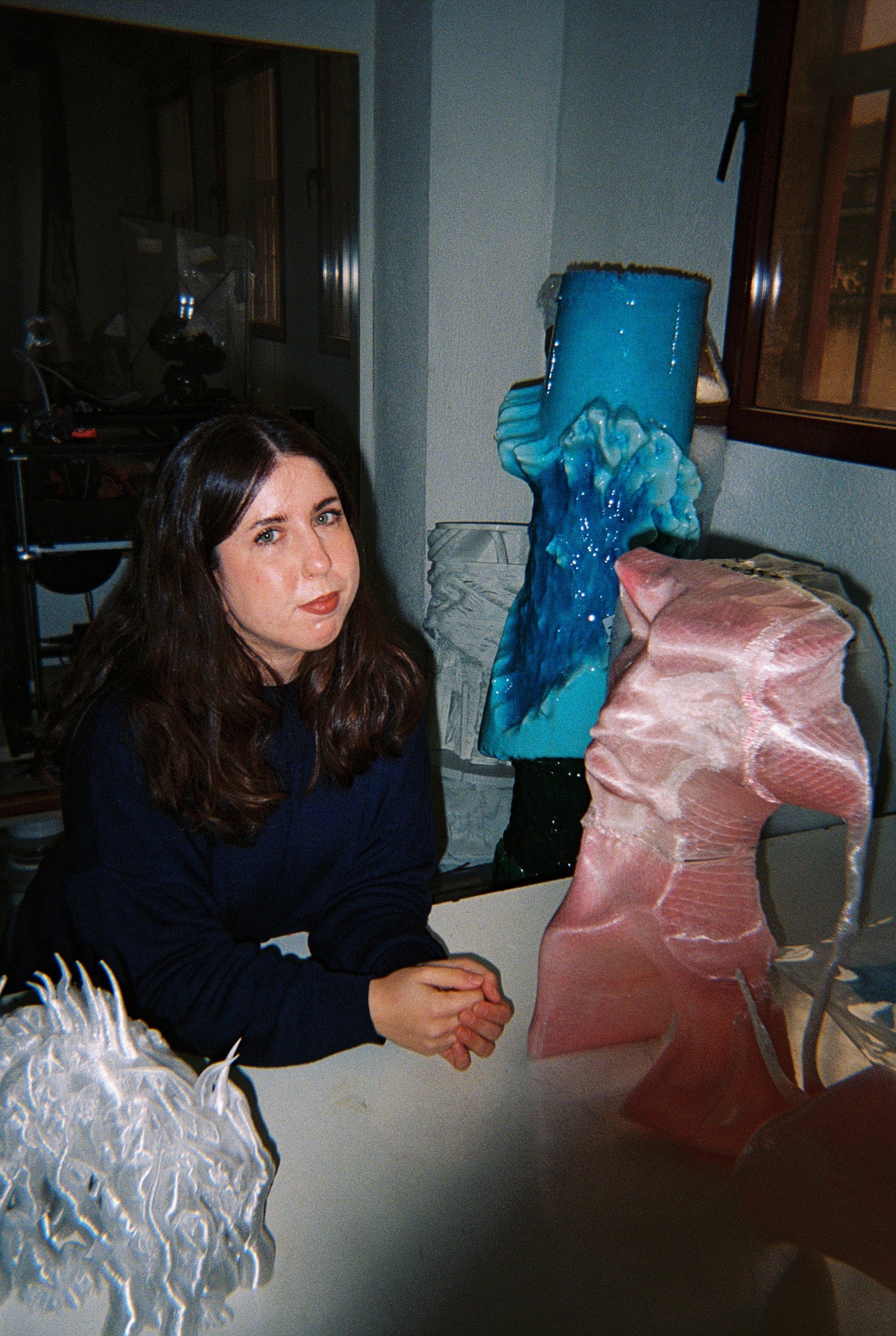
Interview to Lola Zoido (b.1994), lives and works in Madrid, Spain.
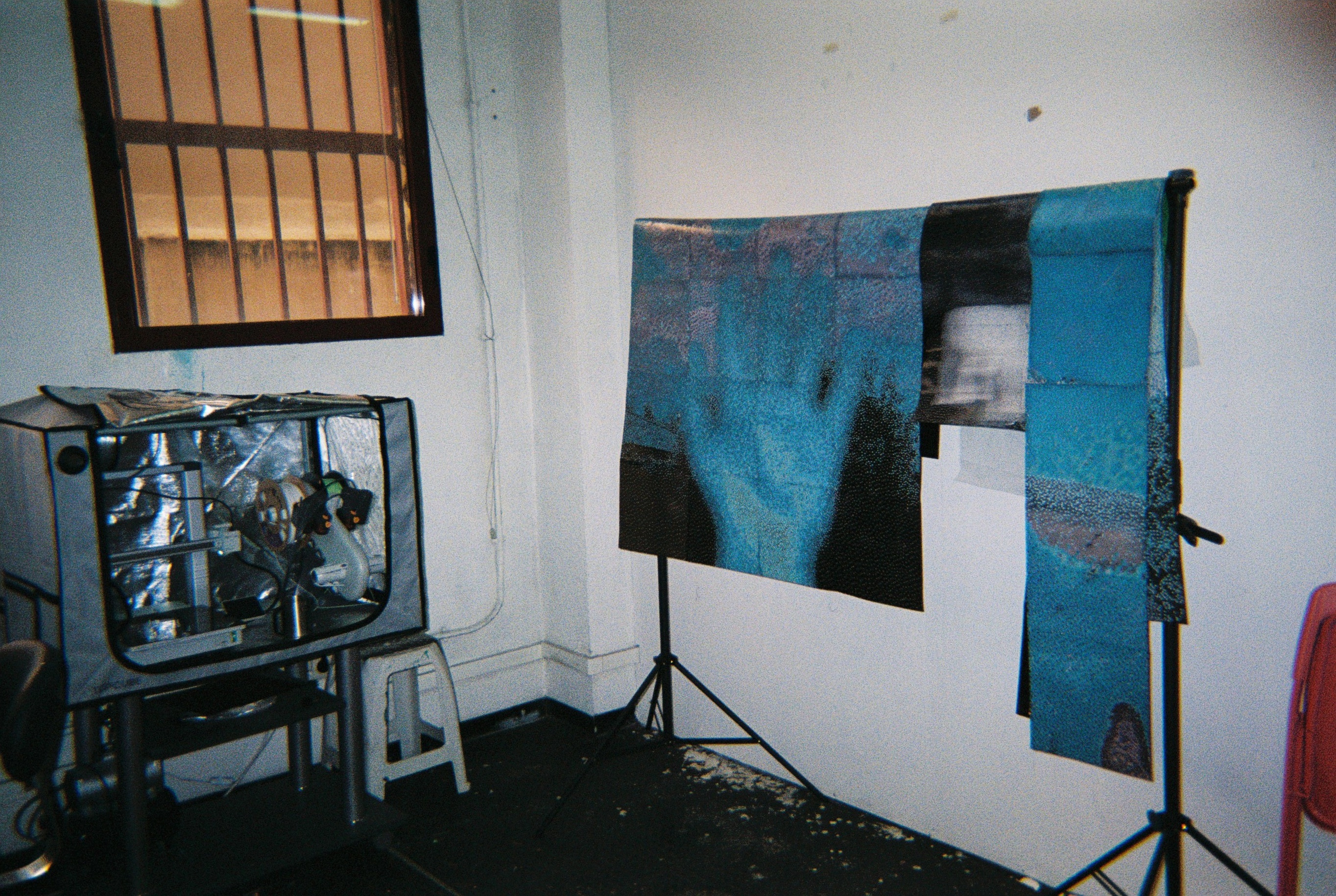
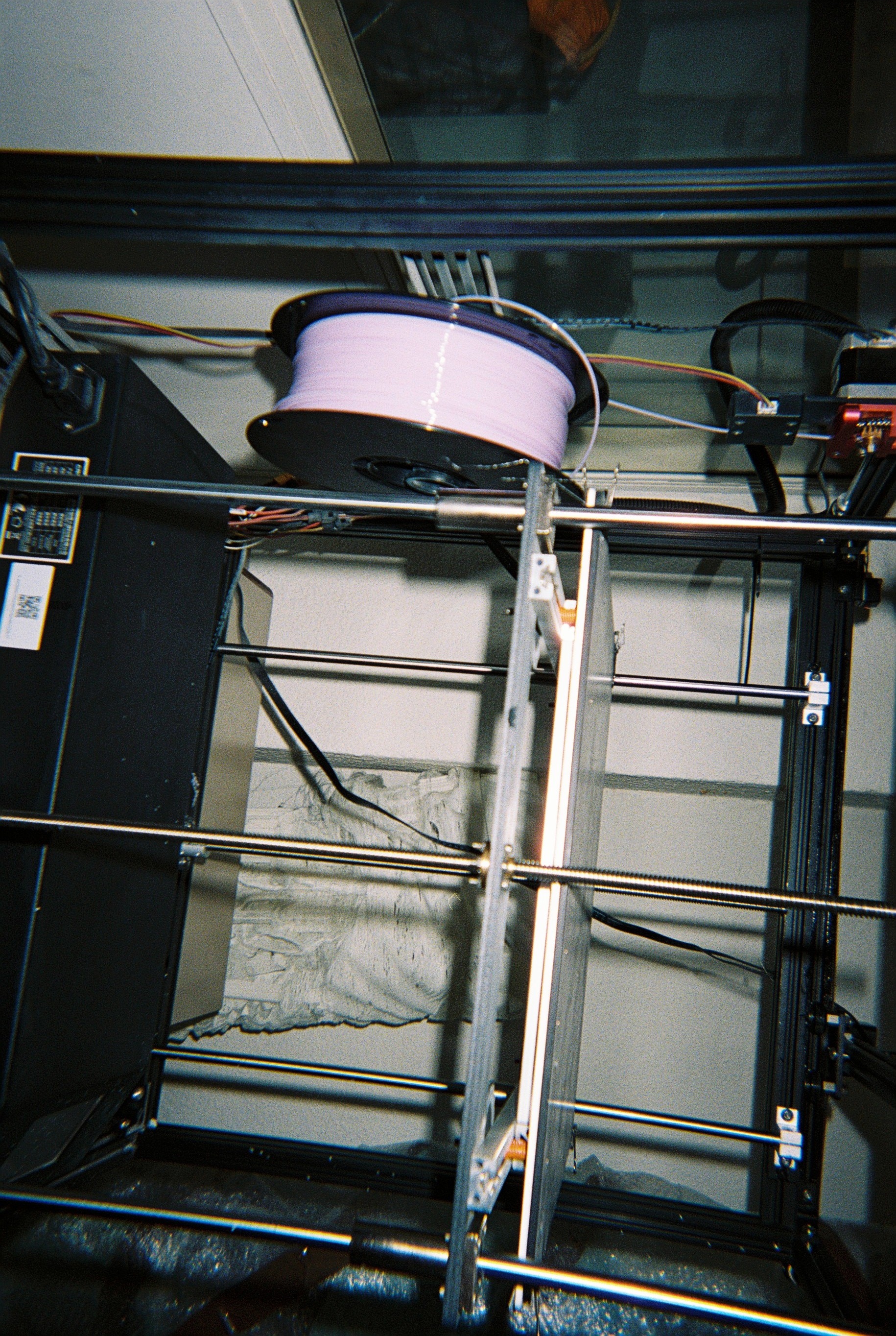
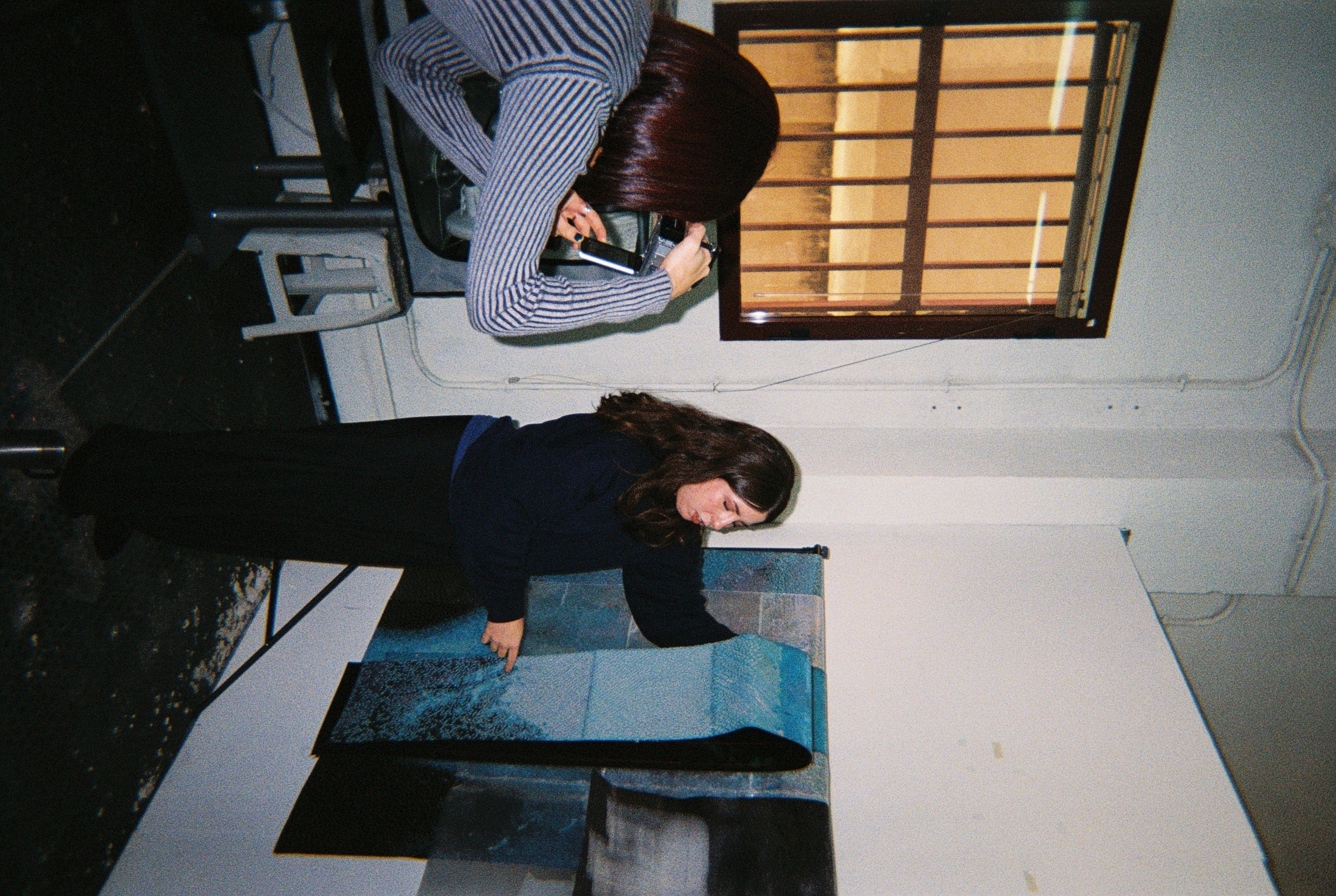
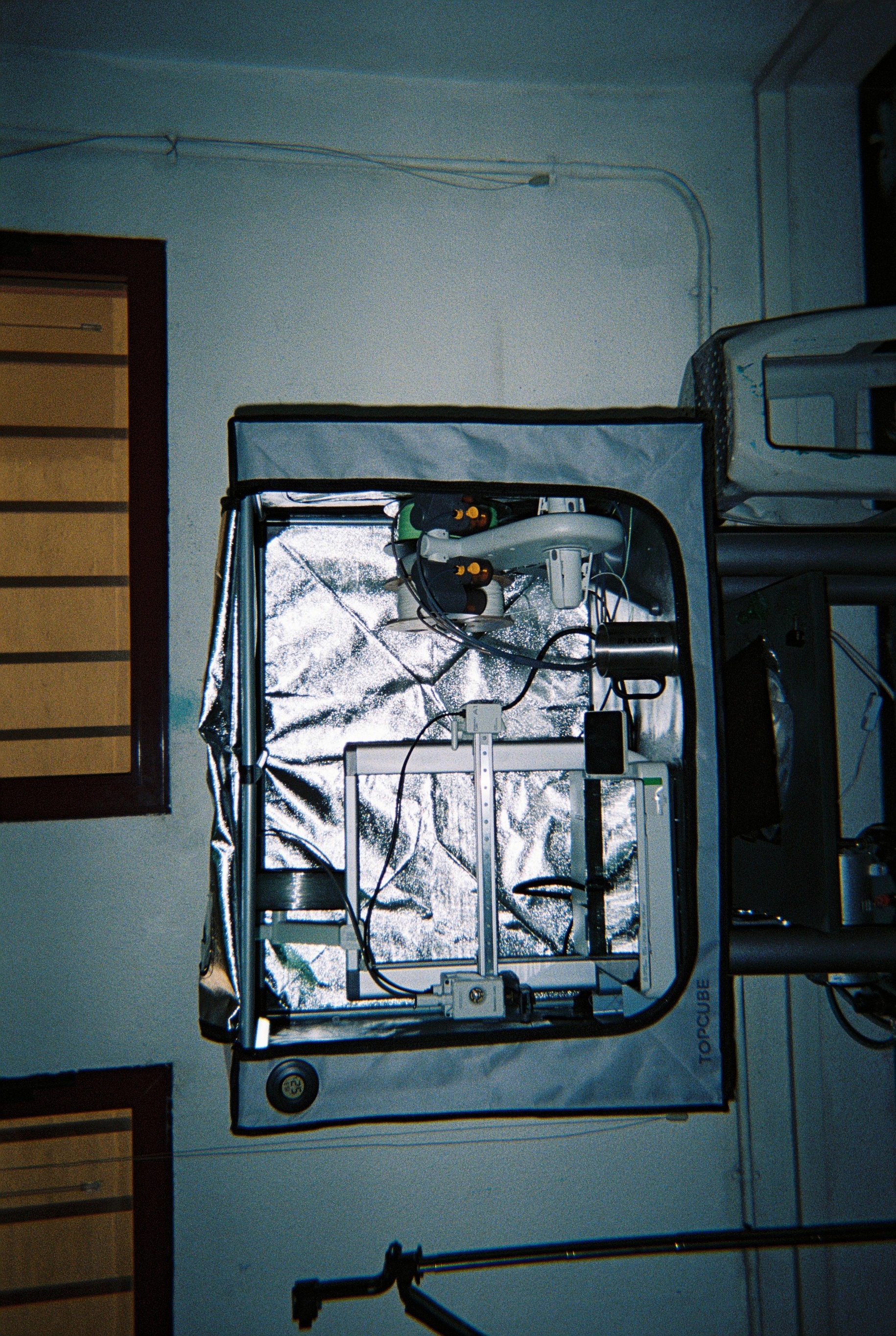
Lola Zoido realized she wanted to be an artist when, at fifteen, she visited Francis Bacon’s studio in Dublin and recognized herself in that gigantic black chaos. A few decades later, entering her own studio in Carabanchel feels just as inspiring, though for very different reasons. We talk to the sound of a 3D printer (which Lola says she has a truly “personal” relationship with) while the artist tells us about her attraction to glitch aesthetics, to Google Maps landscapes, to the layers of affection and identity that pile up on the other side of our screens, and, basically, to anything that helps humanize the digital.
Here’s to our chat:
Lola Zoido realized she wanted to be an artist when, at fifteen, she visited Francis Bacon’s studio in Dublin and recognized herself in that gigantic black chaos. A few decades later, entering her own studio in Carabanchel feels just as inspiring, though for very different reasons. We talk to the sound of a 3D printer (which Lola says she has a truly “personal” relationship with) while the artist tells us about her attraction to glitch aesthetics, to Google Maps landscapes, to the layers of affection and identity that pile up on the other side of our screens, and, basically, to anything that helps humanize the digital.
Here’s to our chat:
Hi Lola! In other interviews you’ve mentioned that you realized you wanted to be an artist when you visited Francis Bacon’s studio as a teenager, right?
Yes, it’s an anecdote I always tell, although at the time I may not have given it so much importance. In Dublin there’s a contemporary art museum, the Hugh Lane Gallery, where Francis Bacon’s studio was relocated from London. A team of archaeologists moved it, and it was impressive to see that chaos: a tangle of objects, materials, remnants… Against the super orderly museum space, suddenly there appeared this kind of black box from which the work emerges.
I was about fifteen when I saw it, and I had never considered that artworks could come out of places like that. My mother, seeing that chaos, said: “It’s clear you’re going to be an artist.” [Laughs] I was quite messy back then — a bit less now — and the experience really marked me. That’s why I always tell it. It was the first time I understood art through its process, not just through the final result.
Francis Bacon is a fairly “traditional” painter who mostly worked in oil, very different from what you do. I’m curious about how you chose digital tools at a time when those practices weren’t yet so widespread.
I’ve always been a very restless person — as we say in my hometown, always tinkering. I liked drawing and painting, and that also came from home: my mother liked painting and my father used to draw when he was young. I went to municipal painting classes with my mother, but art wasn’t discussed as a profession. In my third or fourth year of secondary school I had an art teacher, Salva, who was key. He told me: “You have to study an Arts Baccalaureate.” I didn’t even really know what that was. I went to Mérida to study it; it took me an hour each way every day, but I did it.
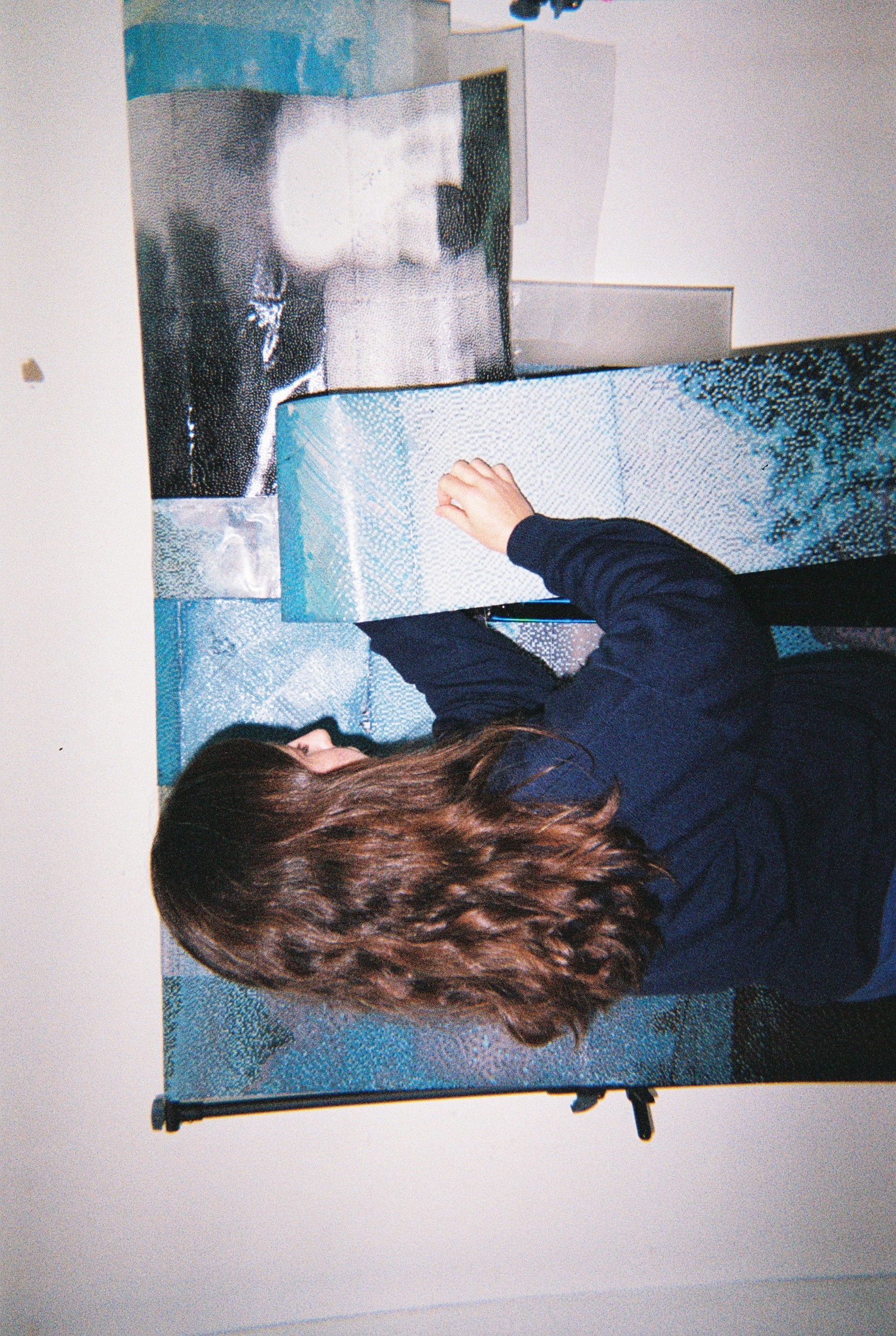
Later I studied Fine Arts in Seville, more because of proximity than the program itself. The faculty there had a very academic approach: painting, drawing, sculpture, classical processes. At the end of the degree I took a landscape course that changed my way of thinking. The professor suggested that landscape could be something internal, something imagined, not just a classical representation. At that moment I became very interested in how Google Maps was beginning to digitize cities in 3D. In those reconstructions there were flaws: pixelated textures, distortions, errors. I saw something very pictorial and sculptural there. I started exploring places virtually, taking screenshots, and working with that “digital material,” translating it into painting. Later, in parallel, we had a 3D course. I didn’t learn much then, but it sparked my curiosity. From that point on, everything digital and 3D I’ve learned on my own.
It strikes me that you chose that path, especially since the art scene in Extremadura can’t be easy for a young digital artist, isn’t it?
No, it’s complicated. There isn’t a strong network of institutions, galleries, or funding like there is in other regions — for example the Basque Country. In Extremadura that’s very limited, so, as in other fields, people leave to seek opportunities elsewhere. It’s historically been that way there.
Since then you’ve been in Sevilla and now you live in Madrid. Would you say these changes have affected the way you work?
More than the way I work, I’d say the opportunities and the people you meet. In Madrid there are more institutions, galleries, and openness. In Seville I did very interesting projects and wouldn’t change it for anything, but I felt there were certain limits, that some artistic languages worked better than others. I came to Madrid to do a master’s at the Universidad Complutense de Madrid, partly as an excuse to settle here. I don’t think it’s essential to come to Madrid to build a career, but it’s true you see more things and meet more contexts.
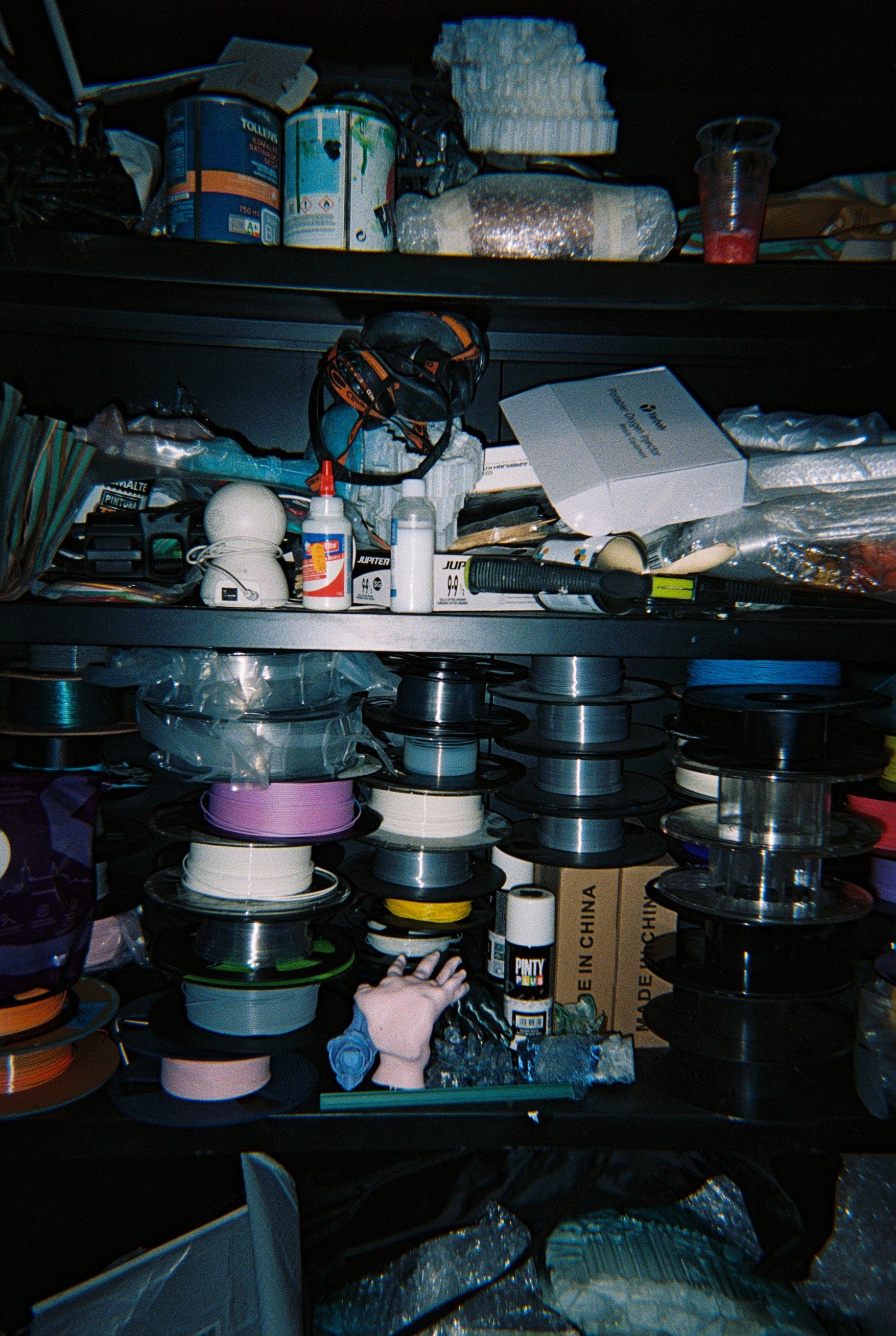
My way of working has also changed depending on the space I had available. At first I worked from my bedroom, so I made purely digital work. Then I moved to a shared studio, bought my first printer, started producing other kinds of pieces, and later had my own space. That’s what has conditioned my practice the most.
In your work there seems to be an interest in giving physical, tangible space to the digital, something that today’s society often perceives as ethereal or intangible.
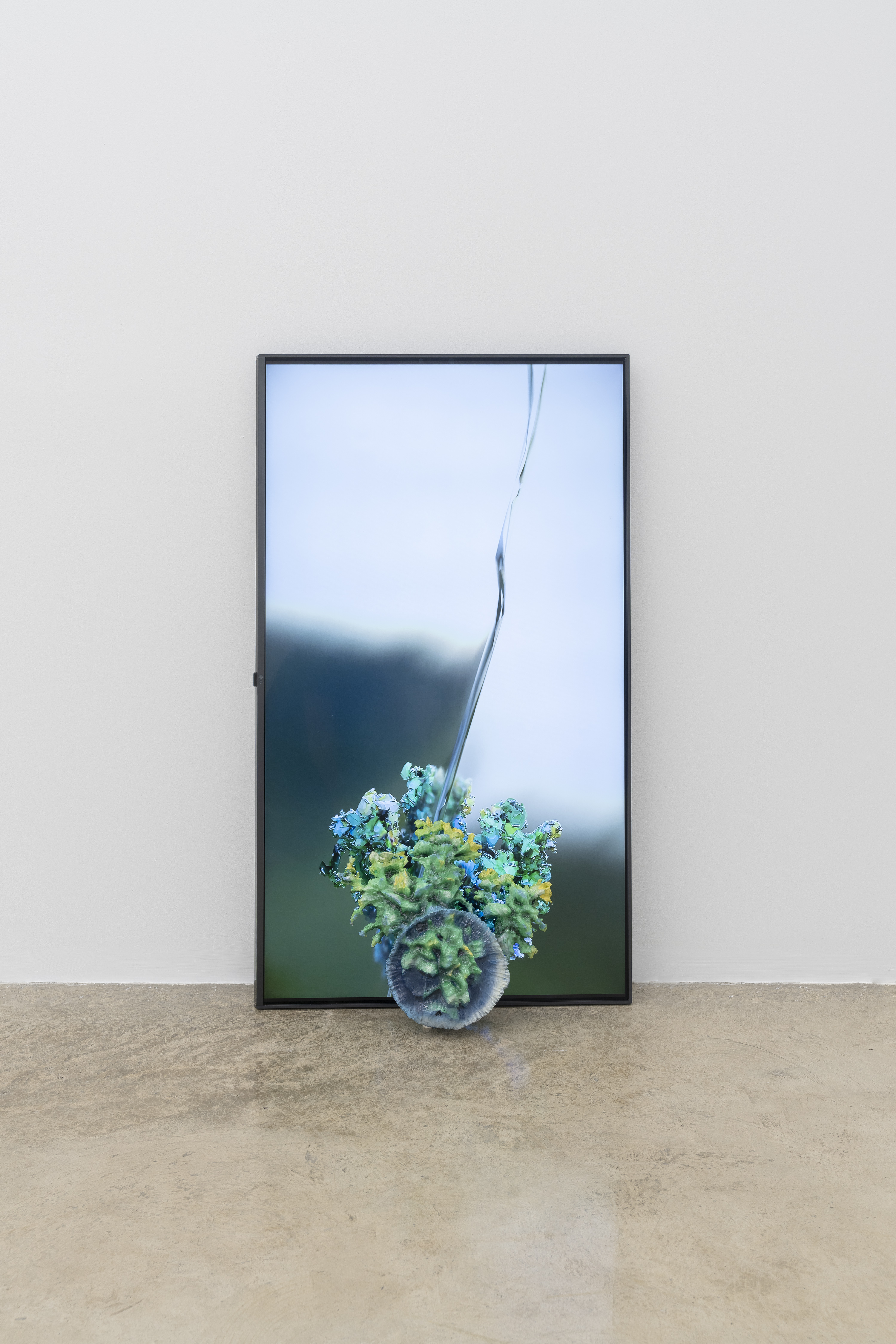
Yes, I think that’s the thread running through all my work. I’m interested in giving body and matter — physical, tangible matter — to what exists on the other side of the screen, which also has its own materiality. I try to give weight, space, time, and rhythm to what seems intangible and observe what happens in the transformation: what the image yields, how objects respond when moving from one side of the screen to the other.
That clean, shiny digital material is supported by cables, servers, industrial warehouses, and resources like water and energy. It occupies space, land, time. That contrast between its immaterial appearance and its physical base interests me a lot, because the digital is directly tied to the earthly.
Digital art is often perceived as cold or impersonal, but in your case it seems to convey the opposite — it feels very emotional. Is that something you consciously pursue?
Yes, it’s true that digital is often associated with something sterile, but I think it’s the opposite. Through the digital we communicate, store memories, build identity…
I talk to my parents every day on FaceTime; that’s deeply emotional. We generate memories by taking photos, sharing them, revisiting them. The digital runs through all aspects of our lives, both positive and negative. That’s why I try for my work to have an affective dimension.
I’m also very interested in error, in failure, when something doesn’t go as expected, because that’s when the human behind this supposed technological perfection becomes visible. Humanizing the digital ultimately means acknowledging that we created it.
This interest in error and glitch — does it also relate to the idea of “humanizing” the digital?
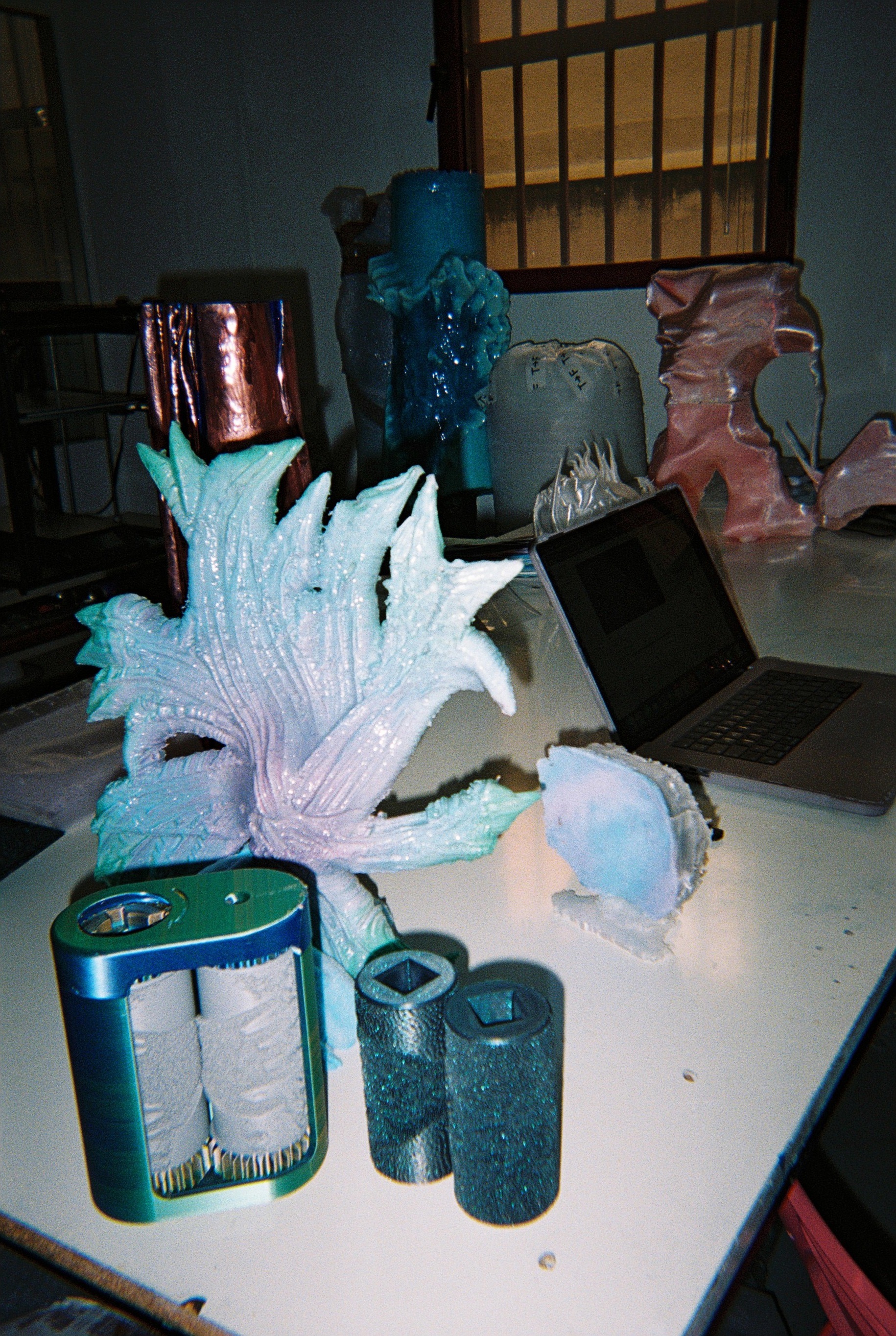
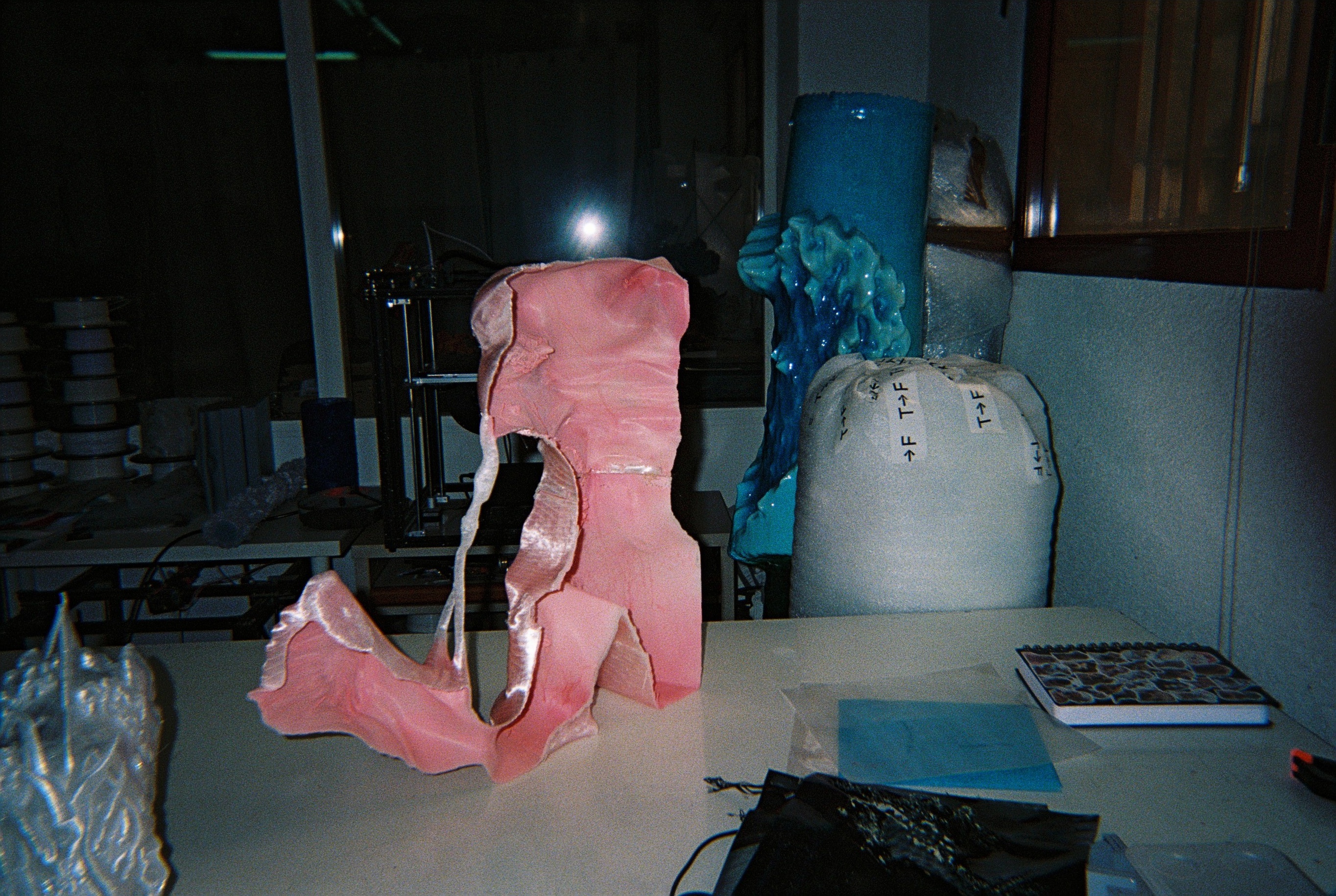
Yes, although I don’t like to force errors; I prefer them to appear genuinely. For example, when I print a piece and the material jams, and tears or threads start appearing on the surface. I’m interested in observing that because it reveals the human, imperfect side behind technologies that seem magical and flawless. The same happens in processes of image generation or 3D animation: I build elements and observe what happens. When something interests me, I keep it, because it speaks about the process behind the work.
During my Fine Arts training in Seville, a lot of importance was given to process, and I think I’ve carried that into the digital. I understand my work almost as a form of craftsmanship, because it involves many steps and decisions. In my case I like to be present in every stage, including sculpture. Some artists outsource printing or production, but I’m interested in seeing what happens.
 In the 1990s and early 2000s there was a very utopian view of digital technology. Today that’s much less clear. If you had to place yourself on a scale between utopia and dystopia, where would you stand?
I think somewhere in the middle. I don’t want to position myself from a place of absolute criticism of the digital. It’s not about going to live in the countryside without screens. The digital has many positive things. I always give the example that I’m diabetic and wear a glucose sensor attached to my body connected to my phone. It warns me if my sugar levels are going to rise or fall, and it’s a wonderful tool for managing diabetes. In that sense, it’s incredible.
Nothing is entirely good or entirely bad. There are nuances. It depends on how it’s used and for what purpose, and that also depends on us. I don’t want to take a critical stance from ego, but rather question what relationship I myself have with the digital. So, utopia or dystopia? I’d say somewhere in between. The digital isn’t a magical entity that becomes good or bad on its own: it’s us, what we consume, how we consume it, and what we use it for.
Digital art sometimes seems to be placed in a kind of ghetto, separated from contemporary art. Do you see it this way?
I felt that for many years, especially when I was in Seville. I remember that in my master’s thesis there were professors who understood and valued it, but it was still perceived as something separate. I think that after COVID several things happened. On one hand, the rise of NFTs.
Although it had many negative aspects and eventually degenerated, it also helped a wider audience understand that the digital could be an artwork — for better and for worse, including speculation. Also, the lockdown pushed institutions to engage more with digital formats. From my experience, I felt that from that moment on the idea that the digital could belong to contemporary art began to grow. Although it still often happens that in a group exhibition there’s “a digital piece” included almost to tick a box.
It seems digital only talks about one thing, when in reality it’s a format, like painting, sculpture, video, or photography. Each artist speaks about different issues, regardless of the medium. Still, I think it’s gradually becoming more integrated into contemporary art, although there’s still a long way to go.
You’ve said in many interviews that landscape representations in any era speak about the sociopolitical issues of their time. Specifically, with the kind of landscapes you build, what kind of reality do you want to convey?
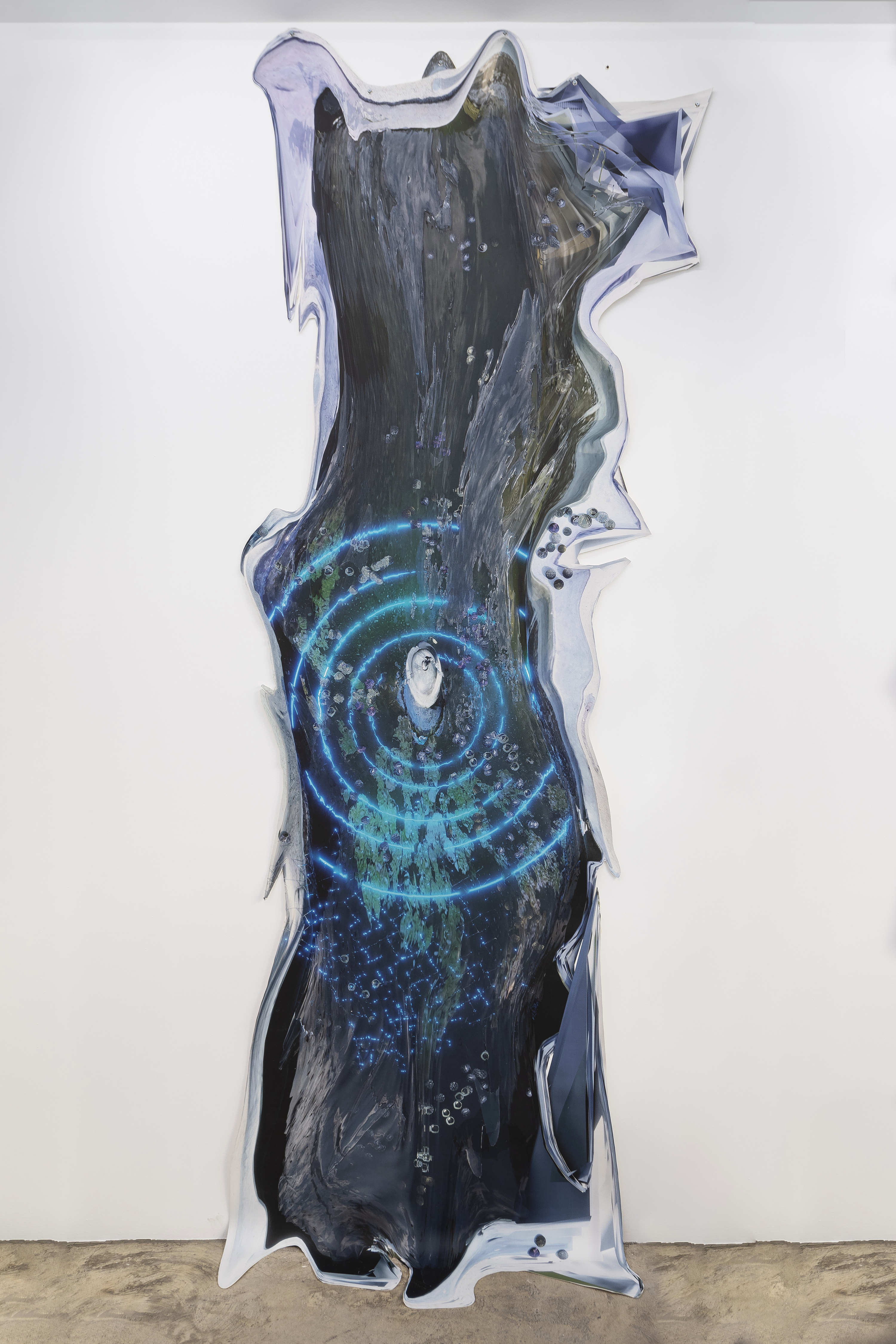
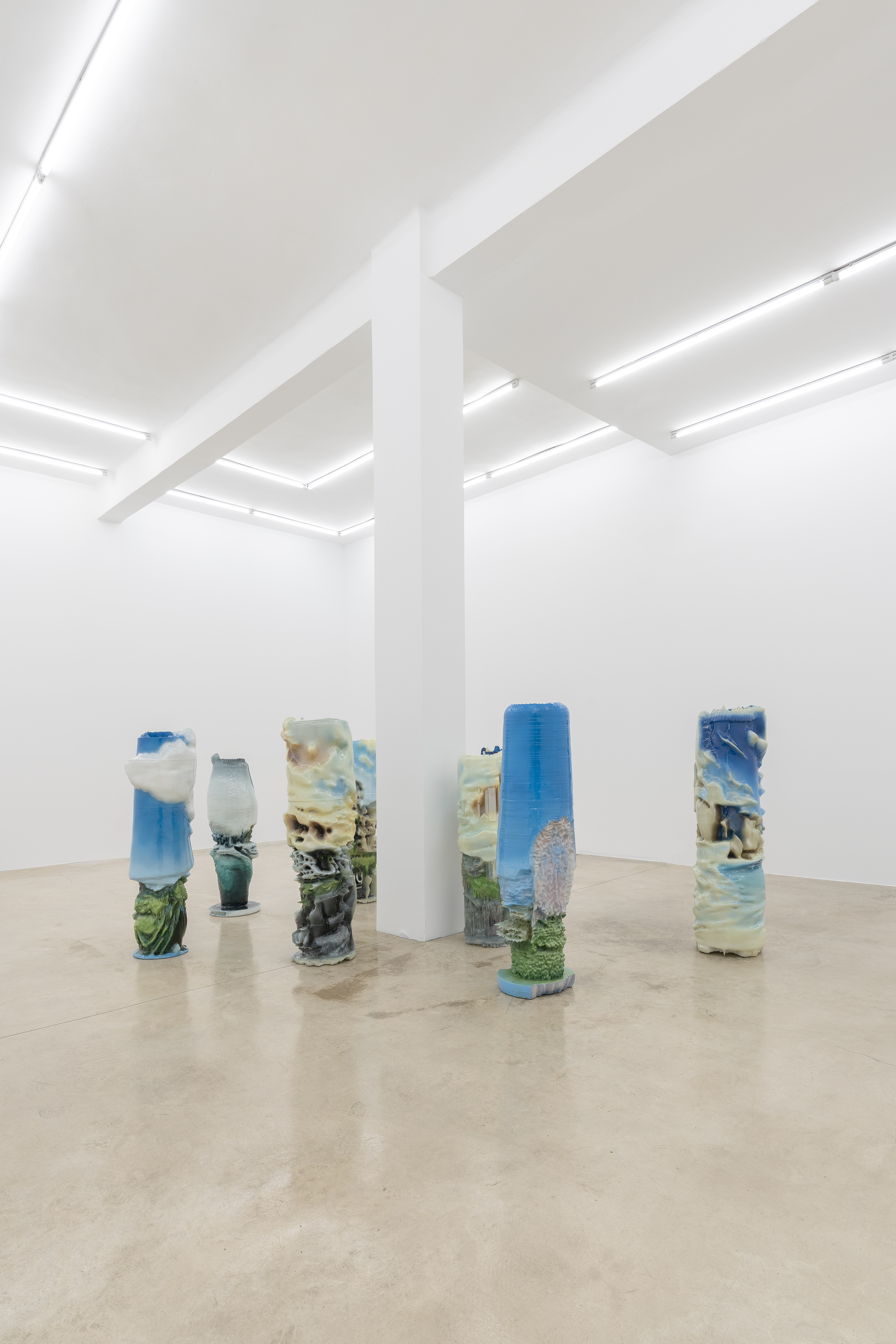
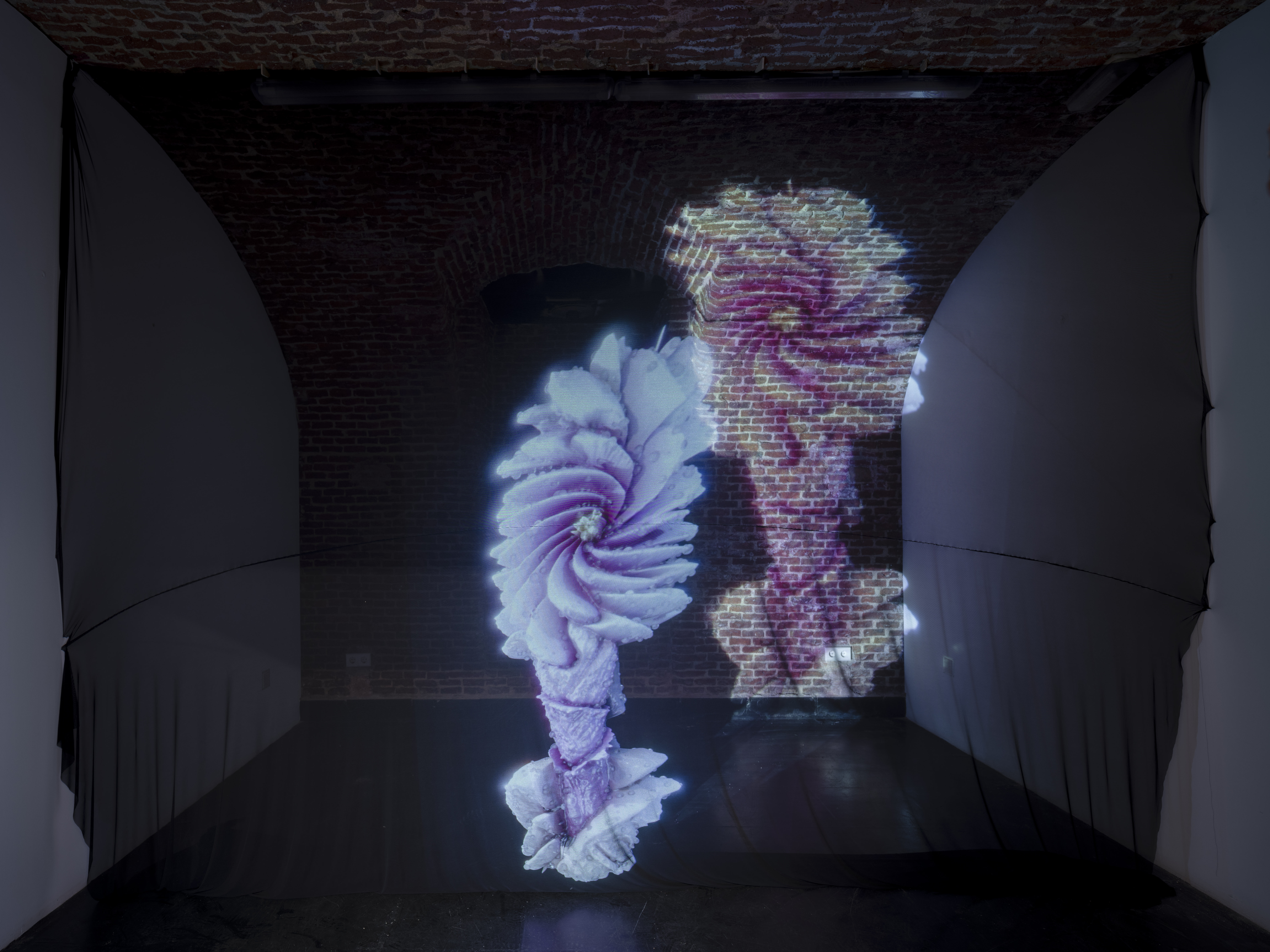
I’ve used landscape to talk about many different aspects. There’s one project — my first solo exhibition — consisting of a series of columns with landscapes around them. In that case, I used landscape to address a very specific issue in Extremadura: depopulation, something happening in many parts of Spain, often referred to as “empty Spain.”
In that project I also spoke about the idea of an uncertain future, given the conditions and context we currently live in. About the impossibility of imagining or visualizing the future, caused by the blockage, fear, and anxiety of the present. All the images of those landscapes were generated with artificial intelligence. I entered descriptions of a future landscape that perhaps only AI might see, because maybe I wouldn’t be there or wouldn’t live to know it. It had to do with how we construct the future.
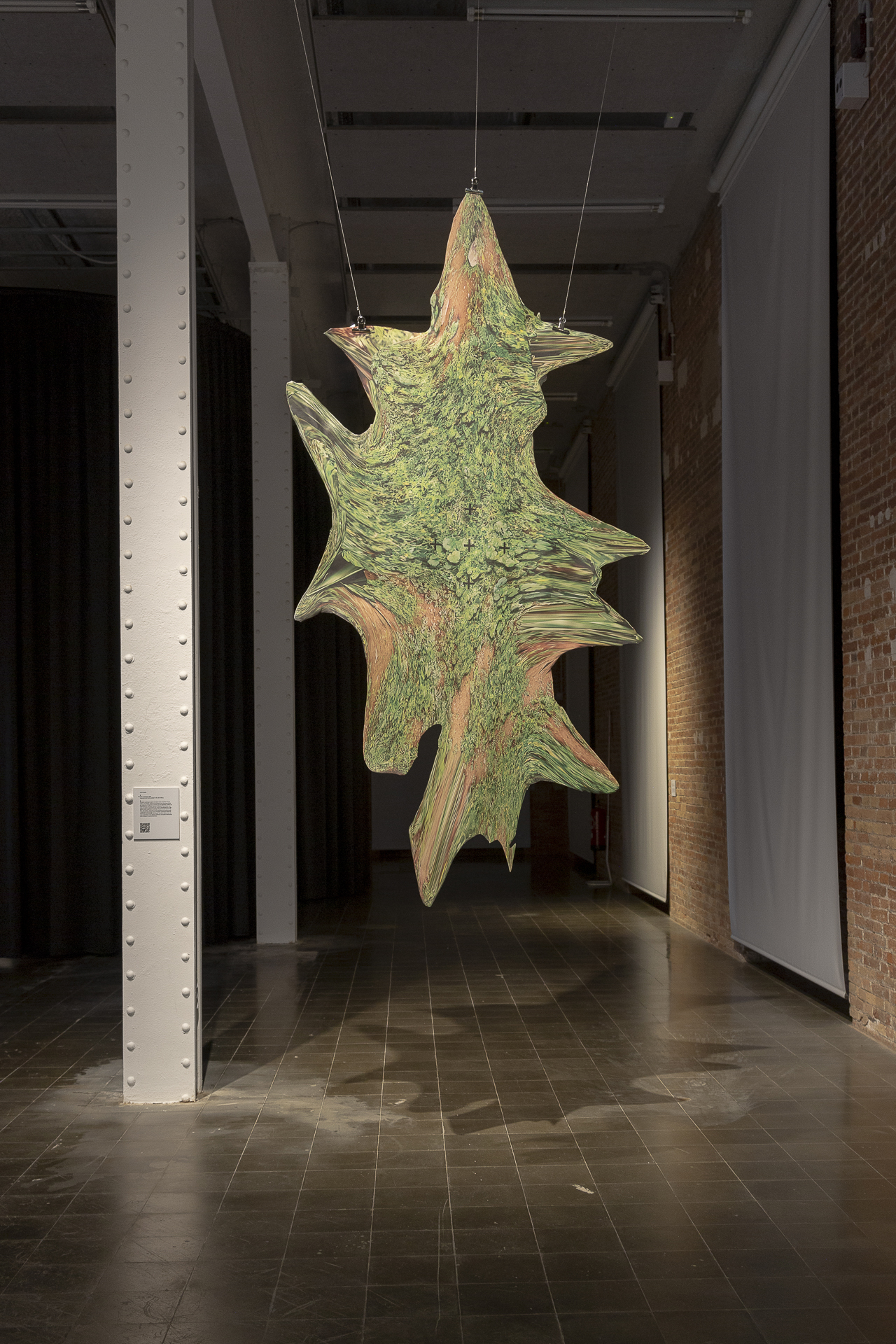
In other projects I’ve used landscape to talk about it as a source of resources linked to the digital. The whole issue of extractivism begins with something physical: territory, landscape. In Extremadura in particular, I understand that some processes occur because the world evolves: there’s a lot of empty land and, for example, solar panels are necessary. But since it’s more sparsely populated than other regions of Spain, large solar installations are concentrated there. In Cáceres, for instance, there’s currently the issue of the lithium mine. Lithium is a mineral we need for the batteries in our mobile devices. I’m interested in talking about landscape as something idyllic, beautiful, aesthetic, but actually a source of resources deeply tied to everything digital.
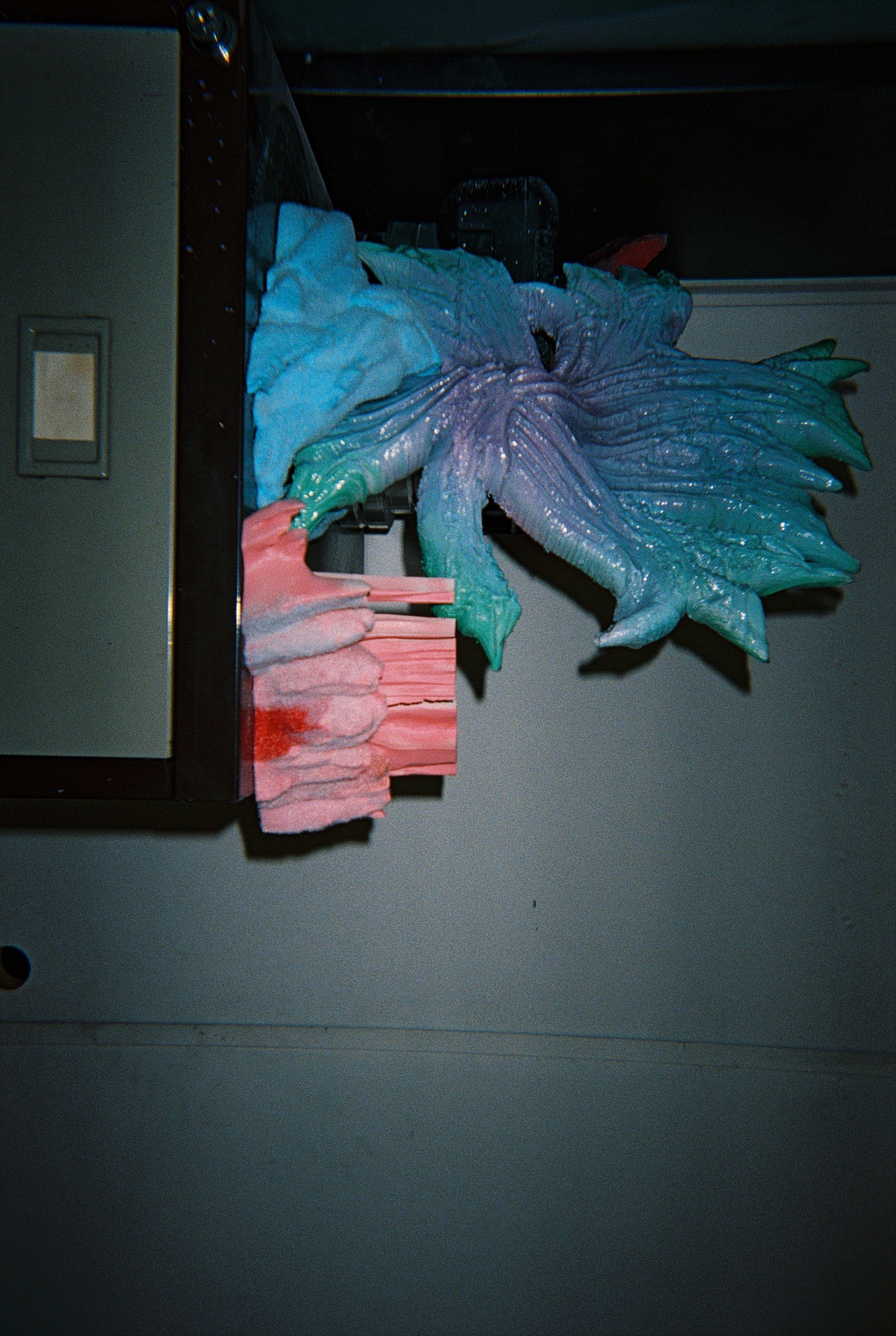
I’ve also seen a kind of creature you created that seems to reference medieval bestiaries. How did that piece come about?
That project emerged from an artist residency I was invited to by the IVAM. It was called Confidències and was part of a series of residencies in villages along Route 99 in the Valencian Community, which groups together towns with fewer than 100 inhabitants. Although I’m from Extremadura, I felt very connected to that rural, small-town context. Each artist completed a residency in two different villages and had to produce a piece linked to their stay, which would then remain in the territory. Afterwards, a group exhibition was organized at the IVAM, with one section more documentary and archival about the experience, and another featuring new work reflecting the research carried out.
In that context I was very interested in how the digital — which for a time was associated with truthfulness and testimony, the idea that “if it’s recorded, that’s what happened” — is now moving further and further away from that notion of truth with artificial intelligence. I’m starting to associate the digital more with legend, invention, and the fantastic. I think, for example, about all those characters created on TikTok and the narratives that arise between them, often generated by AI. Being in a village also connected me with oral tradition: the idea that an event is passed down from generation to generation, transformed, altered, and eventually becomes a legend, like the sighting of a mythical being or a magical occurrence — an imaginary world very present in many rural environments.
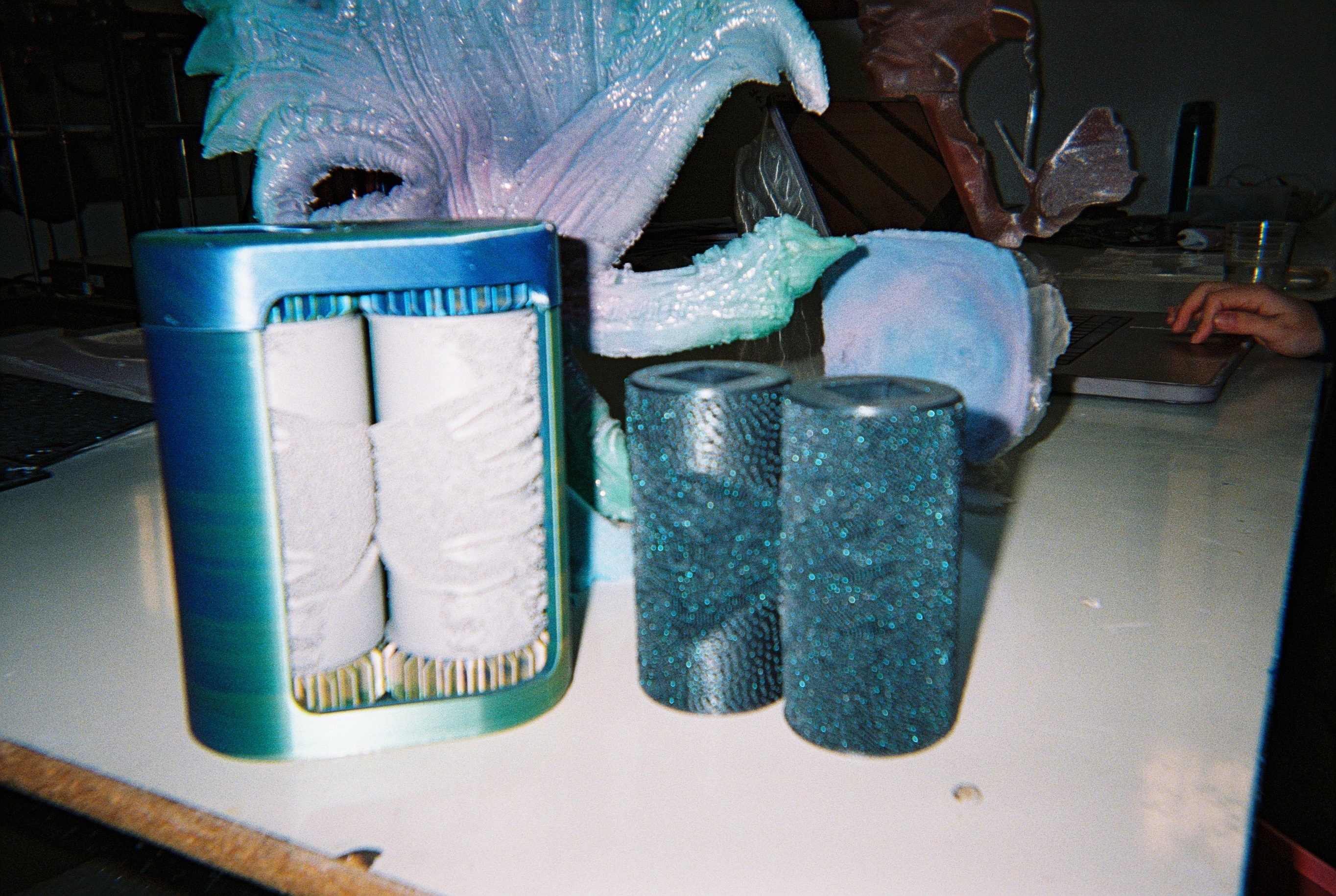
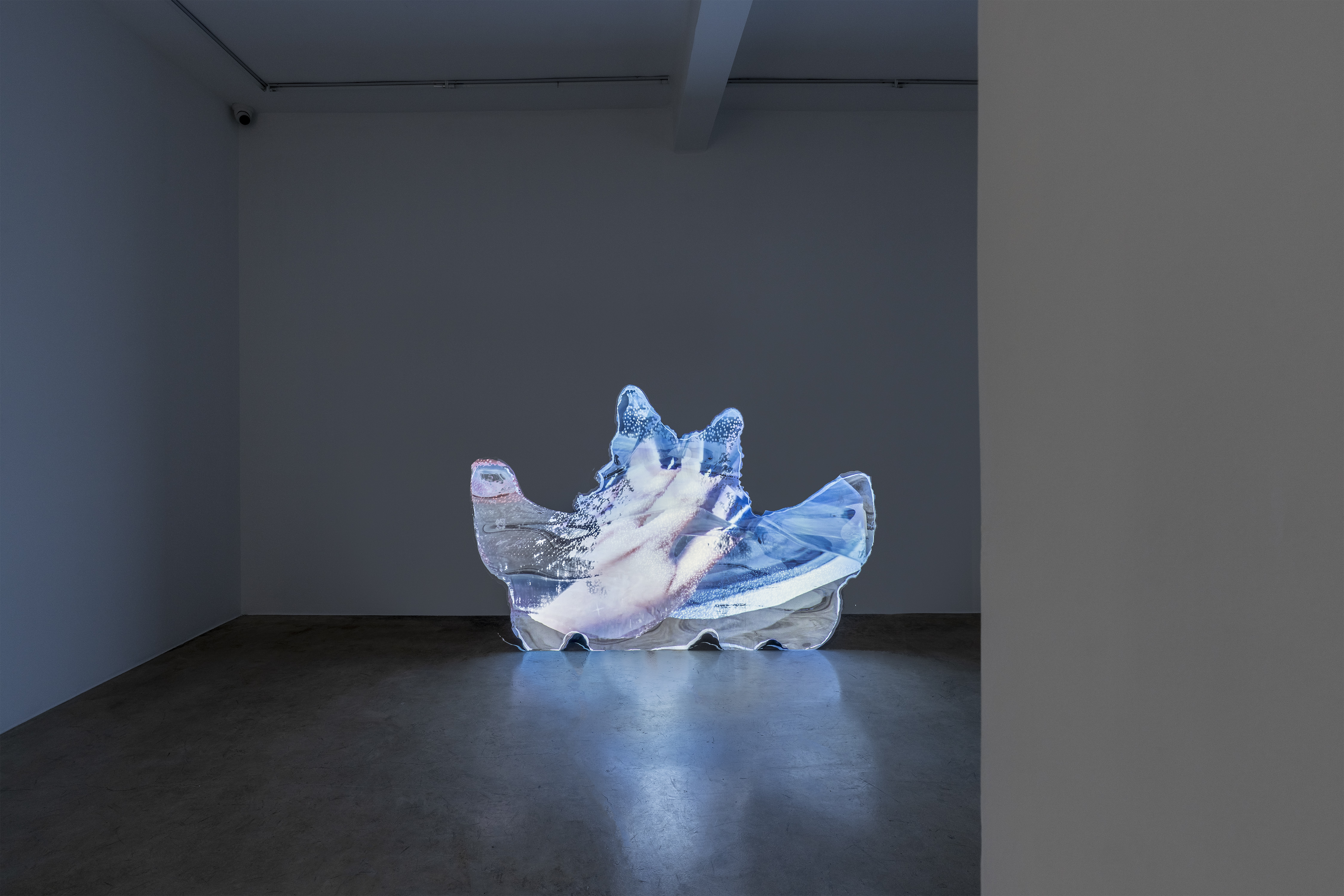
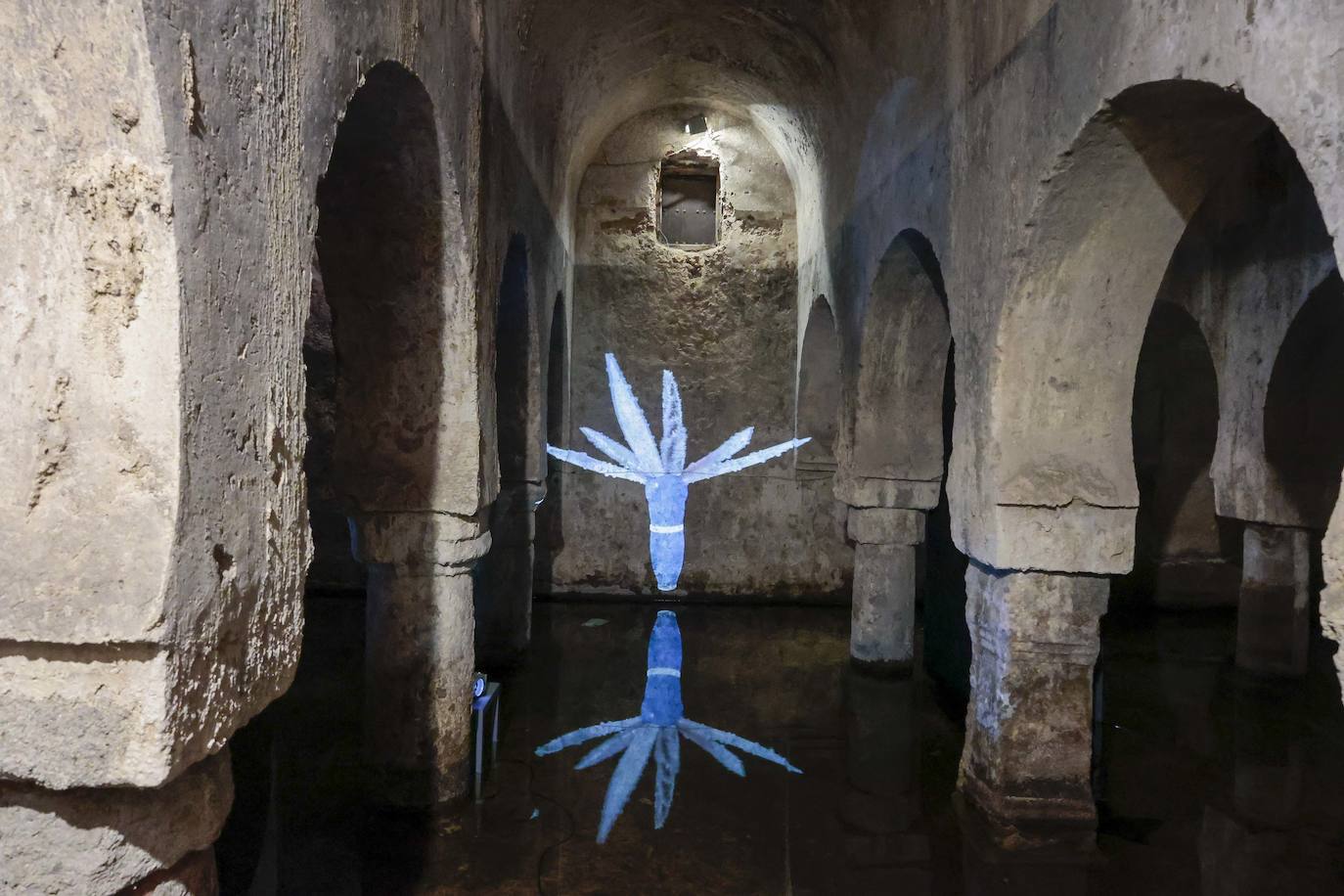
The creature emerged as an exercise in speculative design: imagining a magical being inhabiting that land, specifically in one of the villages where I stayed, Villores in Castellón. I wanted the design to respond to the local context, not to create an arbitrary creature. One of the village’s issues was the high fire risk due to depopulation: with fewer people caring for the land, it becomes more abandoned and overgrown.
From there I began imagining a creature that would respond to that problem — for example, with a hump to store water like a camel, or large limbs that could help extinguish fires, something I researched based on animals like the rhinoceros. It’s not a scientific proposal, obviously, but speculative fiction. Afterwards I filmed videos walking through the countryside during the residency and, in post-production, introduced the creature as if I had really seen and observed it there.
That was the basic logic of the project. In other works I’ve done something similar with fictional plant species or invented elements, always playing with the idea that their design responds to particular environmental conditions.
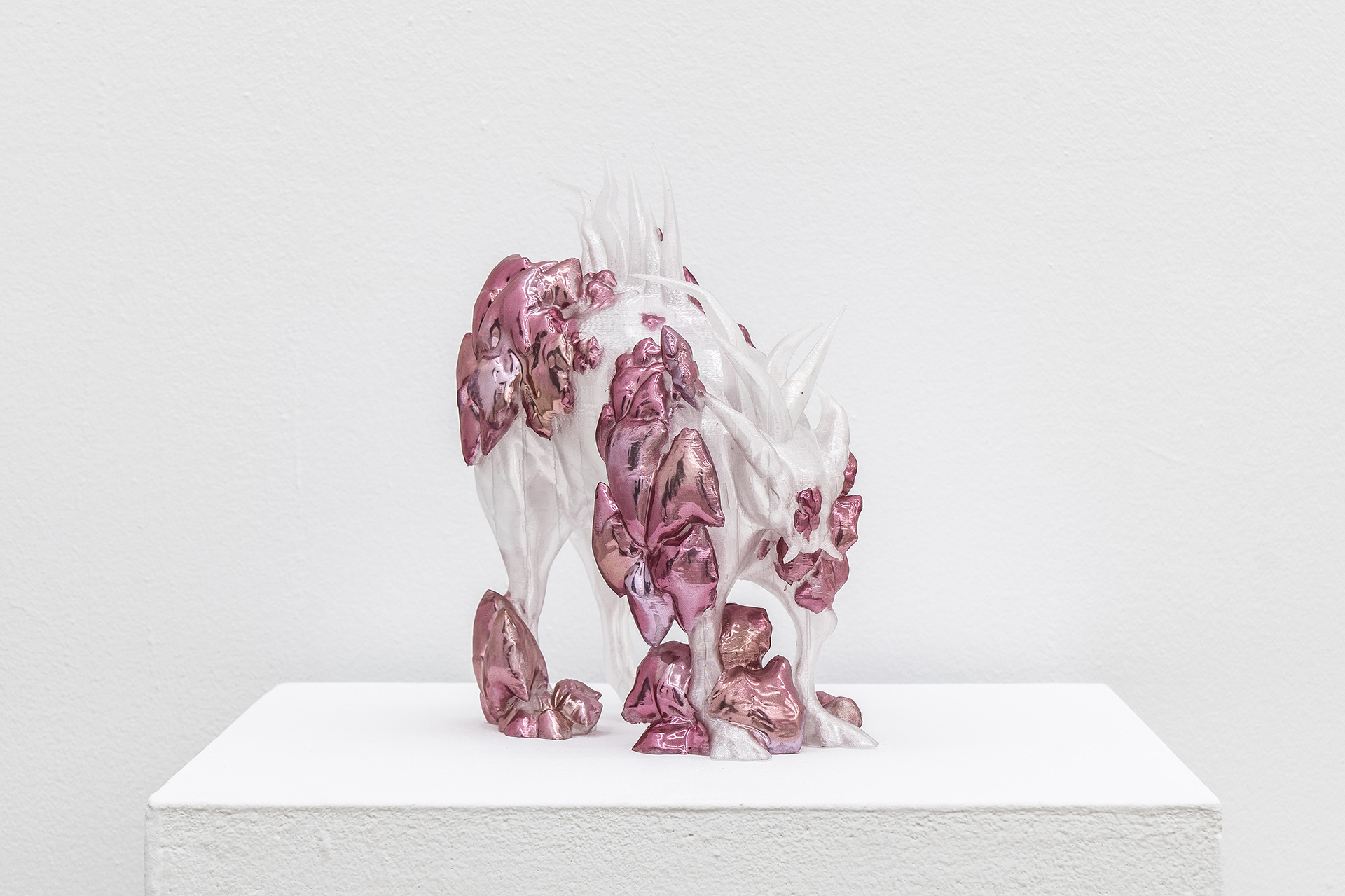 In these works there also seems to be an ecological message, even if it’s quite subtle.
Yes, in a way. More than a direct ecological message, I’m interested in proposing reflections on the weight the landscape has in our lives — how depopulation affects fire risk, how territory sustains essential resources… Addressing these issues in a perhaps subtler or more indirect way, but still present.
I’m interested in how you feel about addressing sociopolitical themes through a rather abstract language that isn’t always obvious or easy to understand. Does it create any conflict for you? Do you think there’s a barrier between what you’re saying and what the viewer receives?
For me that part is always a challenge. Personally, I really like it when viewers draw their own conclusions from what they see, when it isn’t necessary to read the wall text in order to enjoy the work. I don’t think it should be that way. Everyone can read the work as they wish. If they later want to go deeper and learn about the context behind it, that can be interesting, but it’s not mandatory. It’s true that this is the most complicated part, because the piece may not immediately communicate something very concrete.
But it’s also my way of working: first inviting you to be interested in the piece through its colors, forms, and finishes, and then, if you want, to read or learn what it’s about. You might like it more or less, and that’s fine.
It’s always a challenge for viewers to understand a work at first glance, but I don’t think artworks have to be 100% clear either. I really like that contrast between something that invites you to look, that feels attractive, and then discovering that it isn’t about something as beautiful as it initially seemed.
In that sense, your pieces are characterized by a mix of textures: some are very polished and cooler, while others feel strangely tactile despite their digital quality. Do you tend to this mixture?
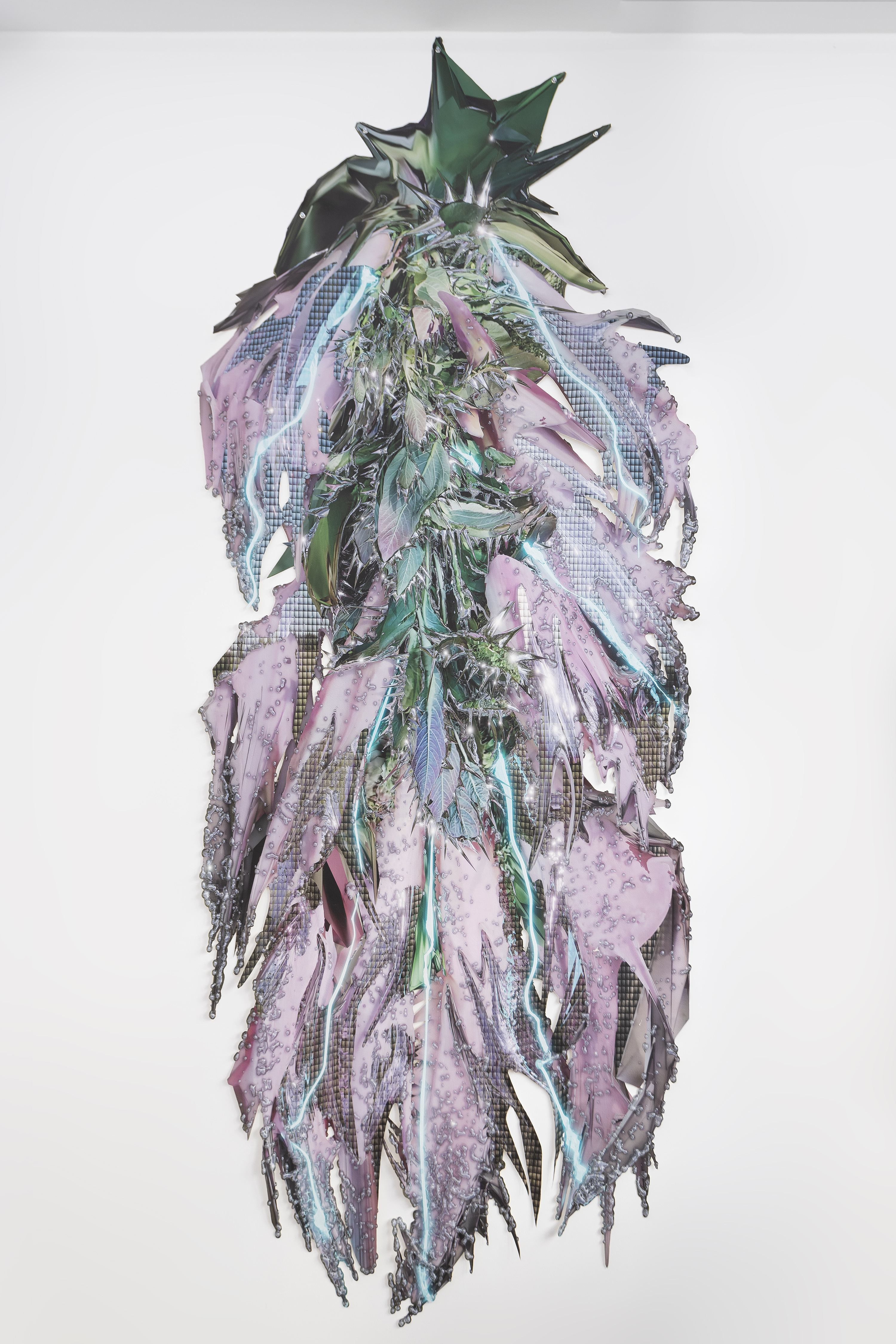
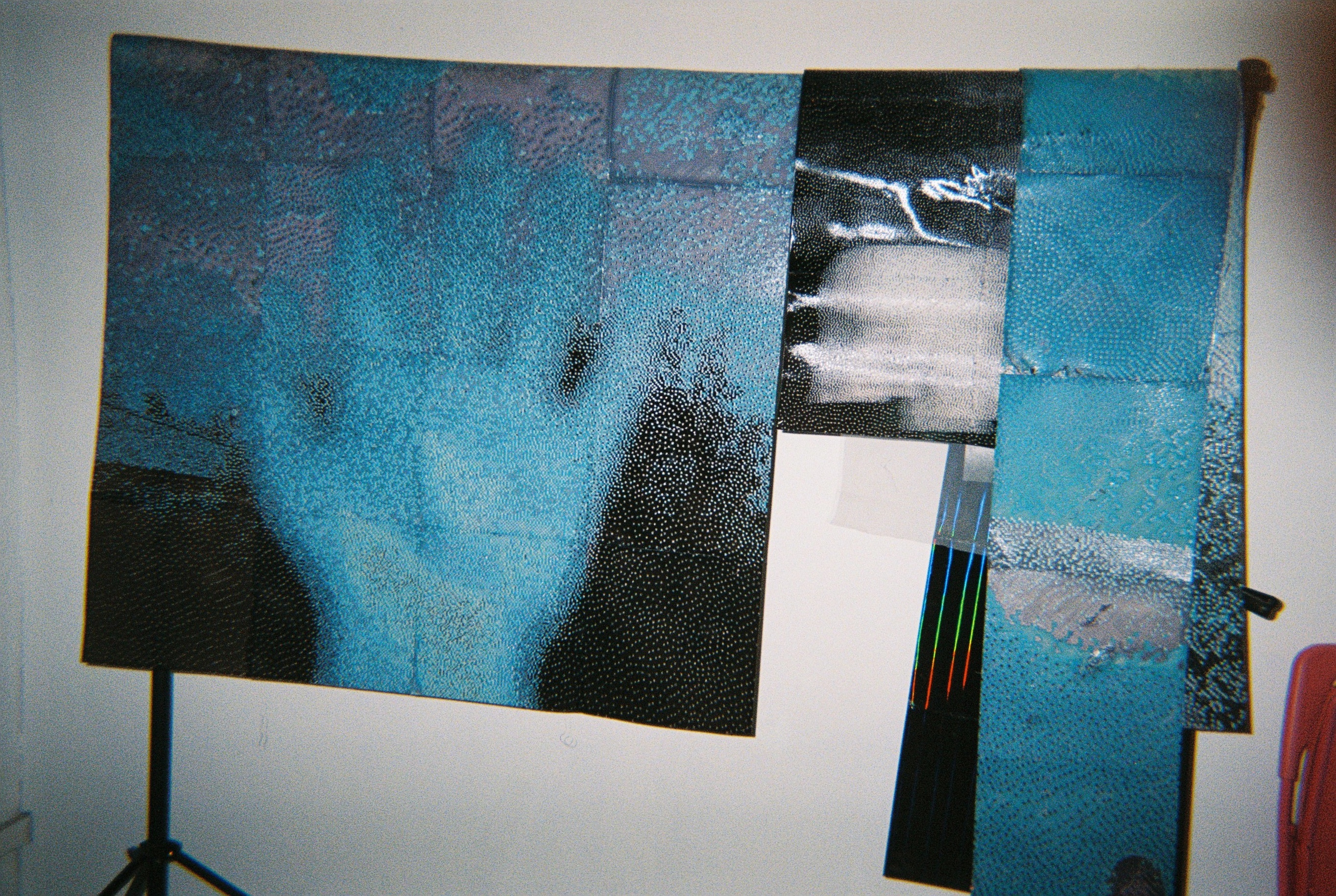
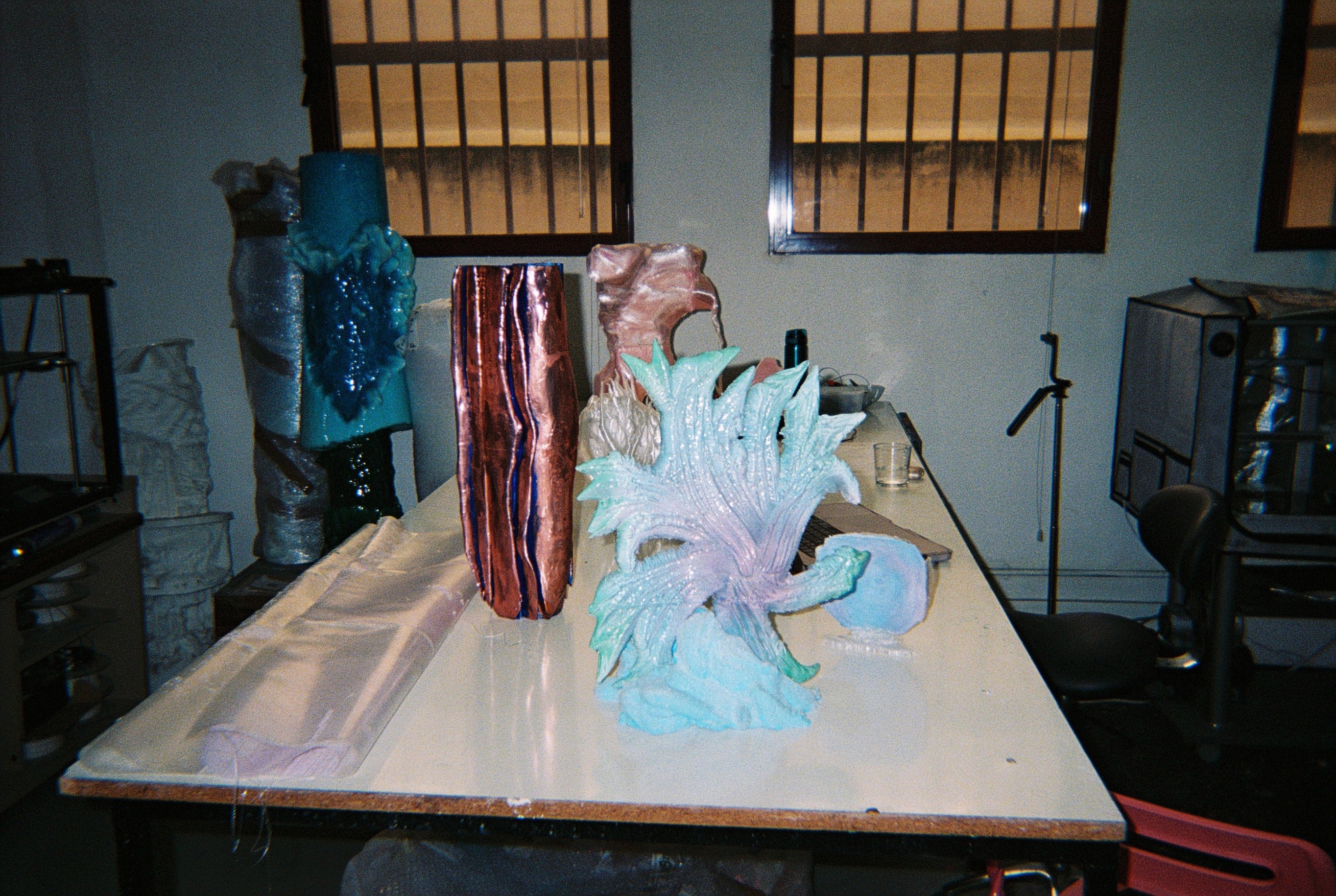
Yes, I vary the finishes. I really like gloss because I associate it with digital materiality. Other times I work with flocked finishes that create a velvety effect. Right now I’m very interested in the tactile, the soft, the haptic — surfaces that invite touch. In general I alternate between soft pieces and more solid, hard ones, depending on what each work requires.
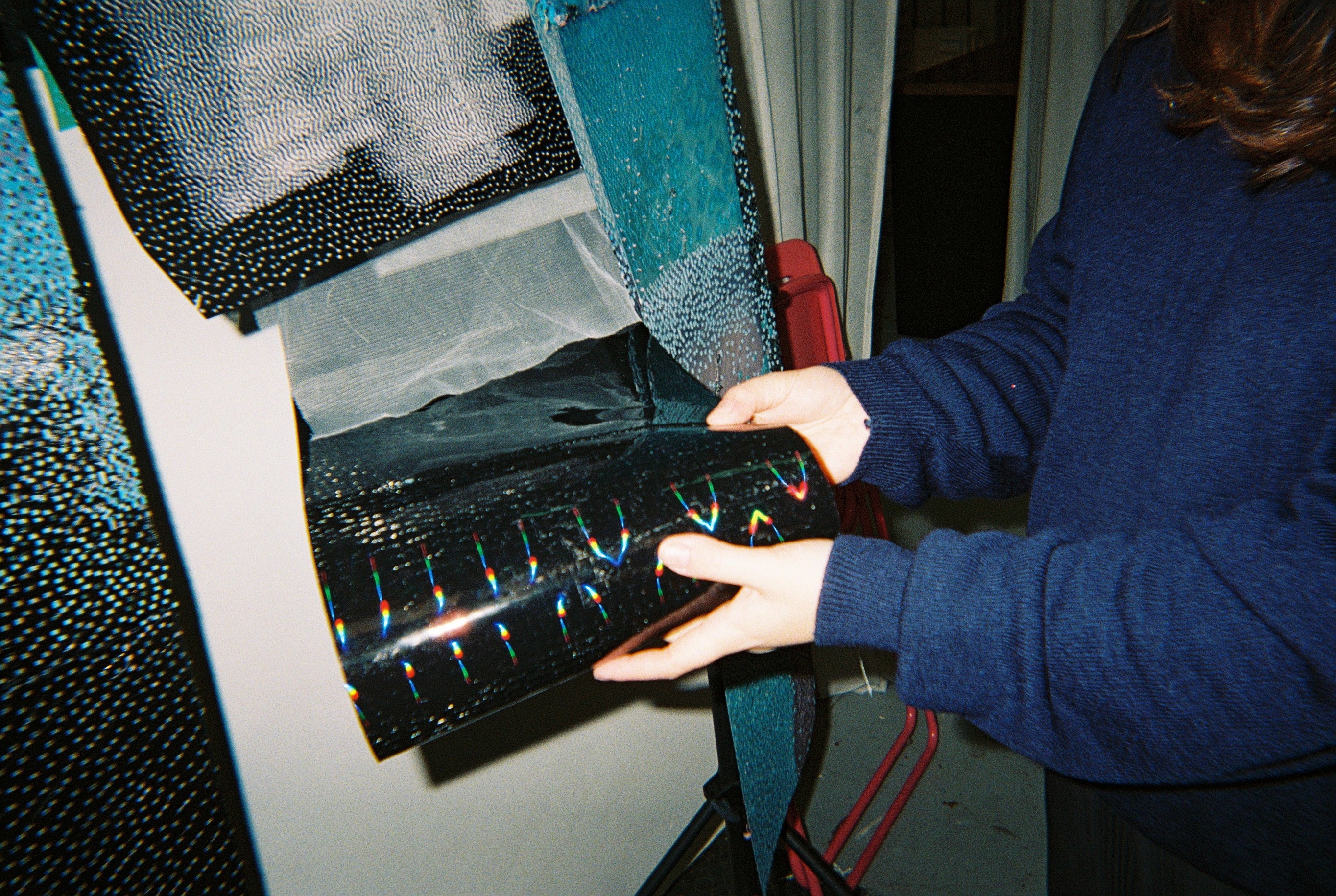
In some of your works women appear with cybernetic or robotic features, as if you were ironizing the standardization of beauty — especially female beauty — happening today on the internet. Does this interest you?
Yes, absolutely. This happens in many aspects of the digital world and is now very evident with AI tools. We think they’re magical or infinite, but in reality they’re quite closed, because they generate from what they’ve consumed: images from the internet, servers, and platforms. For example, if you ask for an image of a woman, you usually get a white, canonical, normative woman, often even sexualized, even if you don’t explicitly ask for that. So with the body there’s a very clear relationship to the digital, and I’m also interested in pointing out that slightly sinister middle ground within all of this.
Your work evokes an aesthetic reminiscent of a somewhat teenage world, like an “internet girl” vibe. Is that something you consciously pursue?
I use a lot of pinks, blues, and gentle colors that interest me visually. Partly it’s a personal preference, but I’m also interested in the contrast between a soft aesthetic and content that may be more critical. That visual friendliness can invite viewers to approach the work and then discover what lies behind it. I work a lot with color ranges associated with landscape, especially sunsets. Historically, landscape has always spoken about its time, and I’m interested in it as a format for telling contemporary stories. It’s also a type of image very present on our devices: travel photos, journeys, everyday moments.
And is there also some irony in the use of these colors?
Yes, definitely. Recently I was talking with a friend about the use of colors associated with femininity and how they’re often perceived as less serious. I’ve even thought at times that if I used more sober tones, what I say might be taken more seriously — which is a horrible thought. But precisely for that reason I’m interested in playing with that chromatic range to talk about complex issues and create contrast and irony.
It seems that certain visual languages associated with art produced by women still aren’t fully validated by the more canonical history of art, right?
Of course. Colors linked to femininity, like pink, have been seen — and still are seen — in a dismissive way, as something inferior. It’s something I hope will be overcome with time, but it’s still present.
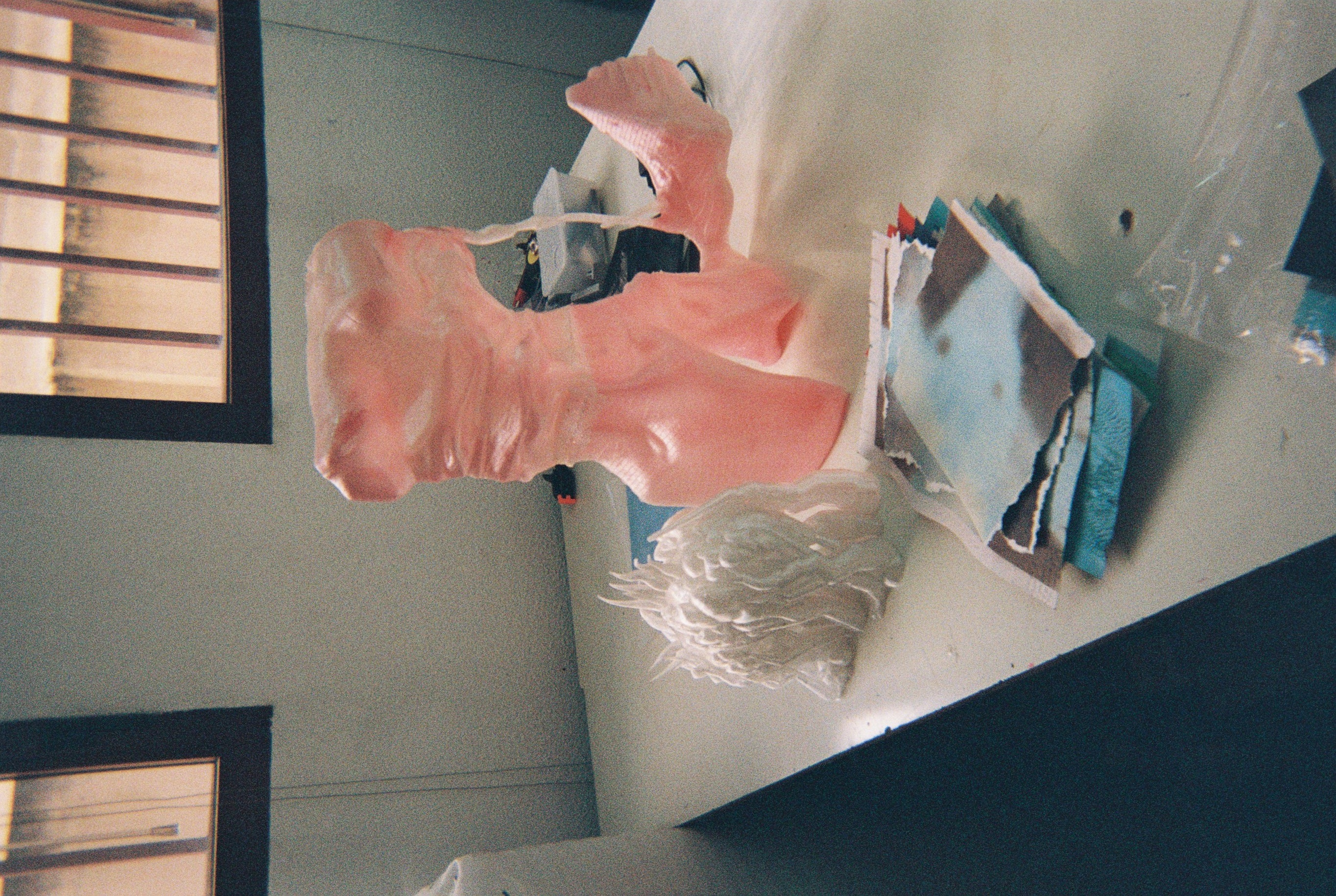
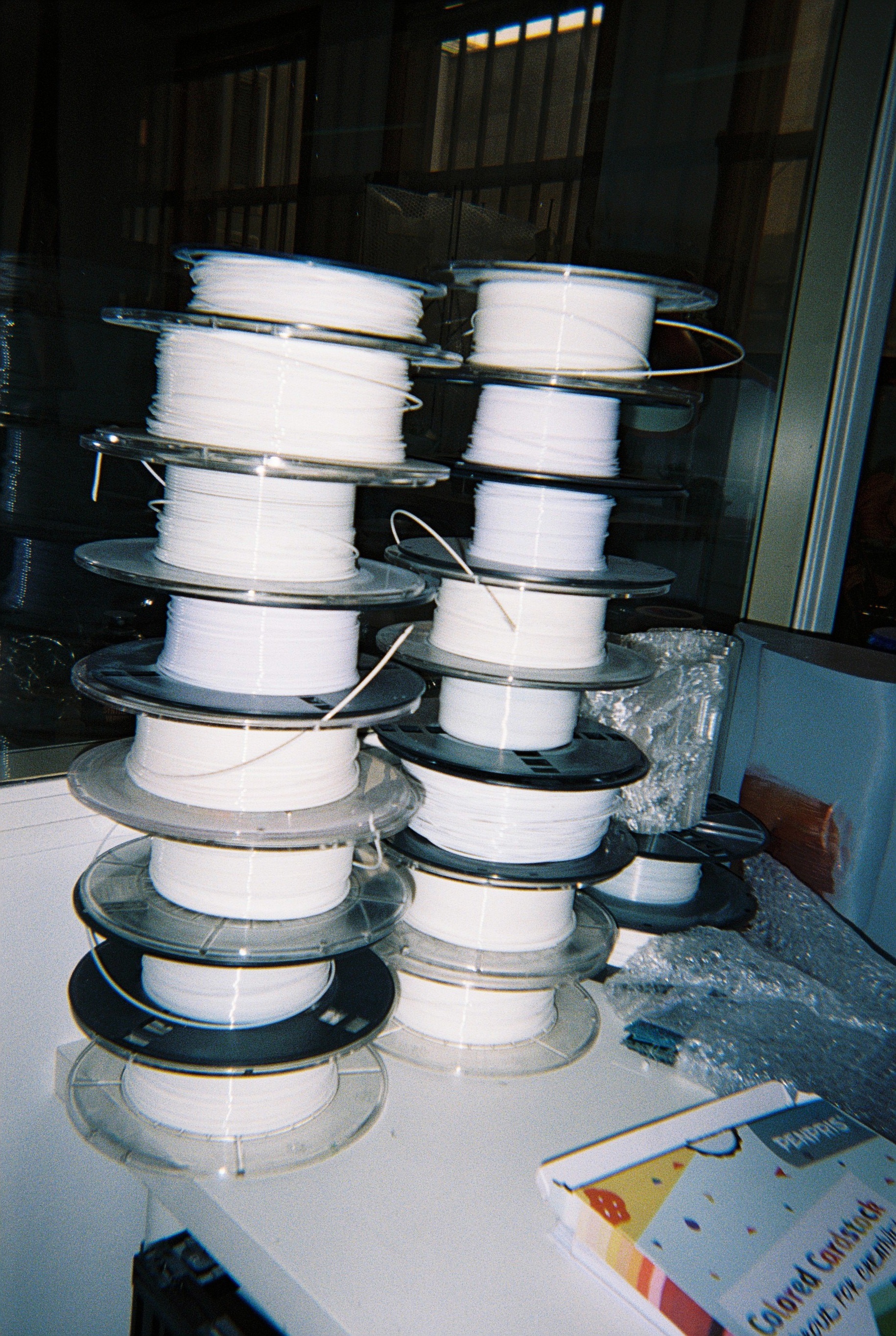
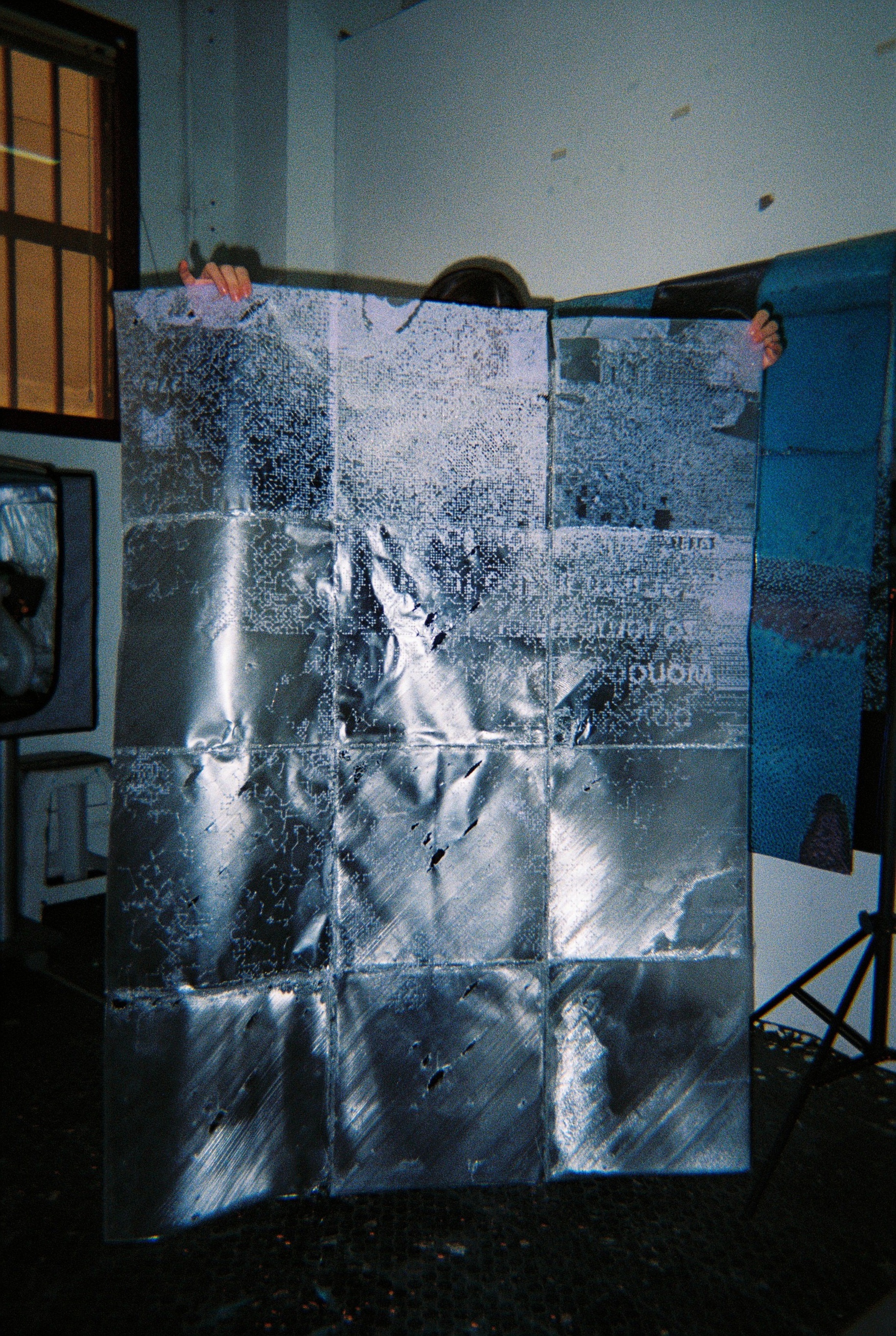
Recently you’ve started developing textile pieces with a filament called TPU, which is white and elastic. Why has this kind of craft started to interest you?
I began developing this line at the beginning of the year. I’d always been interested in textiles, but had never brought them into 3D printing. Previously I had worked with digital printing on materials like faux leather, but I wanted to explore that relationship from another place. Conceptually and historically, textiles are very closely linked to the digital. The automated loom, with its punched-card system, enabled the programming of complex patterns and is directly connected to the development of the first computer. That relationship between programming, textiles, and computation felt very powerful to me.
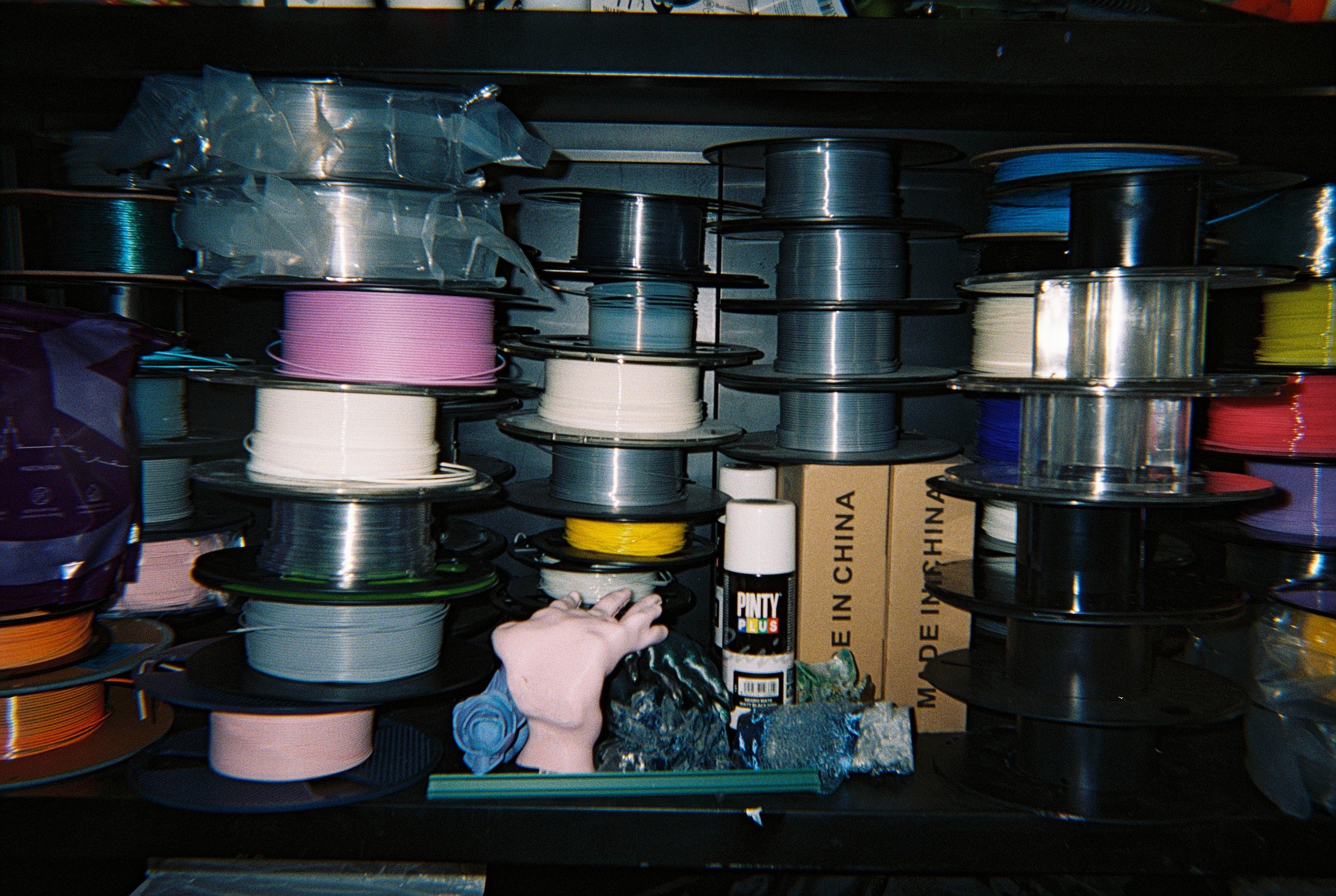
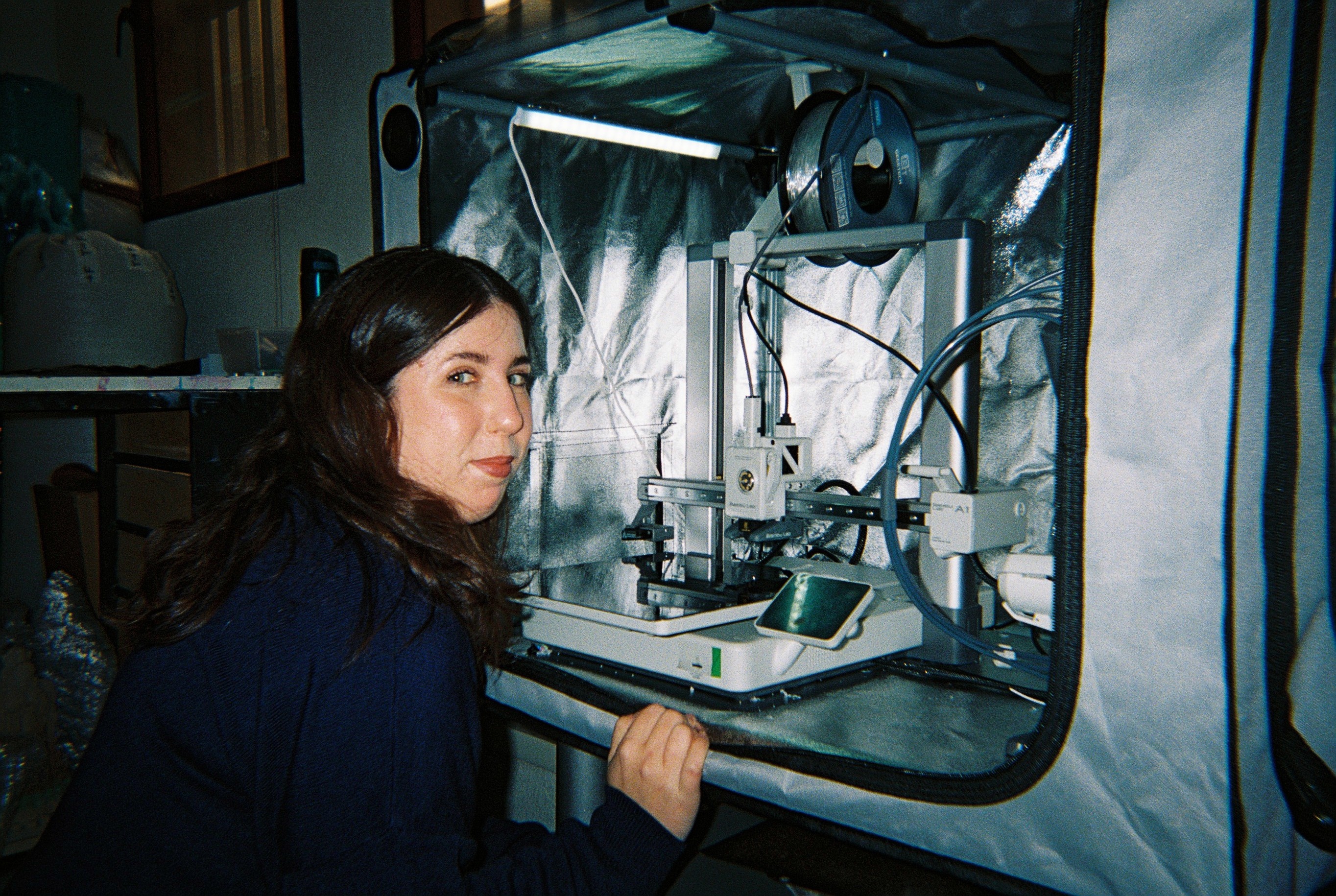
Also, the 3D printer functions almost like an extension of my body. The gesture of changing spools, feeding the machine, reminds me a lot of the world of threads. All of that made sense to me. I’m also interested in softness as a way of talking about the body an image can have — a body that transforms and adapts. The idea of the fold is also very present. Gilles Deleuze spoke about the fold as a space of connection between different worlds, and I think that resonates strongly with the coexistence of the physical and the digital. That’s why I conceive these pieces not only to hang, but to be folded, walked around in the space, and to coexist with sculptural objects.
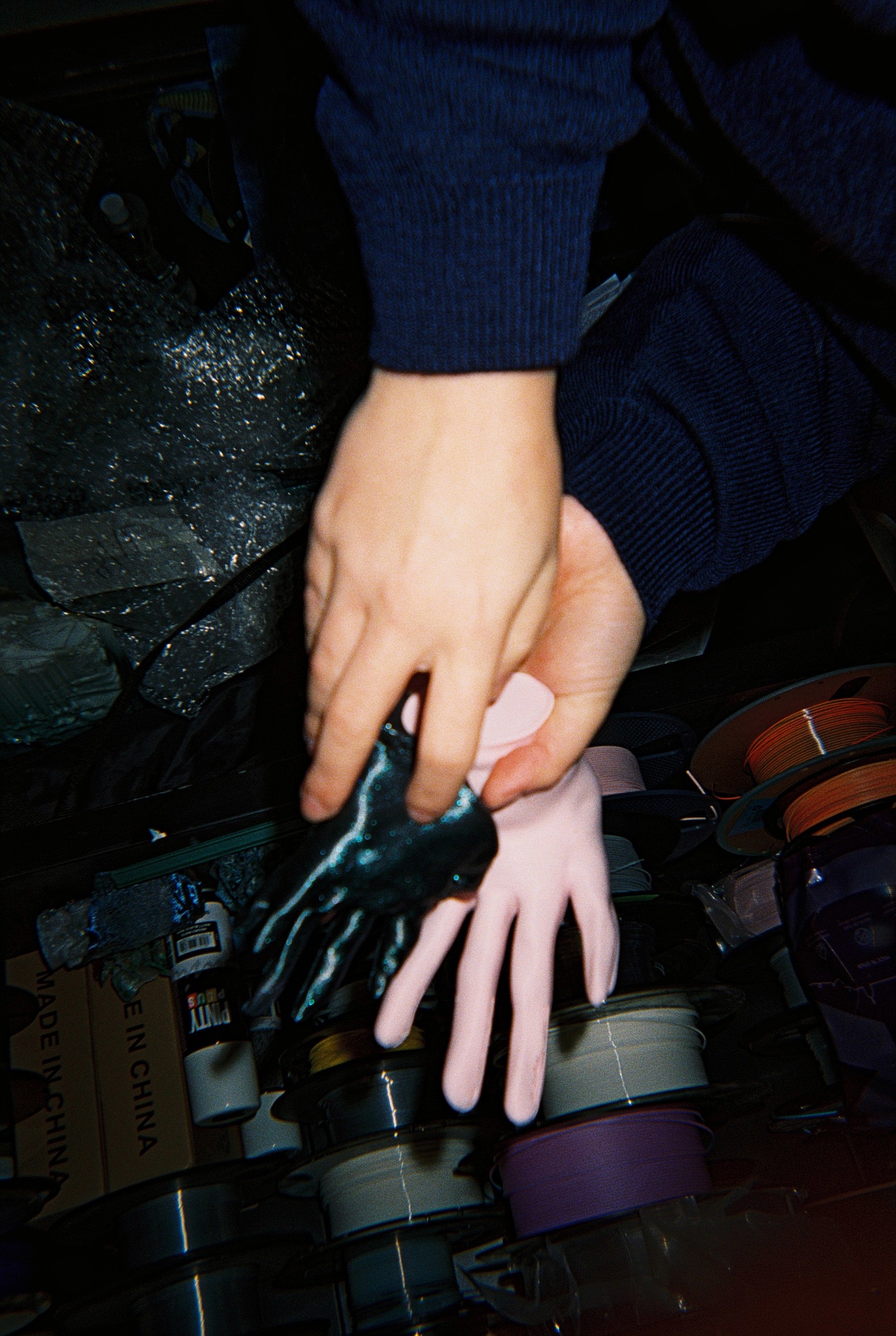
And, finally, there’s the issue of touch. In many of my works the hand appears, because for me today it’s an extension of vision. Through the hand we scroll, swipe, capture images. I’m very interested in that relationship between hand, eye, and surface. That’s why I work with materials that invite touch, with soft, almost velvety finishes that hold images.
I feel this connection between eye and touch appears at a historical moment in which, paradoxically, we’re more isolated than ever.
Yes, absolutely. There’s also that very current expression, “go touch grass.” I think it sums up many of these ideas very well: the need to reconnect with the physical, the tangible, with the body, in the face of an experience increasingly mediated by the screen.
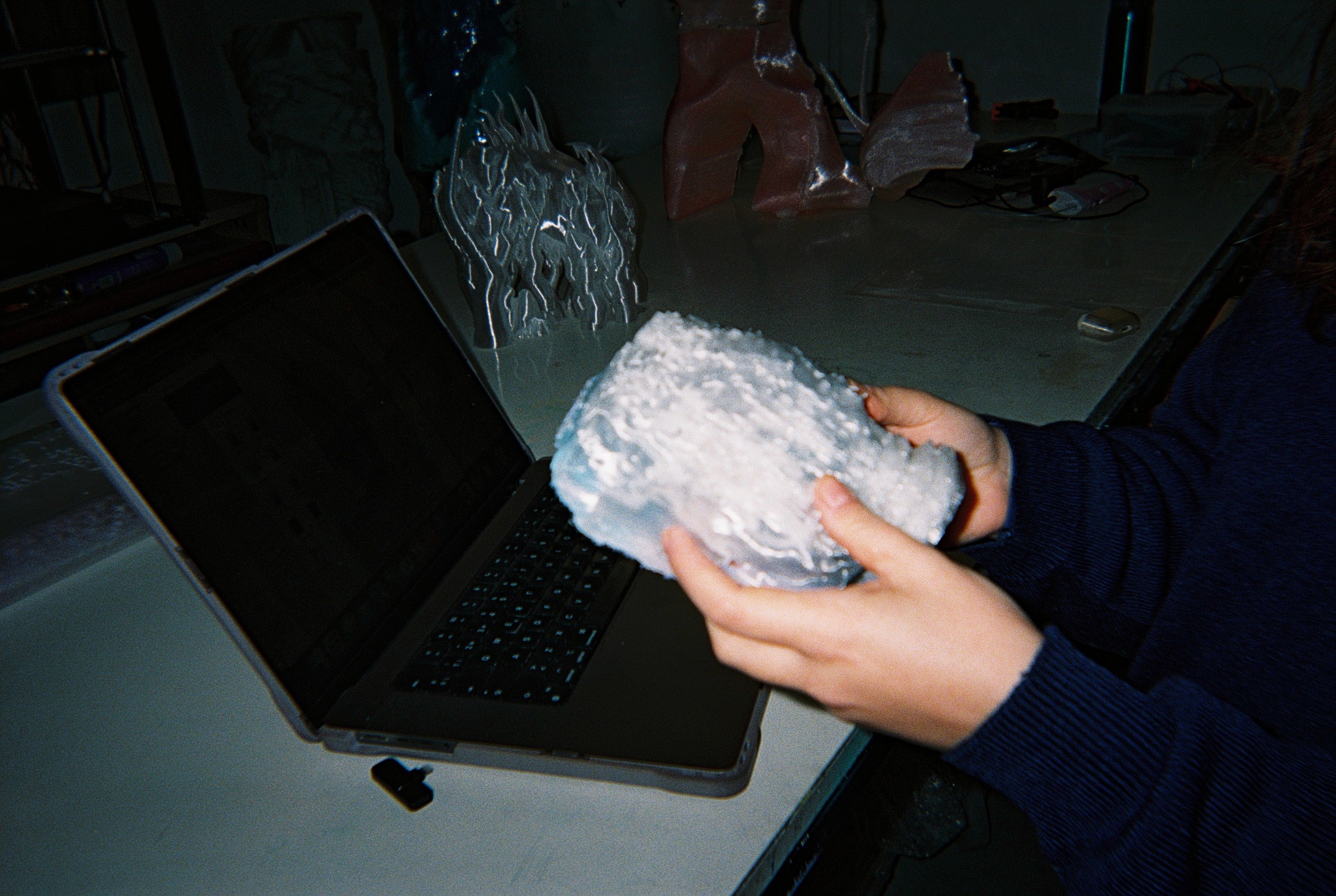
You’ve mentioned several times that you don’t really have clear role models, or that they might be your friends or your family…
Exactly. For me, a reference can perfectly well be a TikTok I see that makes me think, “this is brilliant,” or that sparks an idea. It can also be something I read. When I’ve mentioned Emily Dickinson as a reference, it was because I randomly read a poem with an idea I strongly connected with. I like reading all kinds of things: not only conceptual texts but also novels, for example horror. My reading is quite varied. Sometimes a poem raises an idea that connects with my work or with the stage of life I’m in.
That first exhibition I mentioned came from reading a book about the history of the garden. It began by saying that nomadic peoples didn’t have gardens because their way of life didn’t allow them to think long term or settle in one place. That idea quickly resonated with me and with a very current feeling: the difficulty of imagining the future. Even if you’re not nomadic and live in Madrid, thinking about a future in Madrid can feel dystopian because of housing issues, for example. That’s where the idea of generating a garden for that exhibition came from.
More everyday things also influence me. For instance, I saw a TikTok of a mother who had generated, using artificial intelligence, an image of her daughter hugging her grandfather who had died, whom the girl had never met. I understand the tenderness of the gesture, but it also felt unsettling to think that the image could become a false memory for the girl in the future. All of that connected again with my reflections on memory and the digital.
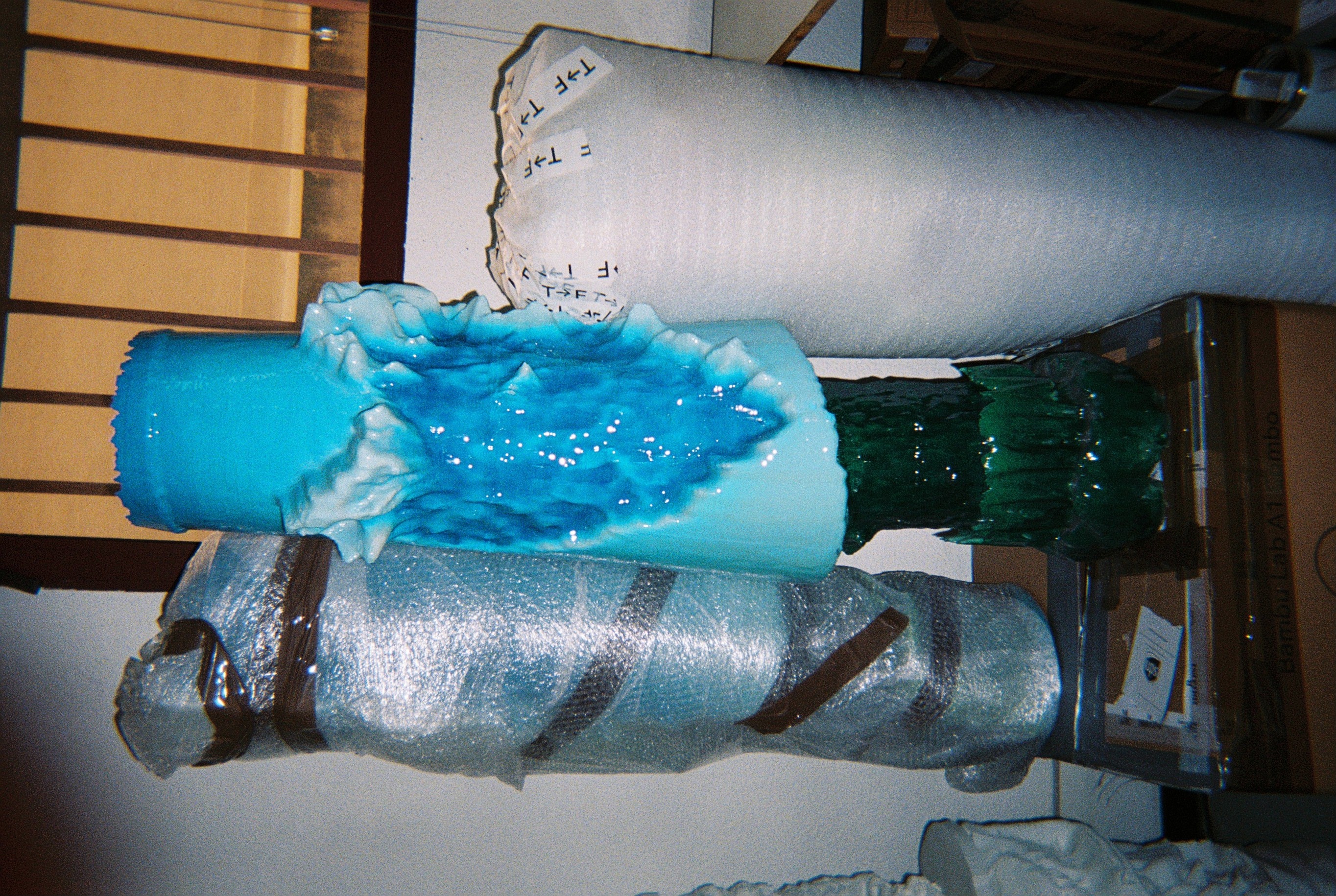
In that sense, the internet also seems like a reflection of all our madness. It has a very psychological dimension, in a way.
Of course — it’s a mirror of everything we are, both good and bad. It’s like a kind of well into which everything falls. That amalgam really interests me: that mass in which beautiful things and dark things coexist, all poured into a space as small as the screen of our phone. That’s why I’m so interested in materializing things, giving them volume and scale. It’s like taking that infinite world that fits in the palm of our hand and giving it a physical dimension, a body. At least that way we can become a bit more aware of those aspects.
On the other hand, the internet can also be understood as a space of accumulation and memory, a kind of archive. By drawing on it as a source of inspiration, do you feel connected to the notion of digital archaeology, understood as a search between the past and future of art in the digital realm?
Yes, absolutely. I think every artist brings that practice into their own territory in a very personal way. I’m very interested in the idea of digital archaeology. In fact, in a project I’m currently working on I use many personal images that I edit, combine, or mix, creating a kind of amalgam. I’m interested in seeing what happens there. It relates to memory and to that fleeting image we capture almost instinctively when we go somewhere: we see something, take a photo, and move on. That generates an infinite archive of images we may not see again for years, or ever, or might even delete. That transience is present both in image generation — for example with artificial intelligence — and in consumption, with the constant scrolling of social media.
That acceleration creates a lot of anxiety in me, and this project functions a bit as a way of slowing down, of holding onto something. That’s why I’m working with textiles based on those images: to give body to something normally fleeting through a slow process that takes time and becomes something physical I can cling to. It’s a personal response to those constant rhythms of consumption and generation.
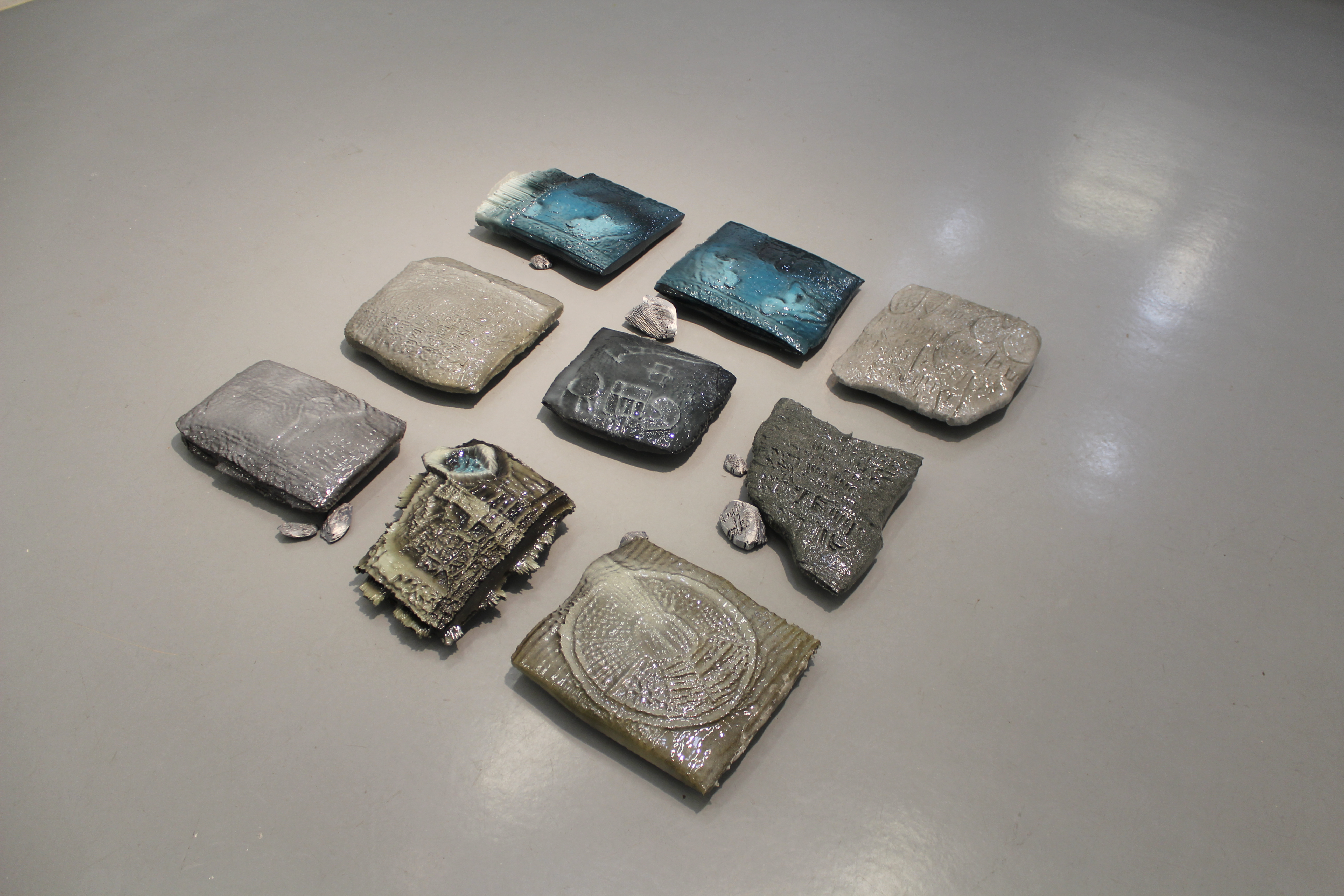
You work with artificial intelligence, a tool that’s generating a lot of controversy today. In other interviews you’ve mentioned the idea that, in a landscape dominated by AI, the artist could become a fetish. Could you expand on that?
I think artificial intelligence, as a tool, can be very positive. My glucose sensor, for instance, uses AI to recognize patterns. Insulin pumps do too. In that sense it’s very useful. But then there’s the idea that it will replace the artist. In fields like design or certain creative processes, this is already noticeable: I have colleagues who see job opportunities shrinking. In contemporary art, where exclusivity is always sought, I think the “non-digital” artist could become a fetish. If everyone uses AI, some people will want something not made with it, precisely because of that exclusivity that’s valued in art consumption.
In my case, when I use AI in the process, it’s because conceptually it adds something to the work. In a project about a fictional future, for instance, I was interested in seeing what the AI imagined when I asked it to show me that future. That speculative aspect contributed something meaningful.
In my first solo exhibition, for example, there was an installation with columns and two screens showing an animation. The same form appearing in the video was also present physically in the space. It was an organic shape, recognizable yet not, with those imperfect finishes that interested me a lot at the time. AI was advancing quickly, but then I was very drawn to errors, to the amorphous, to the undefined. Today it can be visually much more precise, but at that moment those flaws were part of the aesthetic that interested me.
To wrap up… Any wishes or projects you’d like to develop?
I like life to surprise me, ideally in good ways. If I had to make a wish, it would be to be able to keep working on this for many years, because that would mean everything is going well. To keep researching, trying new things. I’m very restless and I like experimenting. I hope I can keep that drive for a long time, because in the end that’s what motivates me in this work.
Interview by Victoria Álvarez Conde. 16.02.26